ClonePix® 2 Mammalian Colony Picker
A complete solution for the automated screening and objective selection of high-value clones across diverse cell types.
A complete solution for the automated screening and objective selection of high-value clones across diverse cell types.
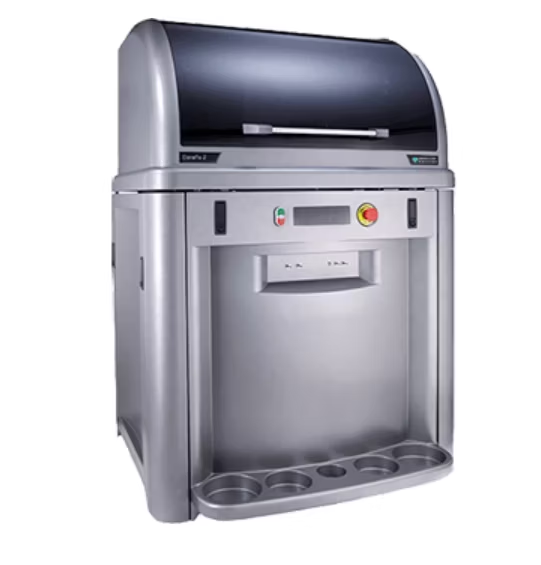
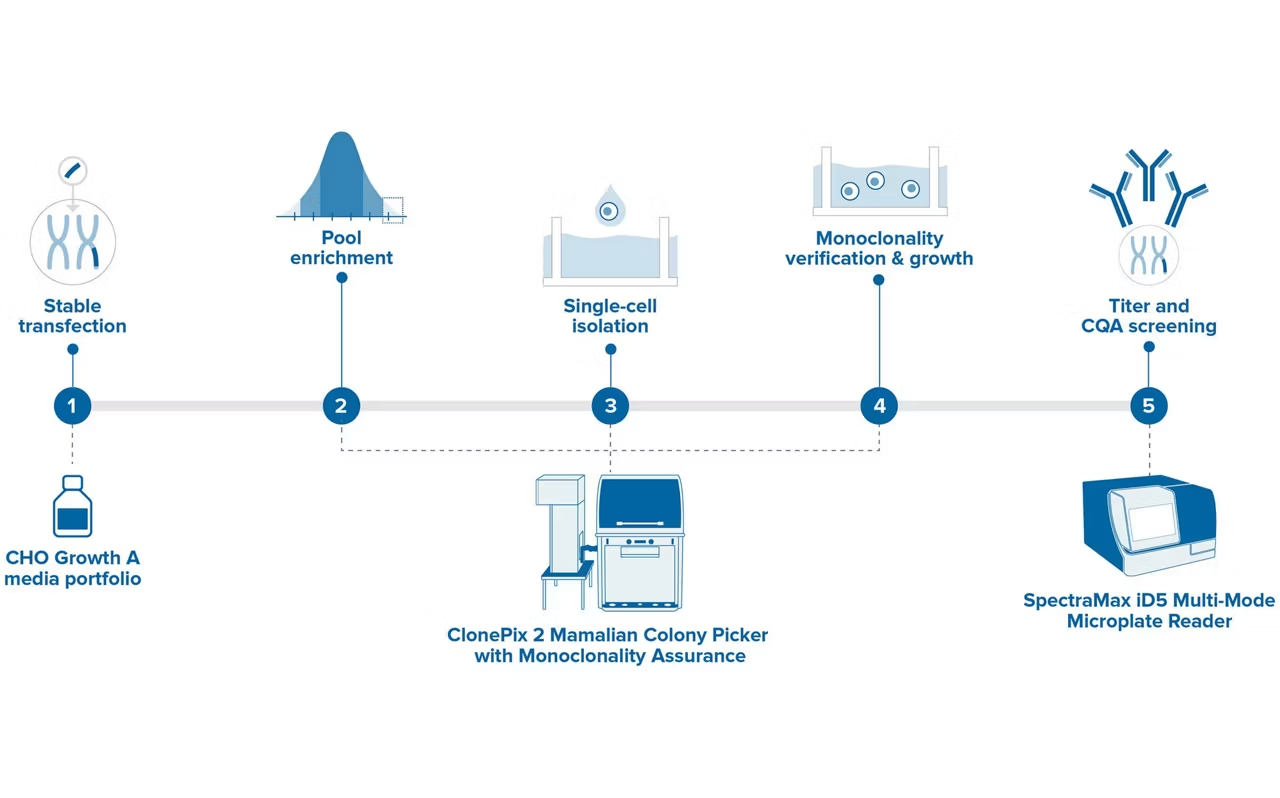
The ClonePix® 2 Mammalian Colony Picker is a fully automated system for selecting high-value clones used in antibody discovery and cell line development. Screen more clones in less time with monoclonal verification on day zero, then screen and identify for highest producers in weeks, not months.
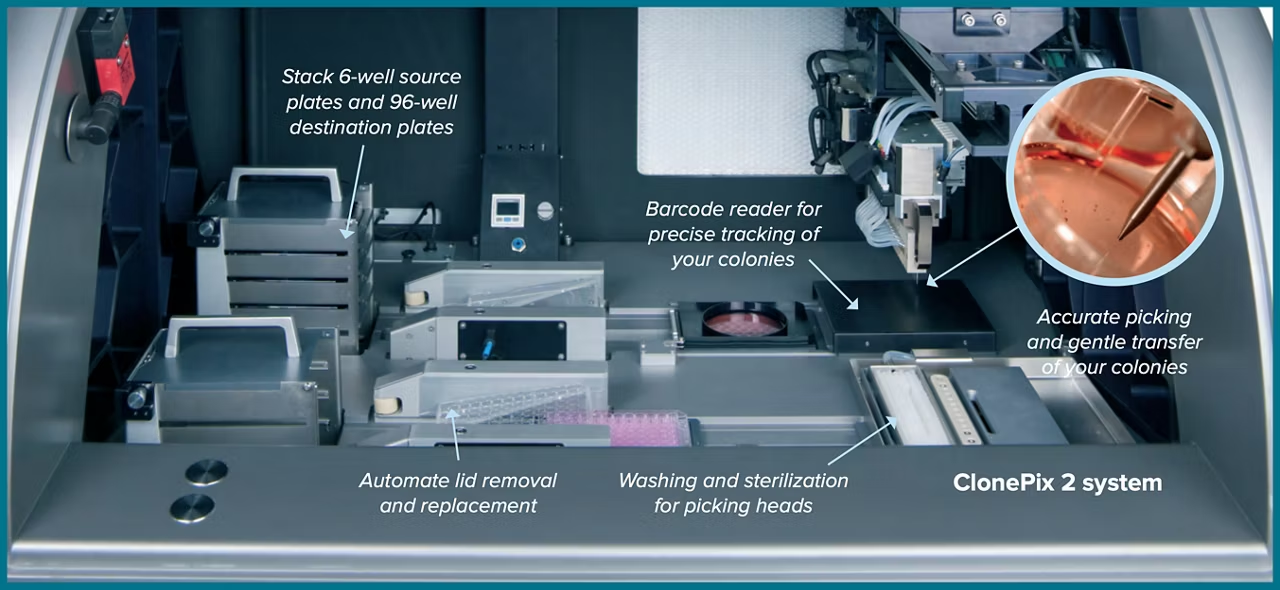
Hybridomas, CHO cells, stem cells and other cell types are imaged and selected based on user-defined parameters. Plate handling, barcode reading, and picking are fully integrated, and all data, including images, are saved for downstream analysis. The picker increases the probability of finding optimally produced cell lines and significantly reduces time and labor.

Automate antibody discovery and cell line development workflows
ClonePix 2 picker is 10x faster than labor-intensive limiting dilution and FACS. Our sophisticated software and integrated robotics enable a screening speed of > 10,000 clones per day.
Select cells with desirable attributes with monoclonality assurance from day 0
Easily screen and select clones based on protein productivity, antigen-specificity, cell viability, and expression levels of tagged recombinant proteins.
Increase the probability of identifying high-value clones while eliminating or recovering unstable clones early
Picking accuracy < 1 mm. Robotic picking reduces the risk of colony disturbance. Images of picked clones are stored with data.
Key Features ClonePix® 2 Mammalian Colony Picker
Multiple detection methods
White light identifies and measures clone morphology, size and proximity. Fluorescence indicates expression level and/or specificity. Up to five fluorescent filters are available for multiplexing.
Sterility maintenance
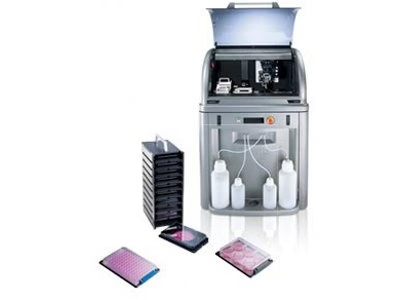
A host of sterility features and options including a UV light process for sanitizing the interior of the instrument, as well as pin washing and halogen drying are standard.
Integrated plate storage
Includes two storage stacks for source and destination plates, each with a capacity of 10 plates.
Discrete colony formation
Semi-solid CloneMediaTM encourages single cells to grow into discreet colonies and allows for ease of plating. The media allows for a higher density of clones to be screened.
Animal-free media and reagent
Chemically defined and animal-free, CloneMedia cell-culture media, is optimized to increase productivity and aid in visualizing secreted antibodies when used with the CloneDetectTM detection agent.
Custom automation options*
The Advanced Workflow Engineering Solutions Team can customize the monoclonality system and offer added services such as integrated verification of monoclonality.
Redefine clone screening and selection with transformative cell line development workflows

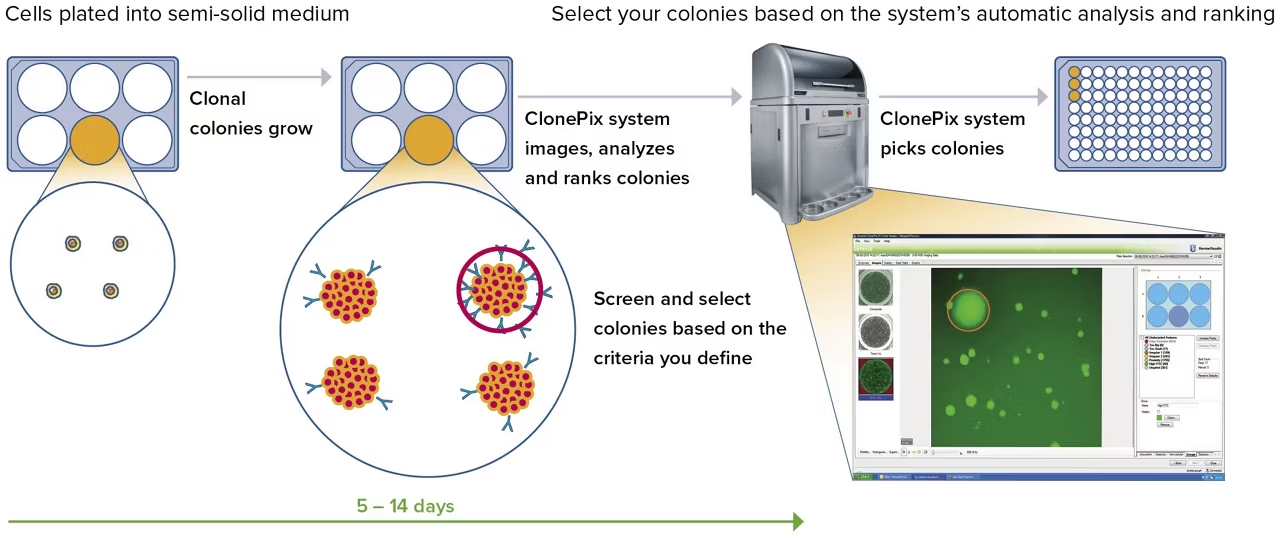
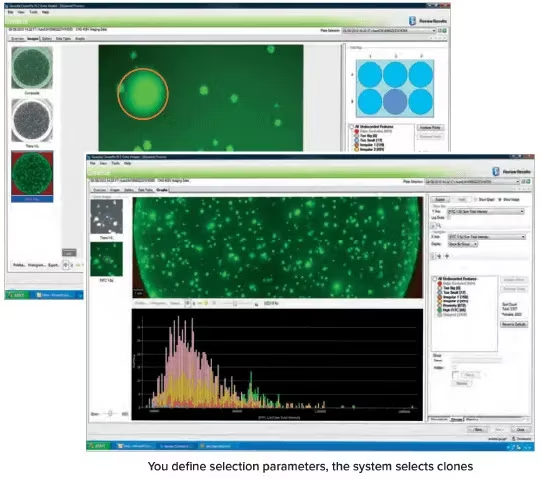
Empower your team with data analysis that automatically generates a map of clones and their secretion levels from a series of images generated in situ. The ClonePix can also be customized to include image-based monoclonality assurance on day zero.* This means your team can screen in one round and then pick for the highest produces in weeks, not months.
Data analysis and tracking—reveal stable clones faster

Data Analysis
- Automatically generate a 2D map of clones and their secretion levels from a series of images generated in situ
- Screen and select colonies based on:
- Size, roundness, and proximity to neighbors
- Ranking according to fluorescence levels
- Closely placed colonies ignored via user-controlled “proximity” software setting.
Data Tracking
All relevant data associated with each colony (including images taken before and after picking along with their picking coordinates) are automatically saved for review and downstream analysis.
Enhanced with monoclonality assurance*
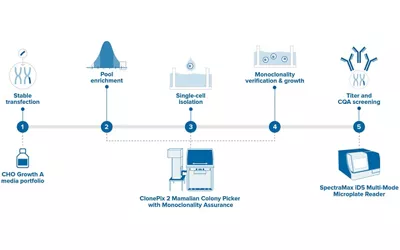
Same ClonePix workflow, now enhanced with high-resolution single-cell imaging capability on day 0
The enhanced ClonePix 2 system can automatically screen and pick clones that are both high producing and monoclonal—all in one system. Screen more clones in less time with monoclonal verification on day zero, then screen and pick for highest produces in less than two weeks.
- Reduce screening time from two rounds to one by providing image-based evidence of clonality
- Rapid Z-stack acquisition feature allows detection of single cells throughout the medium volume, not just a single focal plane, on day 0
- Simplified workflow from single-cell identification and productivity screening with the all-in-one system
Enhanced for stem cell applications*

Identify desirable, clonal stem cell colonies for high-throughput colony screening and picking
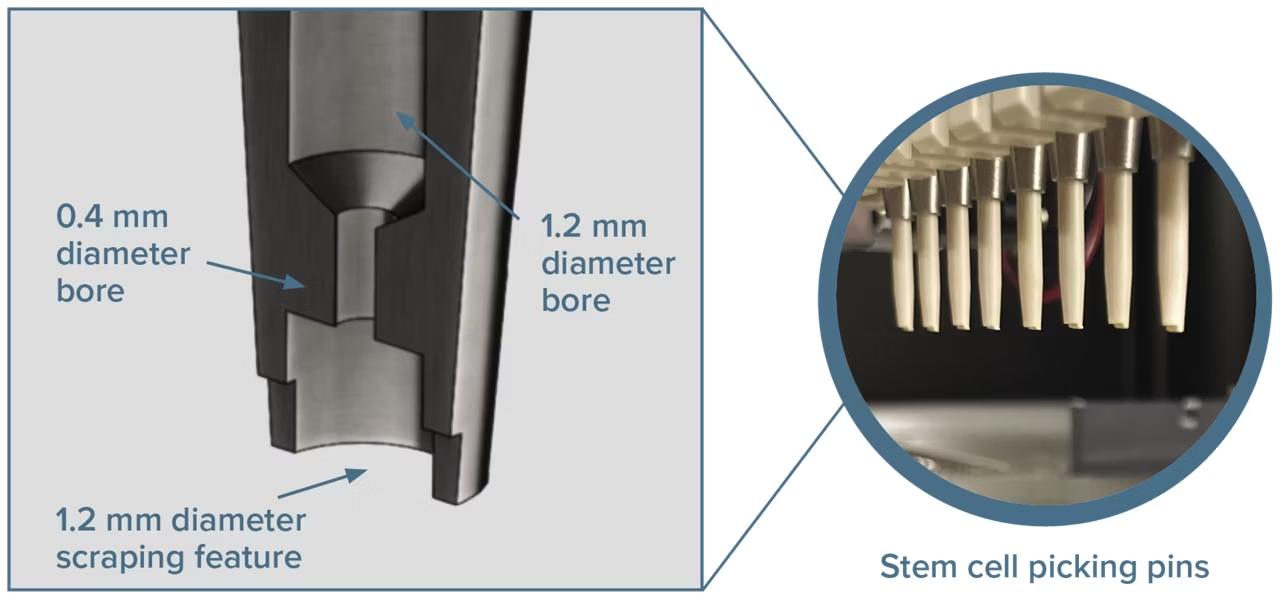
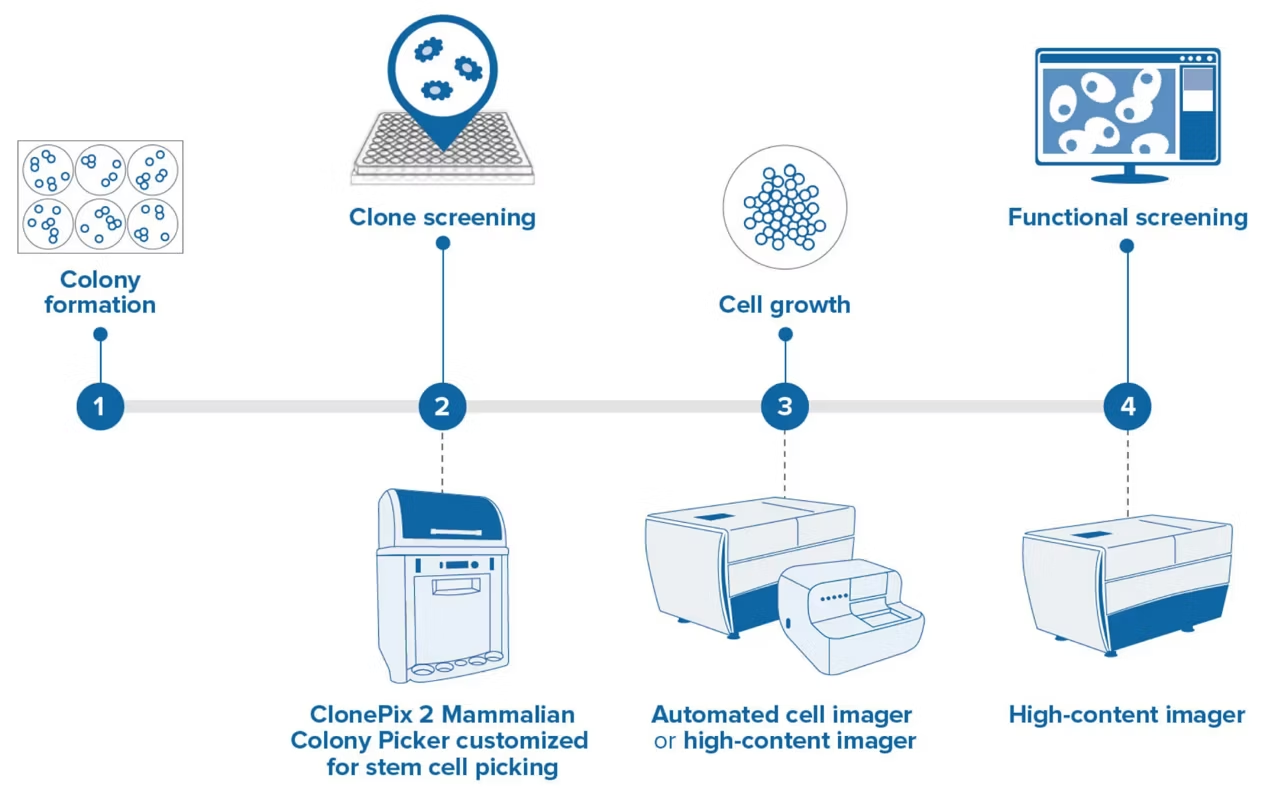
High-resolution imaging identifies desirable, clonal stem cell colonies for high-throughput colony screening and picking. Specialized picking pins allow the gentle transfer of adherent, feeder-free cells to high-density plates for clonal expansion and downstream analysis.
- Colony formation - Individual stem cells plated at a low density in 6-well plates divide and develop into colonies. Plating density is kept low to ensure that colonies are derived from a single parent cell.
- Clone screening - Clonally-derived stem cell colonies are identified by their desirable morphological characteristics and are picked from the low-density 6-well plates into higher density 96-well plates to carry forward with the screening. The ClonePix® 2 Mammalian Colony Picker can be customized with high-resolution optics and stem cell-specific pins, allowing this established technology to be leveraged in stem cell workflows.
- Cell growth - Cell growth is determined by monitoring cell division over a given time using label-free imaging.
- Functional screening - In addition to monitoring growth, functional cell-based assays can be performed. This can include assays assessing differentiation potential, pluripotency, ability to form 3D organoids, and other desirable traits.
Applications of ClonePix 2 Mammalian Colony Picker
- Cell Line Development
- Cell surface expression screening
- Clone productivity screening and titer
- Drug Discovery & Development
- Hybridoma screening
- Monoclonal Antibody Discovery
- Monoclonality
| Item Weight (Metric kg) | 184-400 kg |
| Item Weight (Imperial lb) | 406-500 lb |
| External Light Source Weight (Metric kg) | No external light source. kg |
| External Light Source Weight (Imperial lb) | No external light source. lb |
| Item Height (Metric cm) | 75-120 cm |
| Item Height (Imperial in) | 30-47 in |
| Item Width (Metric cm) | 152-226 cm |
| Item Width (Imperial in) | 60-89 in |
| Item Depth (Metric cm) | 77-80 cm |
| Item Depth (Imperial in) | 30-31 in |
| Clone Screening System Type | Microbial Colony Picking |
| Compressed Air Description | Clean, oil-free with sub-micron filtration |
| Minimum Operating Pressure (Imperial psi) | 90-100 psi |
| Minimum Operating Volume Rate (Metric L/min) | 80 L/min |
| Objective Zoom Multiplier (X) | 0.6 X |
| Light Source(s) | LED (White Light/Fluorescence Light) |
| Source Microplate Size Compatibility | 96 well plate, 384 well plate |
| Source Microplate Capacity Description | Without manual intervention: 2 x 15 cm petri dish; 1 x 15 cm petri dish; 10 x 9 cm petri dishes; 5 x 9 cm petri dishes; 4 x OmniTrays; 2 x OmniTrays; 2 x 22 cm Qtrays; 1 x 22 cm Qtrays |
| Picking Destination Microplate Size Compatibility | 24 well plate, 48 well plate, 96 well plate, 384 well plate |
| Picking Head Description | Fully pneumatic, 96 pin picking head. Interchangeable heads for other applications |
| Picking Height Description | Integrated ultrasonic agar height sensor to set agar height per plate for accurate picking |
| Number of Static Wash Baths | 3 |
| Pin Drying Description | Proprietary halogen pin drying station |
| White Light Picking Capacity (colonies/hr) | 3000 colonies/hr |
| Fluorescent Picking Capacity (colonies/hr) | 2000 |
| Picking Pin Types | Range of organism-specific pins |
| Software Description | Fusion Qpix 450, Fusion Apix 420, or Fusion Qpix 460 |
| Camera Sensor Type | CCD |
| Image Resolution (Metric pixels/mm) | 22-24 pixels/mm |
| White Light Only Field of View Size (Metric mm) | 62-64 x 46 mm mm |
| White Light and Fluorescence Field of View (Metric mm) | 32-34 x 24 mm mm |
| Fluorescent Imaging Details | Epifluorescence illumination, five standard wavelengths included: |
| Colony Selection Choices | Proximity, Roundness, Fluorescence Intensity, Zone Inhibition, Blue-White Colonies |
| Tracking Capability | 1 x barcode reader for tracking of source and destination plates. Data tracked through all applications for plates with same I.D. |
| Bar Code Reader Count | 1 |
| Imaging Speed Description | 6-well microplate: 5 min for 2 wavelengths (standard conditions) |
| Imaging Standard Resolution (Metric μm) | 28 µm |
| Compliance Designation(s) | CE, UK CA |
| Quality Standard(s) | ISO9001:2008 |