










Blazing a path toward a CRISPR platform approach
Regulatory ready workflows, scalable analytics, and high quality reagents are no longer optional-they are scientific requirements for translation.
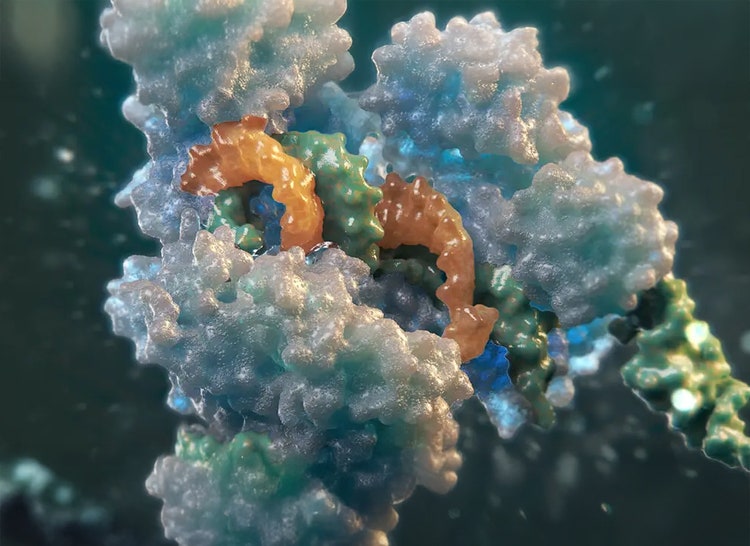
Designing CRISPR genome editing for scale
Integrated solutions from discovery through clinical readiness
Gene editing has evolved from a preliminary research tool to a practical therapeutic option, raising expectations for accuracy, safety, and clinical effectiveness. Advances like high-fidelity CRISPR systems, base and prime editing, RNA-targeting techniques, and better delivery methods are expanding therapeutic possibilities while setting higher standards for quality and regulation.
The next phase of genomic medicine involves turning these innovations into scalable, regulated products. This requires thorough molecular characterization, scalable and reproducible analytics, and traceable data linking editor design, biological effects, and clinical outcomes.
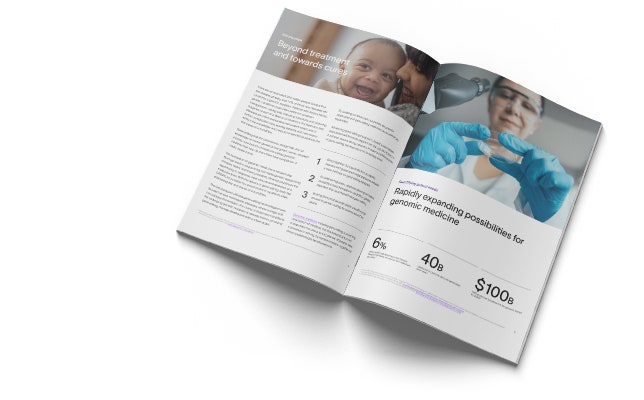
Gene Editing Therapies: Driving Toward the Cure
As next-generation sequencing and CRISPR unlock new possibilities, the path from discovery to delivery remains fragmented. This brochure demonstrates how the life sciences companies of Danaher are working together to drive the gene editing field forward.

Making gene editing therapies more accessible
The life sciences companies of Danaher offer a wide range of solutions, technologies and services used in the development and manufacturing of CRISPR-mediated gene therapies. We enable the scientific community, from discovery to clinic, with RUO and cGMP-grade CRISPR reagents, workflow automation solutions, enterprise-level data management and services, connecting the critical nodes of this ecosystem to help make gene editing a reality.
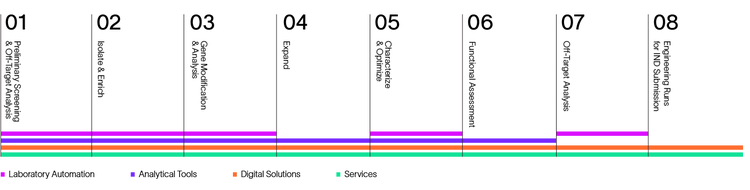
The Process
One lab, three paths to faster outcomes







Reliably Designed Reagents

We see a way to reduce off-target editing by up to 100-fold using Alt-R™ S.p. HiFi Cas9 Nuclease
IDT | Alt-R™ CRISPR-Cas9 System + Alt-R™ S.p. HiFi Cas9 Nuclease
Reliability Designed to Your Specifications
Rigorous QC and validation of gene editing components ensure results reflect true biology rather than reagent‑driven variability, with a focus on specificity, repair outcomes, PAM flexibility, and reagent fidelity.

Manufacturing-Ready Analytics

We see a way to automate NGS workflows during process development and reduce the analysis time by 10X.
Genedata | Genedata Selector
Accelerating Actionable Insights Through Analytics
As programs progress toward manufacturing and clinic, teams must align assays and analytics with CMC requirements, implement quality systems, define starting material controls, demonstrate process reliability and prepare audit-ready packages. Addressing these early ensures clinical timelines stay on track.
Manufacturing & Regulatory Considerations

We see a way to accelerate your GMP mRNA drug product manufacturing timeline by 50%.
Aldevron | mRNA Drug Product Manufacturing
A Platform Approach to Genomic Medicine
Pioneers in the field are adopting platform‑based approaches that integrate design, manufacturing, validation, analytics and regulatory preparedness from the outset reducing risk and accelerating timelines.
Resources

Webinar
From Design to Delivery: A Translational Framework for Non-Viral Gene Editing
Aldevron and Integrated DNA Technologies (IDT) are at the forefront of a non-viral gene editing framework designed to support programs across in vivo and ex vivo therapeutic modalities. Emphasis is placed on editing specificity, off-target assessment and manufacturability to support IND-enabling studies.

eBook
Designing CRISPR Genome Editing for Scale: A Platform Approach from Discovery to Clinic
This ebook explores how a platform approach to gene editing, covering the entire development lifecycle, can help overcome the real bottlenecks that emerge beyond early discovery.

Webinar
Manufacturing the Future: From N=1 Personalized CRISPR Therapy to Scalable Precision Genomic Medicine
The first personalized mRNA base editing therapy for a life‑threatening infant diagnosed with neonatal-onset urea cycle disorder demonstrates how precision gene editing can save lives. Join this webinar to hear leaders discuss transforming N-of-1 breakthroughs into scalable genetic medicine with wider clinical impact.

Webinar
Evolving Gene Editing for Rare Disease Drug Development
Learn how emerging gene editing platforms could accelerate therapies for ultra‑orphan diseases while addressing N‑of‑1 clinical and regulatory challenges. Hear perspectives from translational leaders and discuss paths toward broader patient impact in rare disease.

Webinar
Establishing a Sustainable Platform for CRISPR-Based Genome Editing Therapies
Dr. Fyodor Urnov and Dr. Sadik Kassim introduced a scalable CRISPR platform targeting inborn errors of immunity (IEIs). Designed to extend to other genes and diseases, it aims to improve access to gene therapies. Their standardized cookbook fosters academic-industry collaboration to overcome cost and timeline barriers, unlocking CRISPR’s full potential.
FAQs
Successful gene editing begins with reagent design, selection and characterization. Guide RNAs should achieve high on-target accuracy while reducing off-target activity. Nuclease choice, like Cas variants, depends on whether a knockout, knock-in, or base-editing approach is needed. Donor template features also influence repair and efficiency. These factors ensure reproducibility, precision and scalability when developing therapies.
Verifying on-target and off-target gene editing involves targeted and genome‑wide sequencing with orthogonal assays. Functional assays like protein expression or phenotypic readouts validate biological relevance. These approaches collectively ensure accurate, safe and effective editing across discovery and IND studies.
Reagent design affects editing efficiency, precision and variability. Choosing reagents that minimize off-target effects and maintain consistency across experiments are crucial. Nuclease choice, donor compatibility and reagent purity affect cell viability and analysis. Tailoring reagents to cell types improves outcomes. Good reagent selection and functional validation ensure that edit results truly reflect biological performance rather than reagent-driven variability.
Regulatory agencies expect gene editing programs to demonstrate safety, consistency and thorough characterization. They require detailed documentation of reagent design, manufacturing, analytical validation, off‑target activity and genomic integrity. Programs must also show data on product identity, purity, potency and stability. Aligning with regulatory expectations early on helps streamline IND submissions and readiness.
Transitioning to GMP readiness involves standardizing processes, scaling operations and aligning quality systems. Research-grade workflows must be adapted to controlled, traceable processes that support consistent manufacturing at scale. This includes qualifying raw materials, defining critical quality attributes, establishing in-process controls and generating robust documentation. Analytical methods must also be validated to support regulatory expectations. Early consideration of GMP requirements helps minimize risk, reduce rework and accelerate progression from discovery to clinical development.