Understanding Cytotoxicity Assays: From Cell Viability to Clinical Applications

What Is Cytotoxicity?
Cytotoxicity assessment is a critical pillar of drug discovery and development, helping researchers identify potential side effects and ensure that compounds are safe for clinical trials and further development. Therefore, understanding cytotoxicity is fundamental in derisking late-stage clinical problems.1
Cytotoxicity refers to cellular damage or death caused by chemical, biological or physical agents. These effects can arise through multiple biological mechanisms, including membrane disruption, metabolic inhibition, oxidative stress and activation of programmed cell death pathways. Cytotoxic responses may be acute, occurring rapidly after exposure or chronic, developing over prolonged periods with sustained or repeated stress. This distinction is important when interpreting assay results and designing experiments.1
Cell Viability vs Cytotoxicity: Key Differences
Although both terms are used to describe the impact of a compound on cell death, they measure different parameters.
Cell viability refers to the proportion of living, metabolically active and functionally intact cells within a population. It reflects overall cell health and is typically assessed through measures of metabolic activity, ATP levels or membrane integrity. In contrast, cytotoxicity measures the extent of cellular damage or death, often focusing on loss of membrane integrity or activation of cell death pathways. While viability assays indicate how many cells remain functional, cytotoxicity assays quantify how many cells have been compromised or killed.1
Researchers often measure both parameters together to gain a more complete understanding of biological effects. Viability assays can detect early or sublethal changes, whereas cytotoxicity assays capture irreversible damage and cell death. Because these readouts capture different stages of cellular response, they are complementary rather than interchangeable. Combining them in a single study helps distinguish between reduced cell growth (cytostatic effects) and true cytotoxicity.1
See how Danaher Life Sciences can help
Understanding Cytotoxicity Mechanisms: How Cells Respond to Toxic Insults
Understanding the mechanisms underlying cytotoxicity is essential for selecting appropriate assays and accurately interpreting results. Different toxic compounds trigger distinct cellular responses and no single assay captures all aspects of cell damage or death. A mechanistic perspective helps align experimental design with the specific biological question being addressed.
Apoptosis: Programmed Cell Death
Apoptosis is a tightly regulated form of programmed cell death that plays a key role in development and tissue homeostasis. It can be initiated through two main pathways: the intrinsic (mitochondrial) pathway, driven by internal stress signals such as DNA damage and the extrinsic (death receptor) pathway, triggered by ligand binding to cell-surface receptors. Key molecular markers include caspase activation, DNA fragmentation and phosphatidylserine externalization. Morphologically, apoptotic cells exhibit cell shrinkage, chromatin condensation and formation of apoptotic bodies. In therapeutic development, apoptosis is often a desired outcome, particularly in cancer treatment, where controlled elimination of malignant cells is critical.2
Necrosis: Uncontrolled Cell Death
Necrosis is an uncontrolled form of cell death resulting from acute injury or severe stress. It is characterized by loss of membrane integrity, cellular swelling and eventual lysis. This leads to the release of intracellular contents, which can trigger inflammatory responses in surrounding tissue.
Unlike apoptosis, necrosis does not follow a regulated signaling cascade and occurs rapidly under damaging conditions. From a toxicity assessment perspective, necrosis is often associated with adverse or off-target effects, making it an important endpoint in safety studies.3
Autophagy and Autophagic Cell Death
Autophagy is a cellular process that degrades and recycles intracellular components via lysosomal pathways. It is primarily a survival mechanism activated under stress conditions such as nutrient deprivation or hypoxia. However, excessive or dysregulated autophagy can contribute to autophagic cell death. This process is closely interconnected with apoptotic pathways and exhibits significant crosstalk among regulatory proteins. In drug development, autophagy has gained attention for its role in treatment resistance, particularly in cancer and neurodegenerative diseases.4
Other Cytotoxic Mechanisms
Beyond classical pathways, several additional forms of regulated cell death have been identified:
- Necroptosis: a programmed form of necrosis mediated by specific signaling pathways5
- Pyroptosis: an inflammatory form of cell death associated with immune activation6
- Ferroptosis: an iron-dependent process driven by lipid peroxidation7
- Mitotic catastrophe: cell death resulting from failed or abnormal mitosis8
These emerging mechanisms highlight the complexity of cytotoxic responses and are increasingly relevant in both basic research and therapeutic targeting.
Molecular Targets and Pathways
Cytotoxic agents can act on a wide range of cellular targets and pathways. Common mechanisms include:9
- DNA damage and impaired repair lead to genomic instability
- Mitochondrial dysfunction and oxidative stress disrupt energy production and induce apoptosis
- Inhibition of protein synthesis affects cell survival and function
- Cell cycle disruption prevents proper cell division
- Membrane receptor–mediated signaling activates death pathways
The specific pathway engaged often determines both the type and timing of cell death, which has direct implications for assay selection.
Connecting Mechanisms to Assay Selection
Different cytotoxic mechanisms require different detection strategies. For example, early apoptotic events may be captured by caspase assays, while membrane integrity assays detect later stages of cell death. As a result, multi-parameter approaches are often used to obtain a comprehensive view of cytotoxic effects. Additionally, cytotoxic responses are time-dependent, with early, mid and late events occurring sequentially. Understanding these dynamics informs assay selection and the parameters to be measured.1
Types of Cytotoxicity Assays: Choosing the Right Method
Selecting the appropriate cytotoxicity assay depends on the biological question, the timing of the response and the required sensitivity. Some assays capture early metabolic changes, while others detect irreversible cell damage or specific death pathways. Aligning the assay readout with the expected mechanism of action is critical for generating meaningful and interpretable data.
Metabolic Activity-Based Assays
Metabolic assays measure cellular activity as a proxy for viability, making them particularly useful for detecting early or sublethal effects.
- The MTT assay relies on the reduction of tetrazolium salts to formazan by mitochondrial enzymes, providing an indirect measure of viable cells. It is widely used but requires a solubilization step, which makes it an endpoint assay.10
- ATP-based luminescent assays quantify intracellular ATP levels, offering a highly sensitive readout of cell viability. These assays have a broad dynamic range and are well-suited for high-throughput screening, although they require cell lysis.11
- Resazurin-based assays (e.g., Alamar Blue) measure redox activity and are non-toxic, allowing real-time and longitudinal monitoring of cell health. However, all metabolic assays are influenced by cellular metabolism, which may not always correlate directly with cell number or death.12
These methods are commonly used in drug screening workflows, particularly when early changes in viability or proliferation are of interest.
Featured Product
MTT Assay Kit (Cell Proliferation)(AB211091)
Chosen because it is a colorimetric MTT assay kit that measures metabolic activity as a proxy for cell proliferation/viability, tying directly to this page's subject of cytotoxicity assays methods applications.

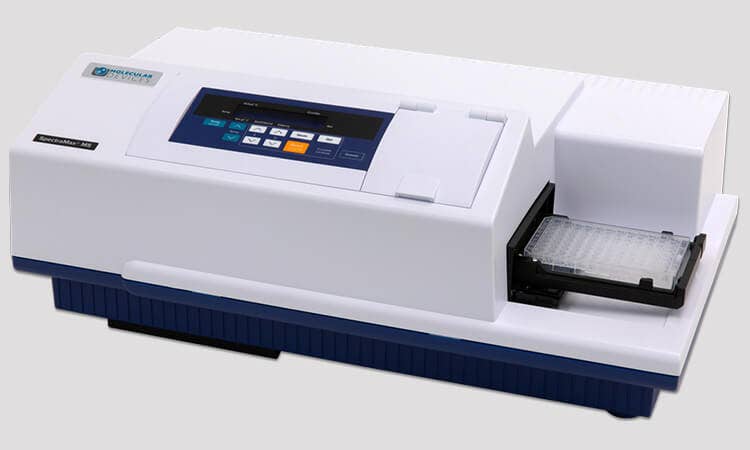
SpectraMax® M Series Multi-Mode Microplate Readers
Chosen as a complementary second option because it is a multi-mode microplate reader for absorbance, fluorescence and luminescence assays across many plate formats, also directly relevant to cytotoxicity assays methods applications.
Membrane Integrity Assays
Membrane integrity assays detect loss of plasma membrane function, a hallmark of late-stage cell death.
- Lactate dehydrogenase (LDH) release assay measures the release of intracellular LDH into the supernatant, providing a quantitative and non-destructive readout of cytotoxicity13
- Dye exclusion methods (Trypan Blue, propidium iodide) assess membrane permeability by allowing dyes to enter damaged cells14
Because membrane disruption occurs late in the cell death process, these assays are best suited for quantifying irreversible cytotoxicity. Some formats also support real-time monitoring, particularly when combined with kinetic sampling or imaging platforms.
Apoptosis and Necrosis Detection Assays
These assays are designed to differentiate between programmed and non-programmed cell death pathways, providing mechanistic insight beyond simple viability measurements.
- Caspase activation assays detect the activity of key proteases involved in apoptosis, serving as early indicators of programmed cell death.15
- Annexin V/PI dual staining is a widely used dual-label approach. Annexin V detects early apoptotic cells through phosphatidylserine exposure, while PI identifies cells with compromised membranes, enabling distinction between viable, apoptotic and necrotic populations.16
Such assays are critical for understanding a compound's mechanism of action, particularly in therapeutic development, where the mode of cell death can influence efficacy and safety.
Specialized Assays for Specific Applications
Certain experimental contexts require more specialized approaches to cytotoxicity assessment.
- Clonogenic survival assays evaluate the long-term proliferative capacity of cells following treatment, making them particularly valuable for radiation and oncology studies17
- High-content imaging-based cytotoxicity assays combine fluorescence microscopy with automated image analysis to capture multiple cellular parameters simultaneously, such as morphology, viability and subcellular changes18
- 3D cell culture and spheroid viability testing capture gradients in oxygen, nutrients and drug penetration in physiologically relevant systems, providing cytotoxicity insights overlooked in 2D models19
- Flow cytometry-based assays allow multi-parameter analysis at the single-cell level, enabling detailed characterization of heterogeneous populations and complex cytotoxic responses20
Cytotoxicity Testing: From Protocol Design to Data Analysis
Experimental Design Considerations
Robust cytotoxicity data starts with thoughtful experimental design, involving the following considerations:
Cell line selection should reflect the biological context of interest and cells should be authenticated and routinely checked for contamination to ensure consistency. This step is critical, as different cell types can respond very differently to the same compound. Furthermore, appropriate positive and negative controls should be selected to evaluate assay performance and the incubation time should be optimized based on the expected mechanism of action, as early and late cytotoxic events may differ significantly. Researchers should also implement dose-response curves for quantitative evaluation of compound potency and cytotoxicity across a relevant concentration range. Finally, sufficient biological and technical replication ensures statistical power and confidence in the results.1
Critical Quality Control Measures
Maintaining assay quality requires careful control of both technical and environmental variables. Key validation parameters include sensitivity, specificity and reproducibility, which together define assay reliability. Additionally, in plate-based assays, uniformity across wells is essential, as edge effects from evaporation or temperature gradients can introduce systematic bias. Consistent environmental conditions (temperature, CO₂, humidity) should also be established during incubation to ensure stable cell behavior. Further attention should be given to reagent quality, preparation and storage, as degradation or variability can directly impact assay performance and data consistency.12
Data Interpretation and Analysis
Accurate interpretation of cytotoxicity data relies on appropriate normalization and quantitative analysis. IC₅₀ values are commonly used to describe the concentration at which a compound reduces viability by 50%, providing a standardized measure of potency.21
Assay performance can be evaluated using metrics such as the Z′-factor, which reflects signal separation and control variability. Proper normalization strategies, typically using defined low and high controls, are essential for meaningful comparisons across conditions.21
Common pitfalls in data analysis for cytotoxicity assays include high background signal, limited dynamic range and misinterpretation of cytostatic versus cytotoxic effects. These issues can be minimized through careful experimental design, appropriate controls and, where needed, complementary assays to validate findings.22
Applications of Cytotoxicity Assays Across Research and Development
Cytotoxicity assays serve as a critical bridge between preclinical development and real-world application, translating in vitro findings into actionable insights across research, industry and clinical development. Their versatility allows them to be applied at multiple stages of the pipeline, from early discovery to regulatory testing and advanced therapeutic evaluation.
Drug Discovery and Development
Cytotoxicity assays are fundamental to early-stage compound screening, where they support hit identification by rapidly flagging compounds with desirable or undesirable effects on cell viability.23 During lead optimization, these assays help establish structure–activity relationships (SAR) and refine compound potency and selectivity.24 Researchers also employ cytotoxicity assays to define the therapeutic window and perform selectivity profiling by comparing effects in target versus normal cell lines. These methods help establish the optimum balance between efficacy and toxicity.25
In oncology workflows, cytotoxicity assays are integrated throughout the entire drug development pipeline, supporting both decision-making and mechanistic understanding. During early discovery, they are used in high-throughput screening to identify compounds that selectively reduce cancer cell viability while sparing normal cells. In mechanism-of-action studies, cytotoxicity assays are paired with pathway-specific readouts, such as caspase activation, cell cycle analysis or DNA damage markers, to determine how compounds induce apoptosis, necrosis or other forms of regulated cell death at the molecular level. 23,26
Biopharmaceutical Quality Control
In biopharmaceutical settings, cytotoxicity assays support batch release testing, ensuring the consistency and safety of biologics. They are also used during process development and optimization, where changes in manufacturing conditions must be evaluated for impact on product quality.27,28
For biosimilars, cytotoxicity assays support comparability studies by confirming functional equivalence to reference products. Additionally, they can play a role in adventitious agent testing, helping detect unintended cytotoxic contaminants.29
Toxicology and Safety Assessment
Beyond pharmaceutical development programs, cytotoxicity assays are widely used in environmental toxicology to assess the impact of pollutants and chemicals on cellular systems. They can also be applied in cosmetic and chemical safety testing, particularly in regions where animal testing is restricted.30
Academic and Basic Research Applications
In academic research, cytotoxicity assays are used to investigate cellular stress responses, including oxidative stress, DNA damage and metabolic disruption. They are also central to studies of disease mechanisms, where cell death pathways play a key role.31
Emerging Applications
The applications of cytotoxicity assays extend to nanoparticle biocompatibility, evaluation of gene therapy vectors and the development of immunotherapies, where cytotoxic effects on target and non-target cells must be carefully characterized.22,32 Their versatility also makes them ideal for integration into translational research and precision medicine, where individual cytotoxicity profiles of patient-derived samples help inform personalized treatment strategies.33
Optimizing Cytotoxicity Assays for Modern Research Challenges
Automation and High-Throughput Screening
Modern cytotoxicity workflows increasingly rely on automation and scalable formats to meet the demands of large compound libraries and complex study designs. To that end, integration with liquid-handling robotics improves precision, reduces variability and enables consistent reagent dispensing across plates. Complementing this, assays are routinely miniaturized to 384- and 1536-well formats, increasing throughput while reducing reagent costs and sample consumption. These shifts are paired with robust data management and analysis pipelines, which handle large datasets, automate quality control checks and streamline hit identification.34
Collectively, automation and high-throughput screening methods improve cost-efficiency, balancing upfront investment in instrumentation with long-term gains in speed, reproducibility and reduced manual intervention.
Multi-Parameter and Multiplexed Approaches
Single-readout assays often provide only a partial view of cytotoxic effects, especially when multiple mechanisms and pathways cooperate. Multi-parameter and multiplexed approaches address this by combining complementary measurements, such as viability, cytotoxicity and apoptosis, within the same well. This strategy supports kinetic monitoring, allowing researchers to track how cellular responses evolve rather than relying on a single endpoint. It also facilitates integrating morphological data from imaging workflows with biochemical readouts, offering a more holistic understanding of cell state. These combinatorial approaches are particularly valuable for comprehensive toxicity profiling, helping distinguish between cytostatic effects, early stress responses and irreversible cell death.35
Emerging Technologies and Trends
Other technologies incorporated into cytotoxicity assessment include:
- Artificial intelligence and machine learning facilitate pattern recognition across high-dimensional datasets and improve predictive modeling of cytotoxicity36
- Label-free, impedance-based systems, which monitor changes in cell adhesion and morphology in real time, provide continuous, non-invasive readouts of cell health37
- Organoid and microphysiological systems (organ-on-chip models) that offer physiologically relevant microenvironments38
Essential Considerations for Cytotoxicity Testing Success
The use of validated reagents, assay kits, media and standardized handling protocols to reduce variability across experiments. Successful cytotoxicity testing depends on the following:1
- Instrumentation requirements: Microplate readers (absorbance, fluorescence or luminescence), microscopes for imaging-based assays and flow cytometers for multi-parameter analysis must be properly calibrated and matched to the assay format.
- Quality assurance in research tools: Performing QC on reagent storage, batch-to-batch consistency and instrument performance helps prevent deviations in assay performance. These measures are essential for generating reliable, reproducible data.
- Reproducibility across laboratories and experiments: Careful documentation, use of controls and adherence to standardized workflows support consistent outcomes and facilitate cross-study comparisons.
- Integration with laboratory workflows: Integrating automation, data management systems and compatible assays helps ensure that cytotoxicity testing can be scaled and incorporated efficiently into broader research and development pipelines.
See how Danaher Life Sciences can help
FAQ's
What is a cytotoxicity assay and what does it measure?
A cytotoxicity assay measures cell damage or death in response to a compound. Readouts include metabolic activity, ATP levels or membrane integrity.
When should cytotoxicity testing be performed in the development workflow?
Cytotoxicity testing is used throughout development, from early screening to lead optimization and safety assessment, to evaluate potency, selectivity and toxicity.
Which cytotoxicity assays are most relevant for oncology drug screening versus general toxicity?
Oncology uses multi-parameter assays (viability, apoptosis, LDH) to assess killing and mechanism. General toxicity relies on robust viability assays for broad safety profiling.
What are membrane-integrity assays and when should they be used?
They detect loss of membrane integrity (e.g., LDH release), indicating late-stage cell death. They are best for confirming irreversible cytotoxicity.
Can cytotoxicity assays be used with 3D cultures or primary cells?
Yes, with optimization. They support physiologically relevant models and longitudinal monitoring.
References
- Khalef L, Lydia R, Filicia K, Moussa B. Cell viability and cytotoxicity assays: Biochemical elements and cellular compartments. Cell Biochem Funct 2024;42(3):e4007.
- Singh P, Lim B. Targeting apoptosis in cancer. Curr Oncol Rep 2022;24(3):273-284.
- Tonnus W, Belavgeni A, Beuschlein F, Eisenhofer G, Fassnacht M, Kroiss M, et al. The role of regulated necrosis in endocrine diseases. Nat Rev Endocrinol 2021;17(8):497-510.
- Debnath J, Gammoh N, Ryan KM. Autophagy and autophagy-related pathways in cancer. Nat Rev Mol Cell Biol 2023;24(8):560-575.
- Seo J, Nam YW, Kim S, Oh D-B, Song J. Necroptosis molecular mechanisms: Recent findings regarding novel necroptosis regulators. Exp Mol Med 2021;53(6):1007-1017.
- Broz P. Pyroptosis: molecular mechanisms and roles in disease. Cell Res 2025;35(5):334-344.
- Dixon SJ, Olzmann JA. The cell biology of ferroptosis. Nat Rev Mol Cell Biol 2024;25(6):424-442.
- Sazonova EV, Petrichuk SV, Kopeina GS, Zhivotovsky B. A link between mitotic defects and mitotic catastrophe: detection and cell fate. Biol Direct 2021;16(1):25.
- Rudd SG. Targeting pan-essential pathways in cancer with cytotoxic chemotherapy: challenges and opportunities. Cancer Chemother Pharmacol 2023;92(4):241-251.
- Ghasemi M, Turnbull T, Sebastian S, Kempson I. The MTT assay: utility, limitations, pitfalls, and interpretation in bulk and single-cell analysis. Int J Mol Sci 2021;22(23):12827.
- Ley‐Ngardigal S, Bertolin G. Approaches to monitor ATP levels in living cells: where do we stand? The FEBS journal 2022;289(24):7940-7969.
- Petiti J, Revel L, Divieto C. Standard operating procedure to optimize resazurin-based viability assays. Biosensors 2024;14(4):156.
- Zhou Y, Qi M, Yang M. Current status and future perspectives of lactate dehydrogenase detection and medical implications: a review. Biosensors 2022;12(12):1145.
- Ligasová A, Koberna K. DNA dyes—highly sensitive reporters of cell quantification: comparison with other cell quantification methods. Molecules 2021;26(18):5515.
- Tong J, Rufli S, Wong WW-L. Measuring caspase activity using a fluorometric assay or flow cytometry. JoVE (Journal of Visualized Experiments) 2023(193):e64745.
- Kumar R, Saneja A, Panda AK. An annexin V-FITC—propidium iodide-based method for detecting apoptosis in a non-small cell lung cancer cell line. Lung Cancer: Methods and Protocols: Springer; 2021:213-223.
- Serrano-Mendioroz I, Garate-Soraluze E, Rodriguez-Ruiz ME. A simple method to assess clonogenic survival of irradiated cancer cells. Methods Cell Biol: Elsevier; 2023:127-136.
- Ewald JD, Titterton KL, Bäuerle A, Beatson A, Boiko DA, Cabrera ÁA, et al. Cell painting for cytotoxicity and mode-of-action analysis in primary human hepatocytes. Cell Syst 2026.
- Takahashi Y, Inoue Y, Sato S, Okabe T, Kojima H, Kiyono H, et al. Drug cytotoxicity screening using human intestinal organoids propagated with extensive cost-reduction strategies. Sci Rep 2023;13(1):5407.
- Wu X, Zhang Y, Li Y, Schmidt‐Wolf IG. Improvements in Flow Cytometry‐Based Cytotoxicity Assay. Cytometry Part A 2021;99(7):680-688.
- de Souza IR, Sivek TW, de Oliveira JBV, Canavez ADPM, de Albuquerque Vita N, Schuck DC, et al. Cytotoxicity assays with zebrafish cell lines. JoVE (Journal of Visualized Experiments) 2023(191):e64860.
- Kiesgen S, Messinger JC, Chintala NK, Tano Z, Adusumilli PS. Comparative analysis of assays to measure CAR T-cell-mediated cytotoxicity. Nat Protoc 2021;16(3):1331-1342.
- Chaudhry G, Zeenia, Safdar N, Begum S, Akim A, Sung Y, et al. Cytotoxicity assays for cancer drug screening: methodological insights and considerations for reliable assessment in drug discovery. Braz J Biol 2024;84:e284409.
- Ziemba B. Advances in cytotoxicity testing: from in vitro assays to in silico models. Int J Mol Sci 2025;26(22):11202.
- Ali SA, Helmy HI, Gaber MH. Comparative in vitro cytotoxicity of free curcumin and a liposomal curcumin formulation on various human cancer cell lines. Sci Rep 2026.
- Forgie BN, Prakash R, Goyeneche AA, Telleria CM. Vitality, viability, long-term clonogenic survival, cytotoxicity, cytostasis and lethality: what do they mean when testing new investigational oncology drugs? Discov Oncol 2024;15(1):5.
- Choi H, Ho M, Adeniji OS, Giron L, Bordoloi D, Kulkarni AJ, et al. Development of Siglec-9 blocking antibody to enhance anti-tumor immunity. Front Oncol 2021;11:778989.
- Ryan SM, Ruscher R, Johnston WA, Pickering DA, Kennedy MW, Smith BO, et al. Novel antiinflammatory biologics shaped by parasite–host coevolution. PNAS 2022;119(36):e2202795119.
- Bharali P, Chand S, Chander H. A Cost-Effective and Robust Cell-Based Bioassay Method for Evaluating the Bioactivity of Trastuzumab-like Antibodies. Biomedicines 2024;13(1):23.
- Viegas C, Pena P, Gomes B, Dias M, Aranha Caetano L, Viegas S. Are in vitro cytotoxicity assessments of environmental samples useful for characterizing the risk of exposure to multiple contaminants at the workplace? A systematic review. Toxics 2022;10(2):72.
- Shekhawat KS, Bhatia P, Bhatnagar K, Shandilay S, Chaudhary S. Roadmap to cytotoxicity: exploring assays and mechanisms. Assay Drug Dev Technol 2025;23(5):217-236.
- Frigaard J, Jensen JL, Galtung HK, Hiorth M. The potential of chitosan in nanomedicine: an overview of the cytotoxicity of chitosan based nanoparticles. Front Pharmacol 2022;13:880377.
- du Puch CBM, Vanderstraete M, Giraud S, Lautrette C, Christou N, Mathonnet M. Benefits of functional assays in personalized cancer medicine: More than just a proof-of-concept. Theranostics 2021;11(19):9538.
- Eder KM, Marzi A, Wågbø AM, Vermeulen JP, de la Fonteyne-Blankestijn LJ, Rösslein M, et al. Standardization of an in vitro assay matrix to assess cytotoxicity of organic nanocarriers: a pilot interlaboratory comparison. Drug Deliv Transl Res 2022;12(9):2187-2206.
- Sandström N, Carannante V, Olofsson K, Sandoz PA, Moussaud-Lamodière EL, Seashore-Ludlow B, et al. Miniaturized and multiplexed high-content screening of drug and immune sensitivity in a multichambered microwell chip. Cell Rep Methods 2022;2(7).
- Serioli L, Gruzinskyte L, Zappalà G, Te Hwu E, Laksafoss TZ, Jensen PL, et al. Moving perfusion culture and live-cell imaging from lab to disc: proof of concept toxicity assay with AI-based image analysis. Lab on a Chip 2023;23(6):1603-1612.
- Lisby AN, Carlson RD, Baybutt TR, Weindorfer M, Snook AE. Evaluation of CAR-T cell cytotoxicity: Real-time impedance-based analysis. Methods Cell Biol: Elsevier; 2022:81-98.
- Subedi N, Van Eyndhoven LC, Hokke AM, Houben L, Van Turnhout MC, Bouten CV, et al. An automated real-time microfluidic platform to probe single NK cell heterogeneity and cytotoxicity on-chip. Sci Rep 2021;11(1):17084.