Biomarker Assay Development: Design, Validation, Multiplexing and Optimization

A biomarker assay is only as valuable as the decisions its data can support. Even technically precise measurements may be misleading if the assay format, sample matrix, detection technology or analytical performance requirements do not match the intended use. Effective development, therefore, begins by defining the biological question and downstream application, then designing, optimizing and validating the assay to meet those needs. This guide examines the critical choices involved, including platform selection, multiplexing, performance evaluation and fit-for-purpose validation.
Key Takeaways
- Define the intended use early: The purpose of the assay determines its required performance characteristics and validation strategy
- Match the platform to the biomarker: Consider biomarker characteristics, sample matrix, sensitivity, specificity, throughput and available sample volume when selecting an assay technology
- Optimize before validating: Establish robust assay conditions and address issues such as matrix interference, cross-reactivity and low biomarker abundance before formal validation
- Use multiplexing strategically: Multiplex assays can conserve samples and provide broader biological insight, but increasing the number of analytes can introduce additional performance and data-interpretation challenges
- Choose fit-for-purpose validation: Validation should provide appropriate evidence of assay performance for the decisions the resulting biomarker data will support
What Is Biomarker Assay Development?
Biomarker assay development is the process of designing, optimizing and evaluating an analytical method to measure a biomarker in a biological sample. The goal of a biomarker assay is to generate measurements that are accurate, specific and reproducible. The developed assay may be used for several purposes, from exploring potential biomarkers to generating data for clinical and regulatory decision-making.1
Biomarker assays play different roles throughout the drug development pipeline, including identifying candidate biomarkers, supporting PK/PD studies, monitoring target engagement, patient stratification and evaluating treatment response. Because of this diversity, not all biomarker assays require the same level of development or validation. In general, exploratory assays, typically used during early research to investigate candidate biomarkers, have less stringent performance requirements. In contrast, a fit-for-purpose assay is developed and evaluated according to the strict requirements of its specific context of use.1
Regardless of its purpose, an assay must undergo a predefined, documented assessment demonstrating its performance to be considered validated. The appropriate assessment strategy ultimately depends on the biomarker, sample type, analytical platform and, most importantly, the intended application of the resulting data.1
Why Assay Design Matters
Assay design is a critical determinant of whether a biomarker measurement is reliable and meaningful. A well-designed assay must be capable of detecting the biomarker of interest while minimizing analytical variability and interference. Key considerations include analytical performance, matrix effects and signal-to-noise, all of which can influence the quality and interpretability of the resulting data.2
Analytical performance describes how reliably an assay measures its target. Characteristics such as accuracy, precision, sensitivity, specificity, selectivity, dynamic range and reproducibility are essential for distinguishing between genuine biological variation and analytical variability. For example, an assay with insufficient sensitivity may fail to differentiate low biomarker concentrations from background, while poor precision can make relatively small changes difficult to capture.2
Reliable analytical performance also depends on the sample environment. Blood, plasma, serum, tissue and urine contain components that can suppress or enhance biomarker signals, leading to inaccurate results. Assay design should therefore test how the intended matrix affects biomarker recovery and detection.3
Even when matrix effects are controlled, weak separation between the target signal and the background can limit performance. Poor signal-to-noise reduces sensitivity and increases uncertainty, particularly at low concentrations. Adjusting reagents, detection conditions, sample preparation and other assay parameters can improve that separation.4
These factors directly affect data quality and downstream decision-making. If an assay produces inconsistent or biased measurements, apparent changes in biomarker levels may be mistaken for biological effects or genuine changes may be missed, ultimately influencing critical decisions throughout development.
Designing around the downstream application reduces the risk that these analytical limitations surface late in development. Clear study objectives allow teams to set appropriate performance requirements and focus development and validation on the characteristics that matter most.
Biomarker Assay Design Considerations
Effective assay design begins by defining the decision that the biomarker data must support. The intended use, such as exploratory research, pharmacodynamic assessment, patient stratification or clinical decision-making, determines the required analytical performance and level of validation. Establishing design requirements before selecting an assay format or platform reduces the risk of costly redevelopment later. Once it is defined, calibration must be aligned to support it.
- Biomarker characteristics: Evaluate expected abundance, stability, molecular properties, biological variability and potential interferents.
- Sample matrix and volume: Select the matrix in which the biomarker is biologically informative and sufficiently stable and confirm that the available sample volume supports reliable measurement. Evaluate matrix effects, collection methods, handling and storage early.
- Assay format and detection technology: Match the platform to the biomarker, matrix, sensitivity, specificity, throughput, multiplexing needs and intended use. Options may include immunoassays, nucleic acid–based methods, flow cytometry and mass spectrometry.1,2,5,6
- Reagents: Select antibodies, affinity reagents, enzymes, probes, calibrators and other materials that provide adequate selectivity, stability and lot-to-lot consistency.7,8
- Controls and calibration: Establish positive, negative and blank controls to monitor assay performance. Use appropriate calibrators and a standard curve to relate the analytical signal to the biomarker concentration.2,3
- Analytical performance requirements: Define acceptance criteria for sensitivity, specificity, accuracy, precision, selectivity, dynamic range and reproducibility according to the intended use.9,10
- Operational requirements: Consider throughput, turnaround time, scalability, operator variability and the need to transfer the assay across runs, laboratories or later-stage studies.
Aligning these elements creates a practical design framework for optimization and fit-for-purpose validation.
Biomarker Assay Development Workflow
Biomarker assay development involves a series of interconnected steps, from identifying a candidate biomarker to generating and interpreting reliable data.
Biomarker Identification
The process begins by identifying a biomarker candidate with potential value for a research or clinical application. Candidates may include proteins, peptides, metabolites, nucleic acids, cells or other measurable biological characteristics associated with disease, treatment response or pharmacodynamic activity.2
Defining the Intended Use
The intended use informs what the assay will measure and what decisions its results will support. This may include exploratory research, target engagement, pharmacodynamic assessment, patient stratification or treatment-response monitoring. The intended use helps establish the assay's required performance and guides subsequent development decisions.2
Selecting Sample Types
The appropriate biological matrix depends on where the biomarker can be detected and what information it can reveal regarding the biological process of interest. Common sample types include:
- Plasma: Commonly used for circulating biomarkers11
- Serum: Frequently used for measuring circulating biomarkers, although its composition differs from plasma11
- Whole blood: Useful for biomarkers associated with blood cells or soluble blood components12
- Tissue: Can provide information about biomarkers localized within specific tissues or tumors13
- Urine: A noninvasive matrix suitable for biomarkers that are filtered or excreted by the kidneys14
- Saliva: Enables minimally invasive collection for selected biomarkers15
- Cerebrospinal fluid (CSF): Can provide information about biomarkers associated with the central nervous system16
Sample collection, handling and storage should be carefully standardized because these preanalytical factors can affect biomarker stability and assay performance.
Selecting Detection Technologies
Detection technology should be matched to the biomarker, sample matrix, required sensitivity, throughput and intended use. Options may include immunoassays, PCR-based methods, sequencing, flow cytometry and mass spectrometry, among other analytical platforms.1
Assay Design
Translate the predefined requirements into an assay configuration by selecting the format, platform, reagents, controls, calibrators and operating conditions. The design should support the intended application and provide a practical basis for subsequent optimization and validation.1
Optimization
Assay conditions should be systematically adjusted to improve performance and address issues such as background signal, matrix interference, sensitivity and variability. Optimization may involve modifying reagent concentrations, incubation conditions, sample preparation or other protocol parameters.1
Analytical Validation
The optimized assay is evaluated against predefined acceptance criteria appropriate to its intended use. Depending on the application, validation may assess accuracy, precision, specificity, sensitivity, selectivity, linearity, range, stability and reproducibility.1
Data Interpretation
Interpretation connects analytical performance to biological meaning. Results should be evaluated in the context of sample quality and biological variability, then integrated with clinical, pharmacological or other experimental findings to determine their relevance to the broader development pipeline.
This progression is rarely linear. Findings from optimization or validation often reveal the need to revisit assay design, reagents, controls or sample preparation.1
Selecting the Right Assay Platform
Platform selection should balance value from minimal sample use with analytical value. The appropriate choice depends on biomarker characteristics, sample matrix, required performance, throughput and intended use. The following platforms offer distinct advantages and trade-offs for biomarker measurement.
See how Danaher Life Sciences can help
Multiplexing in Biomarker Workflows
A single biomarker may not capture the complexity of a disease state or treatment response. Multiplex assays address that limitation by measuring multiple biomarkers in a single sample, conserving material while providing a broader view of pathways, immune responses, disease states or treatment effects.20
That broader coverage comes with added design complexity. Each biomarker must be assessed for biological relevance, expected concentration range, sample requirements, assay compatibility and downstream data use. Adding analytes offers little value if it compromises performance.20
Cross-reactivity is one consequence of placing multiple analytes in the same assay. Reagents and assay conditions should be tested to confirm that detecting one biomarker does not materially affect the measurement of another.21
Concentration differences create a separate constraint: biomarkers in the same panel may span very different abundance ranges. The assay must retain accurate quantification at both the low and high ends of that range.17
The challenge continues after measurement. Multiplex datasets require consistent normalization and quality-control procedures to manage technical variation across samples, plates and analytical runs and support meaningful comparisons.17
Biomarker Assay Development and Validation
Development and validation are related, but they answer different questions. Development creates and optimizes a method to reliably measure the biomarker; validation demonstrates that the method performs consistently and is suitable for its intended use. The table below summarizes the distinction.1
The main difference between development and validation is that validation should be fit for purpose, meaning the extent and type of validation should reflect how the assay will be used in research and clinical environments. The purpose of the assay also informs the extent of validation required. An exploratory assay may demand less extensive characterization than an assay used for patient selection, clinical decision-making or regulatory submissions.22
Custom Biomarker Assay Development
Commercial kits can shorten design, development and optimization timelines, but they may not meet the needs of novel targets, uncommon matrices, low-abundance biomarkers or specialized workflows. When the available configuration does not fit the analytical need, a custom assay can be built around the specific biomarker, sample type and research application.23
A custom design allows scientists to tailor detection technologies, sample preparation protocols and analytical parameters to their workflow. This flexibility can be especially important for studies where standard assay configurations may limit the types or number of biomarkers that can be measured.23
Choosing a Biomarker Assay Development Lab
When in-house teams lack the resources or specialized expertise for extensive assay development, an external laboratory can provide the required capabilities. The choice should depend on more than capacity alone; scientific fit, systems, troubleshooting expertise and collaborative support all influence whether the resulting assay will meet study requirements. high-quality, efficient and reliable assays. Key factors include:
- Scientific expertise and method optimization: Evaluate experience with the relevant biomarker, sample matrix and detection technology, as well as the laboratory’s ability to optimize methods for specific study requirements
- Quality control and assay troubleshooting: Confirm that the laboratory maintains robust quality-control processes and can identify and resolve assay performance issues
- Collaborative support: Assess whether the laboratory provides continuity from initial assay design through validation and data analysis, rather than assay output alone
Common Challenges and How to Address Them
Biomarker assay development can present analytical challenges that affect performance and data interpretation. Addressing these issues early can improve reliability and reduce the need for repeated development. Common challenges and response strategies include:24
- Low-abundance biomarkers: Improve detection by optimizing assay sensitivity and sample preparation while maintaining an acceptable signal-to-noise ratio
- Matrix interference: Evaluate the effects of the biological matrix and adjust sample preparation, dilution or assay conditions accordingly
- Cross-reactivity: Select and test reagents to prevent structurally related molecules from producing nonspecific signals
- Reproducibility across runs and lots: Use standardized procedures, appropriate controls and well-characterized reagents to reduce variation across runs, lots, operators and laboratories
- Data interpretation across multiple analytes: Apply consistent quality-control, normalization and data-processing procedures to support reliable comparisons across complex datasets
Applications in Modern Research
Biomarker assays connect biological measurements with disease mechanisms, treatment response and patient outcomes across research and drug development. Common applications include:
- Candidate biomarker identification: Identify biomarkers associated with normal or diseased states, treatment response or resistance25
- Translational research: Connect preclinical findings with human-centered clinical research26
- Pharmacodynamic monitoring: Measure biological changes after treatment to assess target engagement, immunogenicity or toxicity27
- Patient stratification: Identify patient subgroups based on biomarker profiles to support treatment selection28
- Diagnostics and precision medicine: Support disease detection, prognosis and treatment decisions, particularly in heterogeneous patient populations29
Feature Product
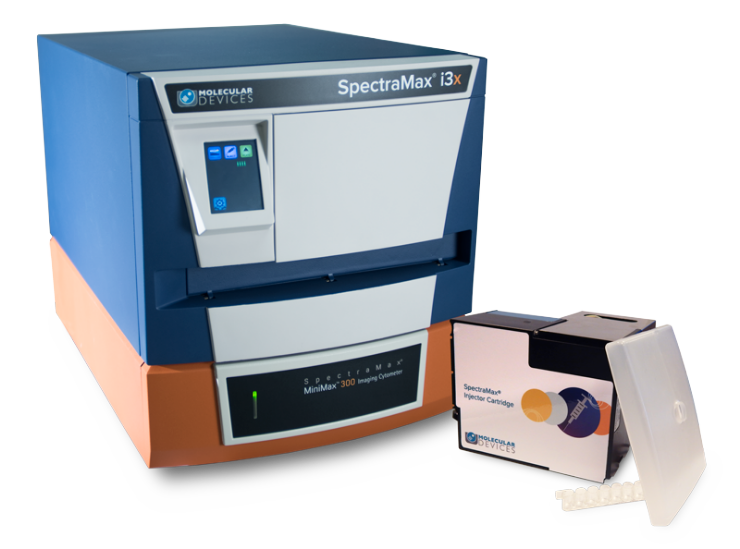
SpectraMax® i3x Multi-Mode Microplate Reader
The SpectraMax i3x Multi-Mode Microplate Reader performs absorbance, fluorescence and luminescence detection in a single instrument, with upgradeable detection cartridges for added assay formats. Read absorbance endpoints, fluorescent multiplex panels and luminescent assays on one platform, with SoftMax Pro software for curve fitting and data analysis.
Triple Quad™ 3500 LC-MS/MS System
The Triple Quad 3500 LC-MS/MS System delivers targeted quantification of small molecules and peptides with triple quadrupole selectivity across complex biological matrices. Robust, routine-ready operation supports high-volume quantitative workflows with consistent day-to-day performance.

See how Danaher Life Sciences can help
FAQ's
How long does biomarker assay development typically take?
Timelines vary depending on the biomarker, assay platform, sample matrix and level of optimization required. Simple assays may be developed within weeks, while complex or multiplex assays can take several months.
What factors influence the cost of biomarker assay development?
Costs depend on assay complexity, reagents, instrumentation, sample preparation, optimization, validation requirements and the number of samples or analytes involved. Custom or highly multiplexed assays may require additional development resources.
What is the difference between singleplex and multiplex biomarker assays?
Single-plex assays measure one biomarker at a time, whereas multiplex assays measure multiple biomarkers simultaneously. Multiplexing can conserve samples and provide broader biological insight, but may introduce additional assay complexity.
What are the most common reasons biomarker assays fail during development?
Common challenges include insufficient sensitivity, matrix interference, cross-reactivity, poor reproducibility, unstable reagents and inadequate assay design.
Can the same biomarker assay be used for multiple sample types?
Not necessarily. Assay performance can change between matrices, so additional optimization and characterization may be required for each sample type.
When should a biomarker assay be revalidated?
Revalidation may be needed after significant changes to the assay, such as changes to reagents, procedures, equipment, sample matrix or intended application.
References
- Ahmad A, Imran M, Ahsan H. Biomarkers as biomedical bioindicators: approaches and techniques for the detection, analysis, and validation of novel biomarkers of diseases. Pharmaceutics 2023;15(6):1630.
- Nakayasu ES, Gritsenko M, Piehowski PD, Gao Y, Orton DJ, Schepmoes AA, et al. Tutorial: best practices and considerations for mass-spectrometry-based protein biomarker discovery and validation. Nat Protoc 2021;16(8):3737-3760.
- Khamis MM, Adamko DJ, El‐Aneed A. Strategies and challenges in method development and validation for the absolute quantification of endogenous biomarker metabolites using liquid chromatography‐tandem mass spectrometry. Mass Spectrom Rev 2021;40(1):31-52.
- Backiyalakshmi G, Snekhalatha U, Salvador AL. Recent advancements in non-invasive wearable electrochemical biosensors for biomarker analysis–A review. Anal Biochem 2024;692:115578.
- Shoukat CA, Tariq M, Aqib RM, Tajwar MA, Iqbal R. Plasmonic ELISA for biomarker detection: a review of mechanisms, functionalization strategies, and emerging modalities. ACS Appl Bio Mater 2025;8(7):5512.
- Kulkarni MB, Ayachit NH, Aminabhavi TM. A short review on miniaturized biosensors for the detection of nucleic acid biomarkers. Biosensors 2023;13(3):412.
- Huang J, Wei F, Cui Y, Hou L, Lin T. Fluorescence immunosensor based on functional nanomaterials and its application in tumor biomarker detection. RSC Adv 2022;12(48):31369-31379.
- Ning B, Chen L, Youngquist BM, Lyon CJ, Su Y, Hu T. Direct delivery of assay reagents to extracellular vesicles in liquid biopsies for biomarker analysis. Nat Protoc 2026:1-31.
- Mandal S, Li Z, Chatterjee T, Khanna K, Montoya K, Dai L, et al. Direct kinetic fingerprinting for high-accuracy single-molecule counting of diverse disease biomarkers. Acc Chem Res 2021;54(2):388-402.
- Wang M, Liu H, Fan K. Signal amplification strategy design in nanozyme‐based biosensors for highly sensitive detection of trace biomarkers. Small Methods 2023;7(11):2301049.
- Sarhadi VK, Armengol G. Molecular biomarkers in cancer. Biomolecules 2022;12(8):1021.
- Li S, Zhang H, Zhu M, Kuang Z, Li X, Xu F, et al. Electrochemical biosensors for whole blood analysis: recent progress, challenges, and future perspectives. Chem Rev 2023;123(12):7953-8039.
- Sanguedolce F, Cormio A, Zanelli M, Zizzo M, Palicelli A, Falagario UG, et al. Diagnostic, prognostic, and predictive tissue biomarkers in urothelial carcinoma in situ: A narrative review. Diagnostics 2025;15(17):2163.
- Sequeira-Antunes B, Ferreira HA. Urinary biomarkers and point-of-care urinalysis devices for early diagnosis and management of disease: a review. Biomedicines 2023;11(4):1051.
- Dongiovanni P, Meroni M, Casati S, Goldoni R, Thomaz DV, Kehr NS, et al. Salivary biomarkers: novel noninvasive tools to diagnose chronic inflammation. Int J Oral Sci 2023;15(1):27.
- McGrowder DA, Miller F, Vaz K, Nwokocha C, Wilson-Clarke C, Anderson-Cross M, et al. Cerebrospinal fluid biomarkers of Alzheimer’s disease: current evidence and future perspectives. Brain Sci 2021;11(2):215.
- Ahsan H. Monoplex and multiplex immunoassays: approval, advancements, and alternatives. Comp Clin Path 2022;31(2):333-345.
- Pais MV, Forlenza OV, Diniz BS. Plasma biomarkers of Alzheimer’s disease: a review of available assays, recent developments, and implications for clinical practice. J Alzheimer's Dis Rep 2023;7(1):355-380.
- Zhang Y, Zhao Y, Cole T, Zheng J, Bayinqiaoge, Guo J, et al. Microfluidic flow cytometry for blood-based biomarker analysis. Analyst 2022;147(13):2895-2917.
- Li Z, Guo M, Zhong W. Multiplex detection of biomarkers empowered by nanomaterials. Precis Chem 2025;3(6):297.
- Japp NC, Souchek JJ, Sasson AR, Hollingsworth MA, Batra SK, Junker WM. Tumor Biomarker In‐Solution Quantification, Standard Production, and Multiplex Detection. J Immunol Res 2021;2021(1):9942605.
- Schuck RN, Sekar V. Use of biomarkers in drug development for regulatory purposes. Clin Transl Sci 2025;18(10):e70377.
- Thankamony SP, Liu R, Peterson JE, Santockyte R, Olah T, Zhang Y. Calibrator material selection: a key criteria during biomarker assay method development. Bioanalysis 2021;13(10):787-796.
- Purkayastha K, Dhar R, Pethusamy K, Srivastava T, Shankar A, Rath GK, et al. The issues and challenges with cancer biomarkers. J Cancer Res Ther 2023;19(Suppl 1):S20-S35.
- Cortese S, Solmi M, Michelini G, Bellato A, Blanner C, Canozzi A, et al. Candidate diagnostic biomarkers for neurodevelopmental disorders in children and adolescents: a systematic review. World Psychiatry 2023;22(1):129-149.
- Kim K-H, Yoo M, Choi MY, Yoo BC. A practical roadmap for clinical translation of metabolic biomarkers: A review. Int J Mol Sci 2026;27(4):2030.
- Fernández-Metzler C, Quadrini KJ, Amaravadi L, Cape S, Green J, Hays A, et al. Progress and promise of pharmacodynamic biomarkers: novel strategies and assay considerations in drug development. Bioanalysis 2026;18(1):91-109.
- Glaab E, Rauschenberger A, Banzi R, Gerardi C, Garcia P, Demotes J. Biomarker discovery studies for patient stratification using machine learning analysis of omics data: a scoping review. BMJ open 2021;11(12):e053674.
- Netala VR, Hou T, Wang Y, Zhang Z, Teertam SK. Cardiovascular biomarkers: tools for precision diagnosis and prognosis. Int J Mol Sci 2025;26(7):3218.