JavaScript is disabled in your browser. Please enable JavaScript to view this website.

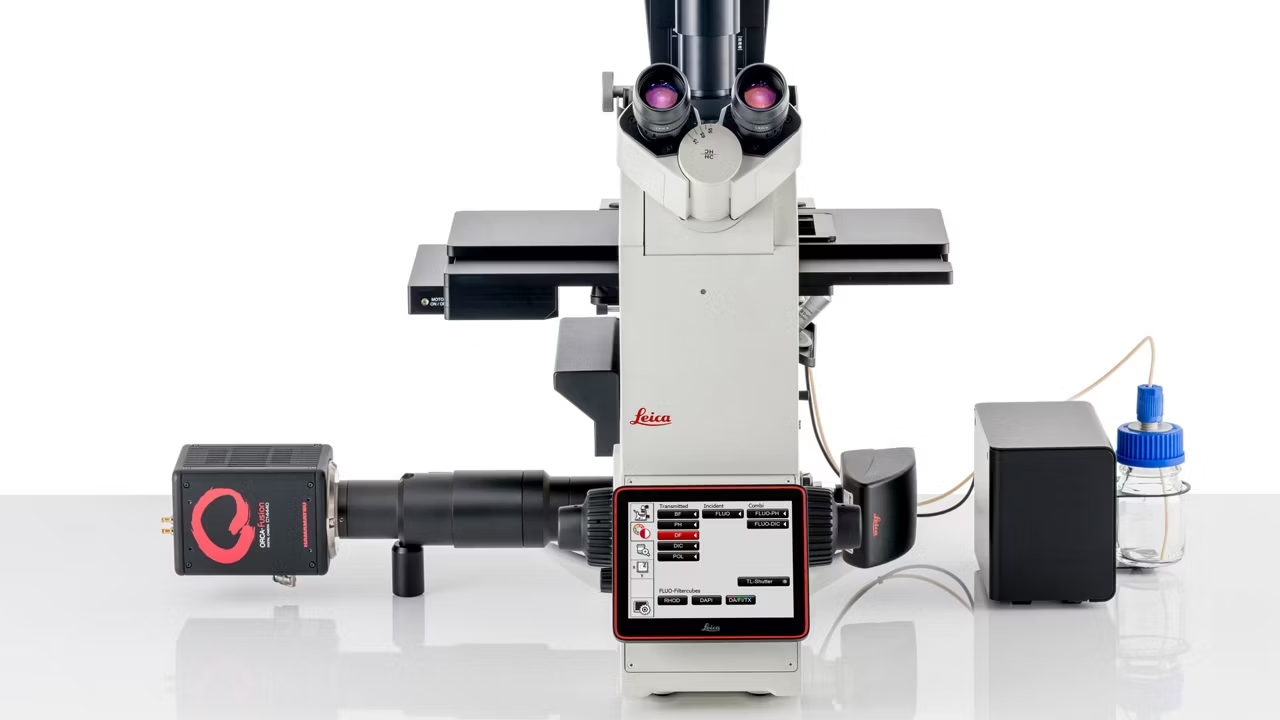
DMi8 S Inverted Microscope Solution
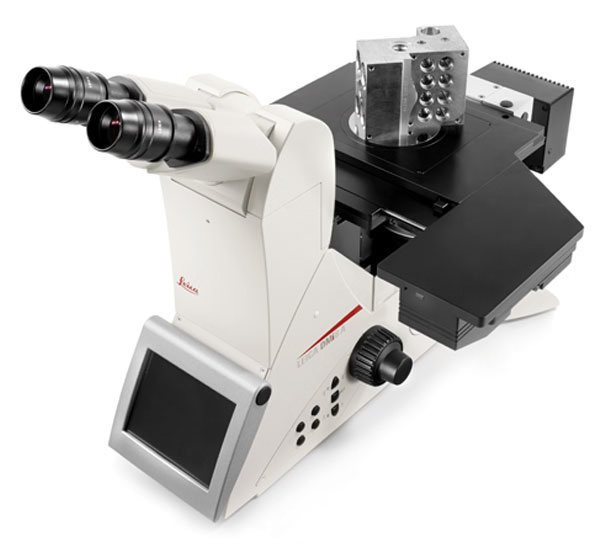
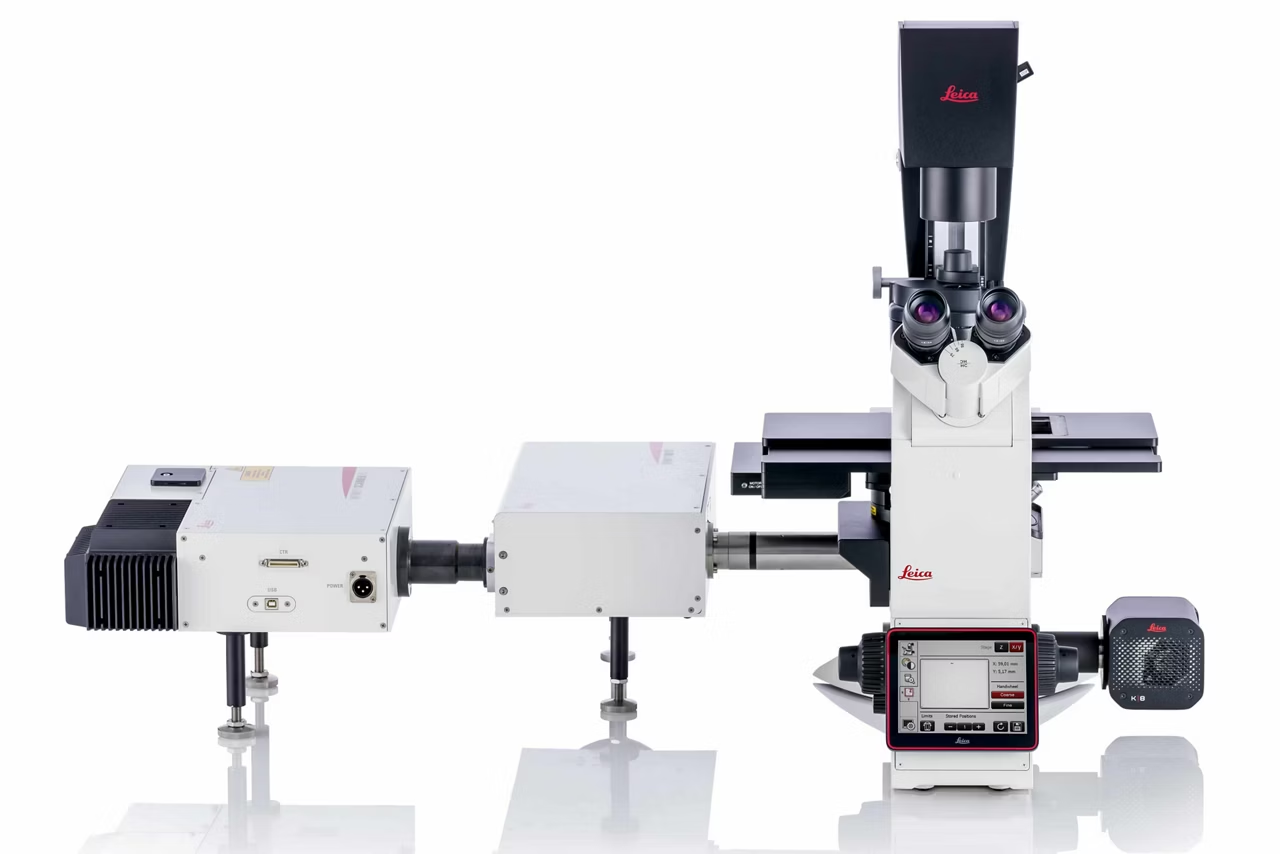
Leica Microsystems Dmi8 S Hero

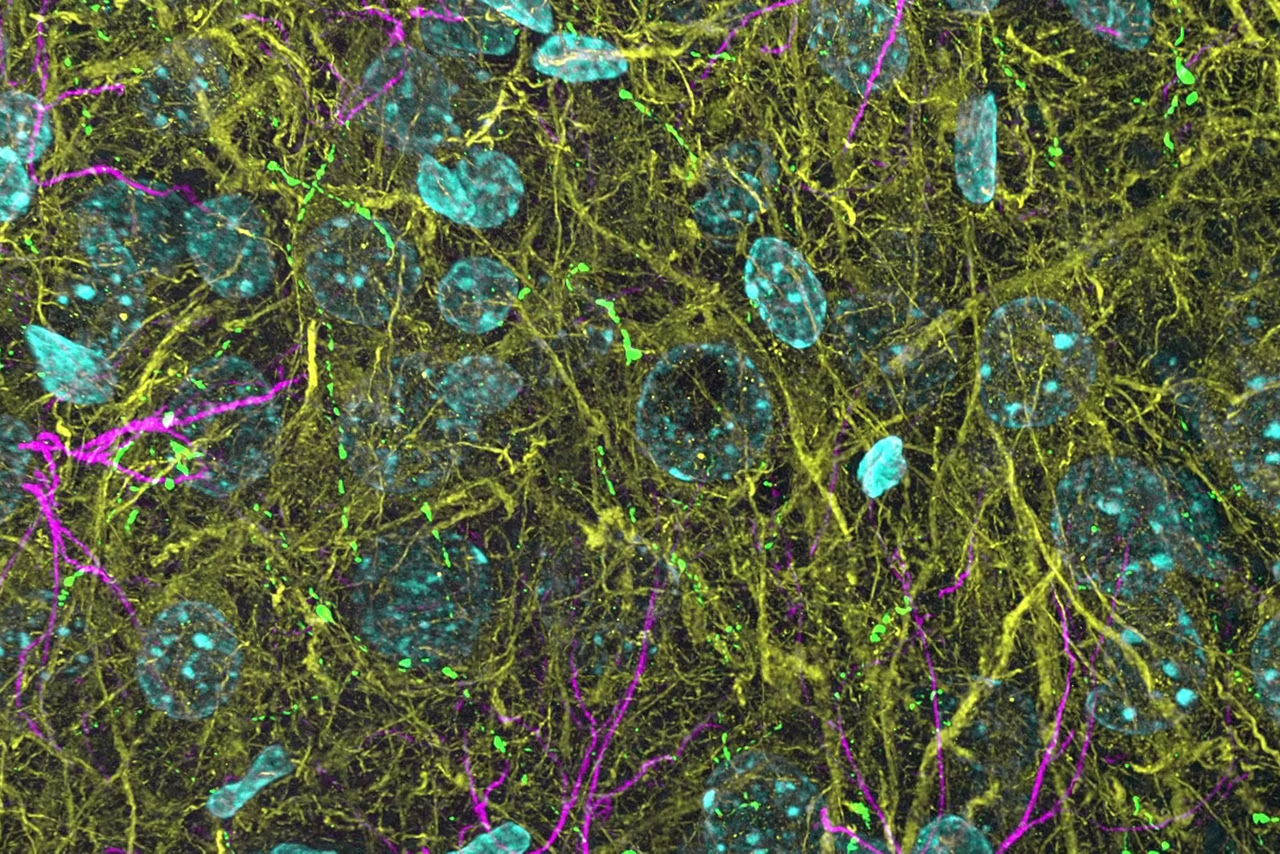
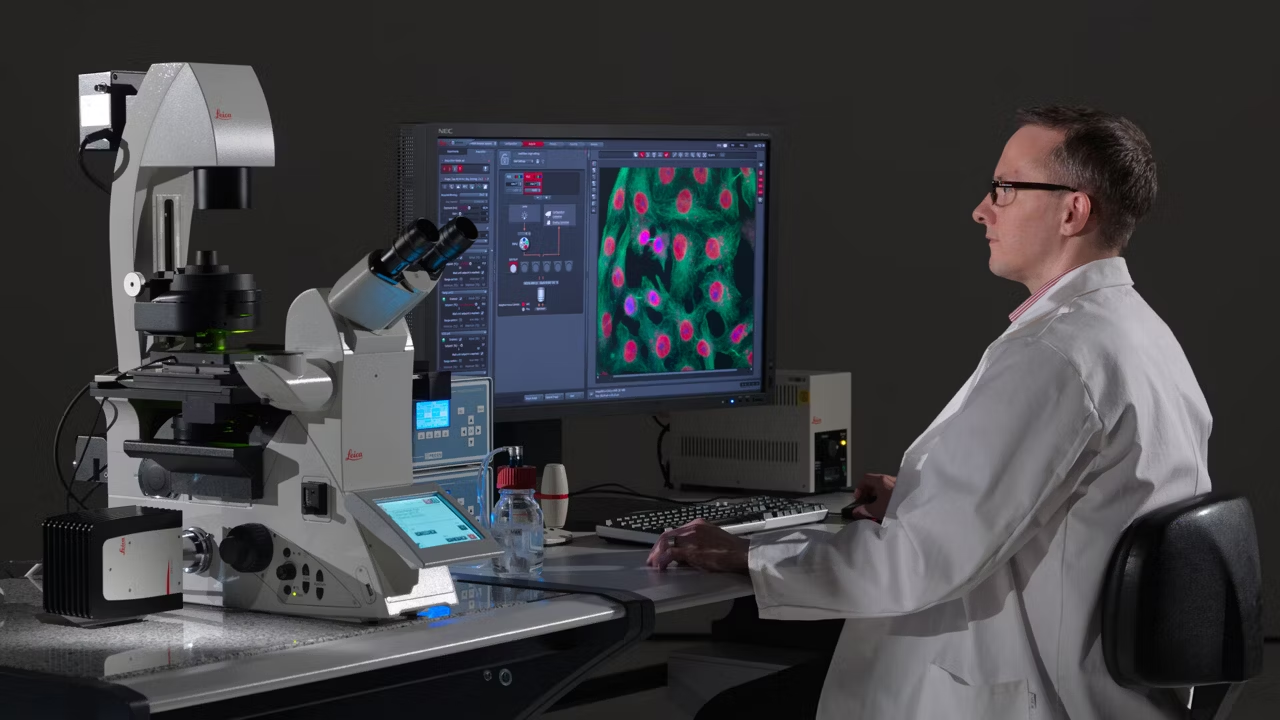
Leica Microsystems Dmi8 S Image1

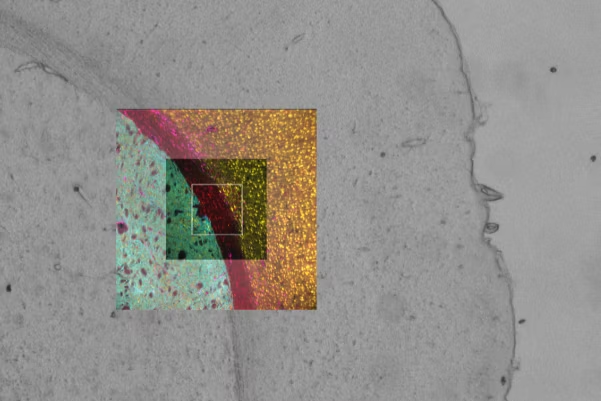
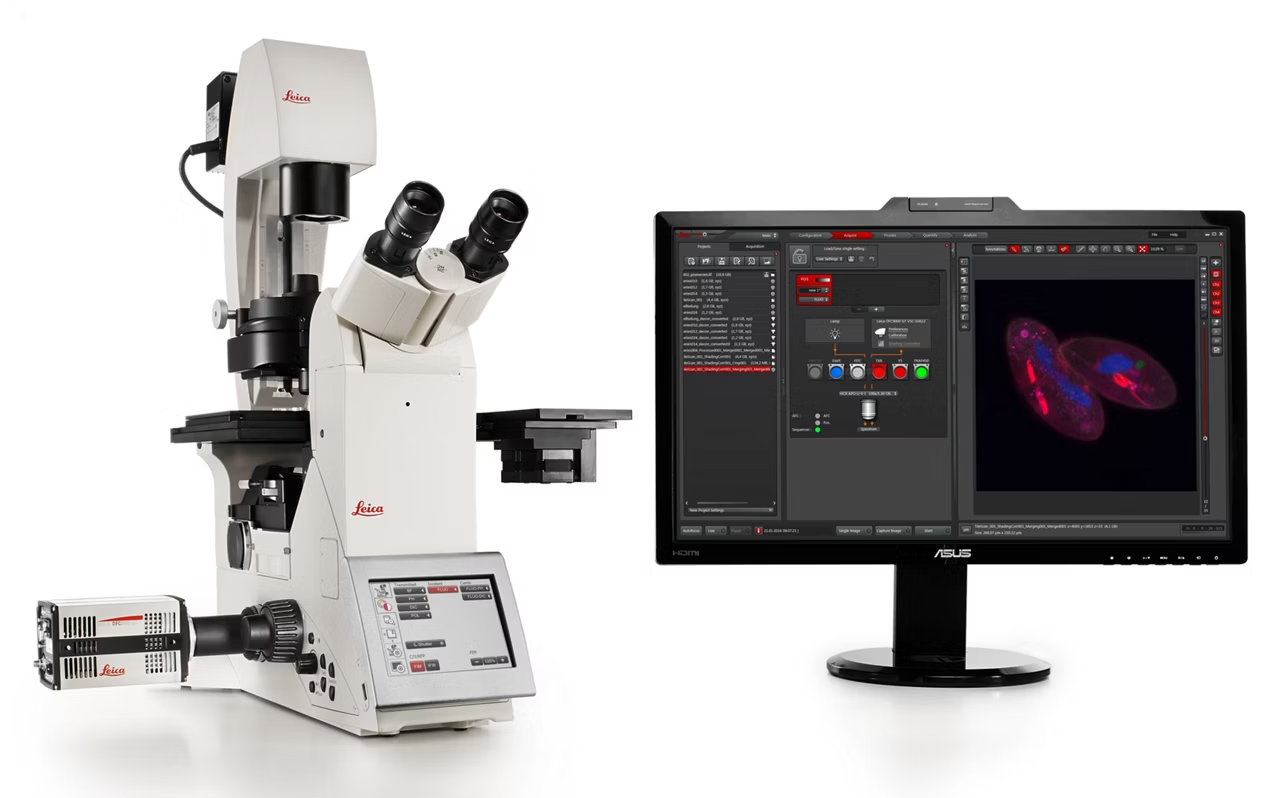
Leica Microsystems Dmi8 S Image2

Leica Microsystems Dmi8 S Image3

Leica Microsystems Dmi8 S Image4

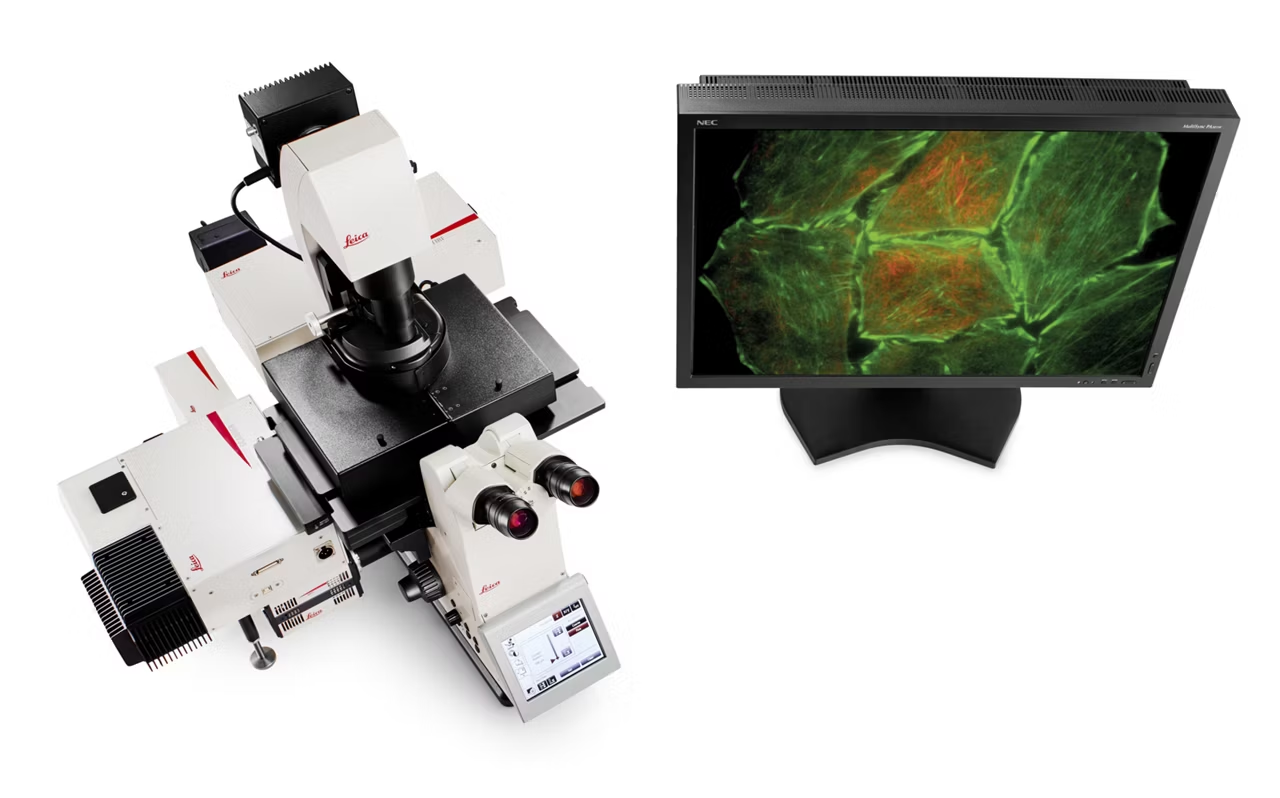
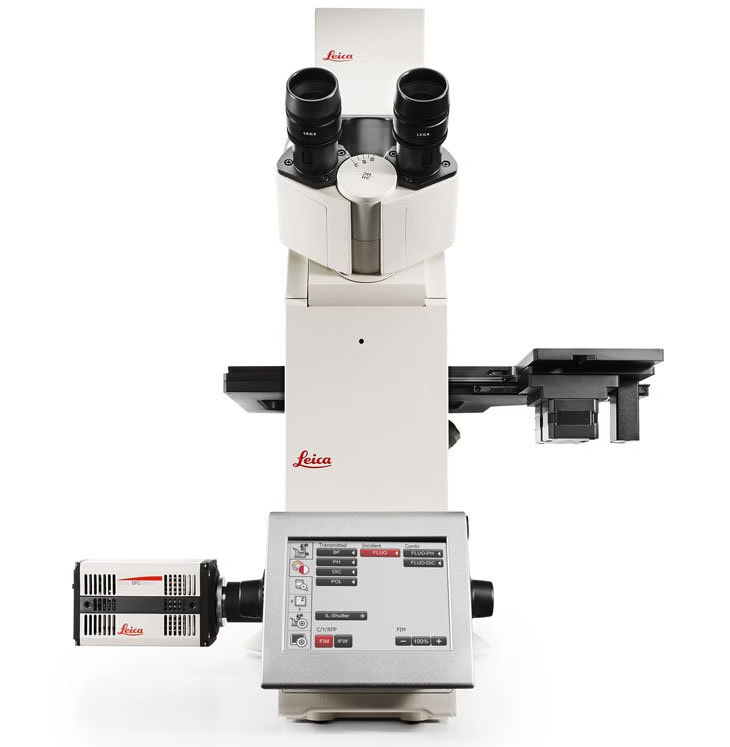
The modular DMi8 inverted microscope is the heart of the DMi8 S platform solution. For routine to live cell research, the DMi8 S platform is a complete solution. Whether you need to precisely follow the development of a single cell in a dish, screen through multiple assays, obtain single molecule resolution, or tease out behaviors of complex processes, a DMi8 S system will enable you to see more, see faster, and find the hidden. 

Your Benefits

  • See more – Increase your viewing area up to 10,000x

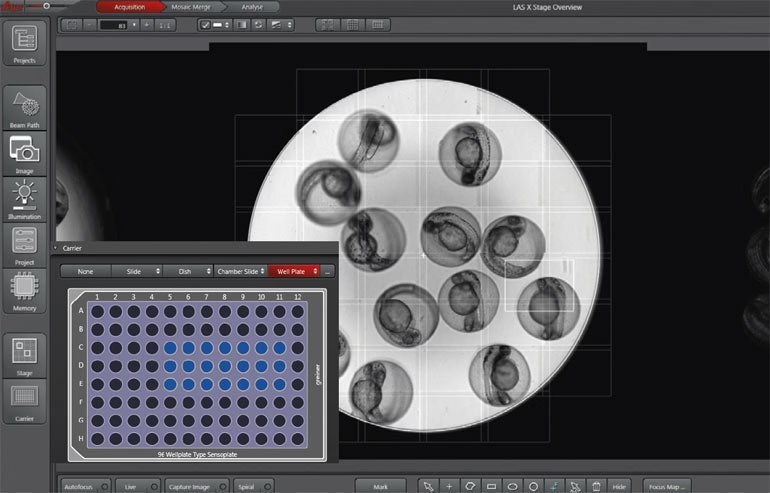
    Like a GPS for your cells, the software module LAS X Navigator ensures that you always have a clear roadmap to brilliant data

  • See faster – Experiments up to 5x faster

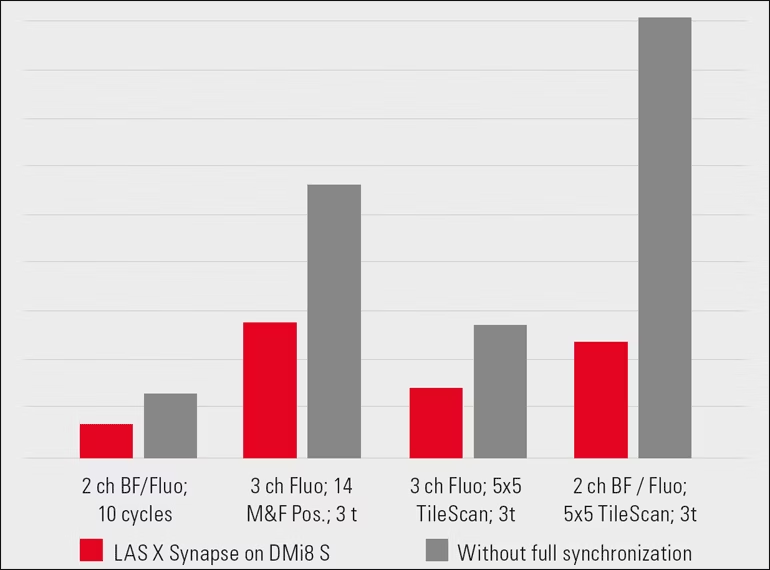
    The DMi8 S imaging solution powered by LAS X Synapse advanced sequencer eliminates the bottlenecks between system components, resulting in dramatically faster imaging

  • See the hidden – Activate, ablate, and bleach within one experiment

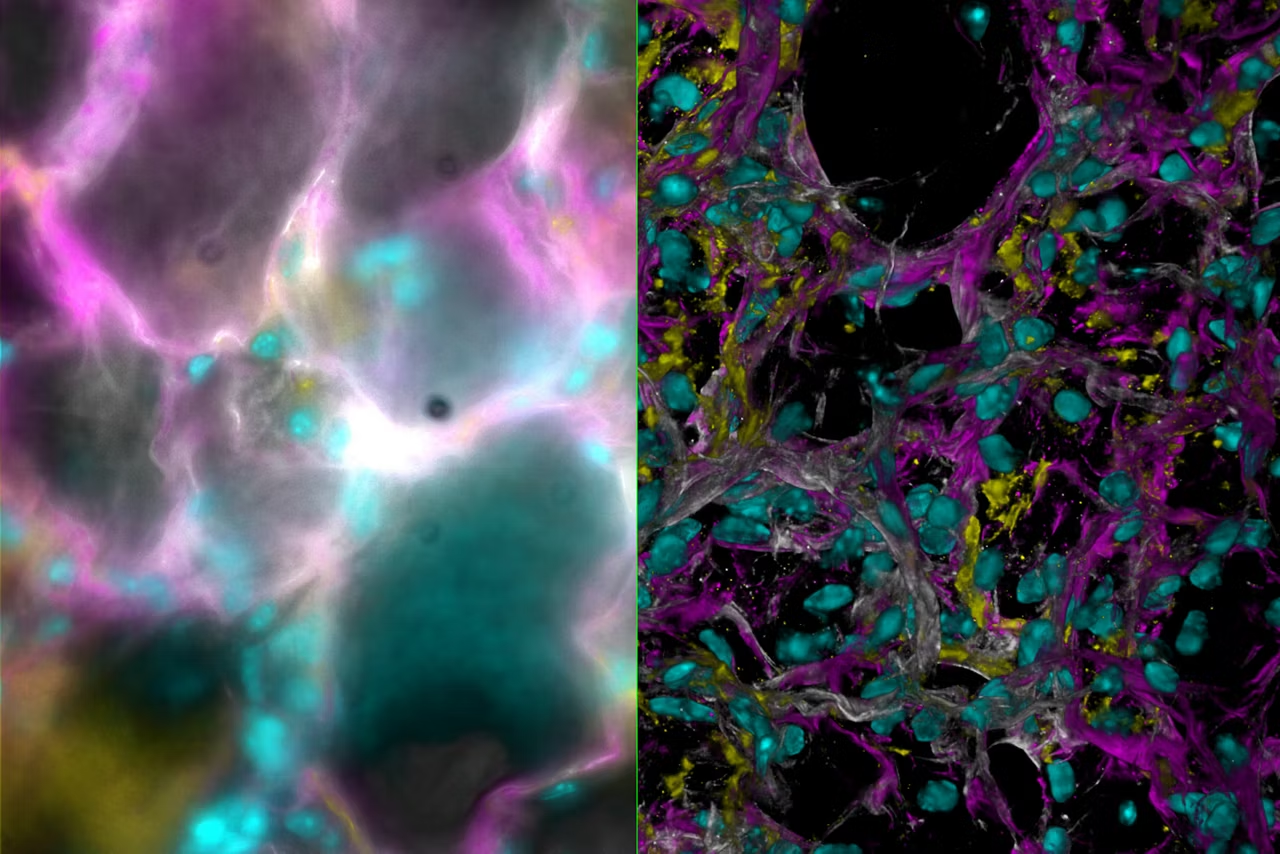
    You can perform Super Resolution, TIRF and several photomanipulation tasks within one time-lapse experiment using up to 5 lasers


DMi8 S for advanced widefield research

Starting from discovery and analysis of single molecules and culminating in breakthroughs in understanding and treating human health, the key to the next scientific discovery lies in finding the missing links connecting your data.

The DMi8 S is a flexible solution for advanced widefield research. The new DMi8 S platform extends the flexibility of the DMi8 microscope, adding high speed control, Infinity TIRF and Infinity Scanner modules, plus advanced software capabilities to create the solution for your advanced live cell imaging.


See more – Increase your viewing area up to 10,000x

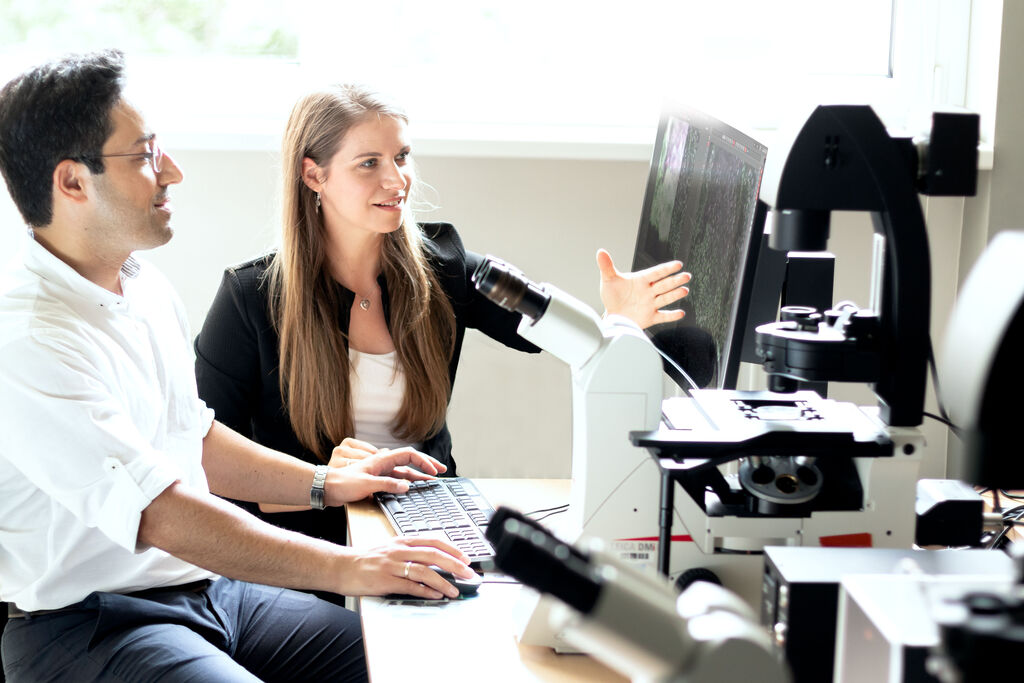
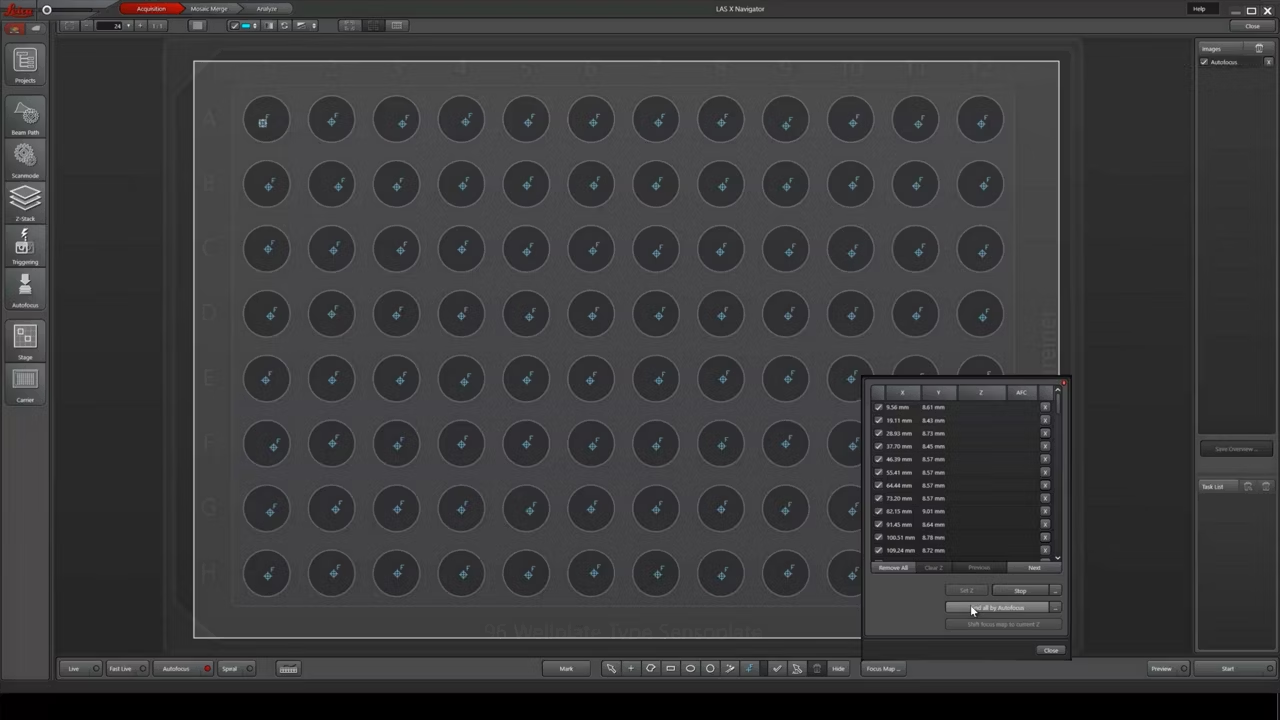
Switch from searching image by image to seeing the full overview of your samples. Like a GPS for your cells, the software module LAS X Navigator ensures that you always have a clear roadmap to brilliant data.

Create fast overviews of your samples and identify the important details instantly. Then set up high resolution image acquisition automatically using templates for slides, dishes and multiwell plates.


Find your answers

No matter what experiments you have in mind, LAS X Navigator is the key to all applications on your DMi8 S platform.

  • Generate live overviews
  • Create spiral scans to search in the vicinity of your current location
  • Display images in sample carrier templates for quick orientation
  • Work flexibly with different magnifications, cameras, detectors, and contrasting methods in the same workspace
  • Define multiple regions and positions for high resolution scans or multiwell projects
  • Zoom swiftly in and out of your sample
  • Move to any stage location by mouse click
  •  


See faster – Experiments up to 5 x faster

The DMi8 S imaging solution powered by LAS X Synapse advanced sequencer eliminates the bottlenecks between system components, resulting in dramatically faster imaging. With an integrated real-time controller that directly interacts with all of your hardware components, cameras and peripherals, you can control your entire system with micro-second precision.

Combine high speed External Filter Wheels with multi-position stage experiments and benefit from filter wheels with high precision stage control.

Time lapse experiments up to 5x faster mean you can both save time and capture more details. No matter which of the instrument components are part of the experiment, the system will run at the highest speed possible.

Precise control

For specialized live cell applications, you can now add additional devices to the system and set up high-speed experiments with trigger controled third party devices.

The DMi8 S platform is powered by LAS X Synapse advanced sequencer, which allows you to freely specify the behavior of connections and create fast imaging sequences to analyze an organism’s response to external stimuli delivered via third party devices.

Define both digital and analog signals, and set up the trigger signaling independently from the image acquisition with exact timings and full reproducibility.


See the hidden – Activate, ablate, and bleach in one experiment

Add the Infinity TIRF and Infinity Scanner to your DMi8 S platform to maximize the versatility of your system. You can perform Super Resolution, TIRF and several photomanipulation tasks within one time-lapse experiment using up to 5 lasers.

Sensitive light applications like optogenetics or photoswitching can be performed alongside more demanding tasks like FRAP or ablation. Combine techniques even further using the fully automated, super-resolution capable Infinity TIRF to analyze membrane dynamics.


Features

The DMi8 Microscope

Fully configurable with manual to motorized components, the DMi8 microscope allows you to build the imaging system for your research and budget needs.

Flexibility is built-in, allowing you to add established options like DIC for unstained samples and Intelligent Automation. For time-lapse experiments use precise focus control with Adaptive Focus Control and Closed Loop Focus.

DMi8 - Flexibility in mind

The Leica DMi8 is built with flexibility in mind.

With up to two Infinity Ports providing access points for addition of fluorescent devices, the microscope is easily adaptable for everything from simple fluorescent imaging to sophisticated super resolution applications.

This novel design facilitates the integration of additional fluorescence light sources and laser systems for advanced applications like

DMi8 – Modularity in widefield imaging

The DMi8 modular research microscope is the heart of the DMi8 S system. Fully configurable with manual to motorized components, you can create the imaging system for your research and budget needs. In addition, if your research needs to change, the system can also be adapted or upgraded at any time.

Every DMi8 microscope can be equipped with up to two Infinity Ports, allowing direct access to the infinity space for flexible upgrading of your DMi8.

Contact us to find out how to upgrade your DMi8 with the latest DMi8 S platform options

Adaptive Focus Control

One click of a button and the LED light beam assisted Adaptive Focus Control (AFC) automatically maintains your focus, in real time.

Save time and make sure your time lapse imaging isn’t affected by changes in experimental conditions.

DMi8 focus drive

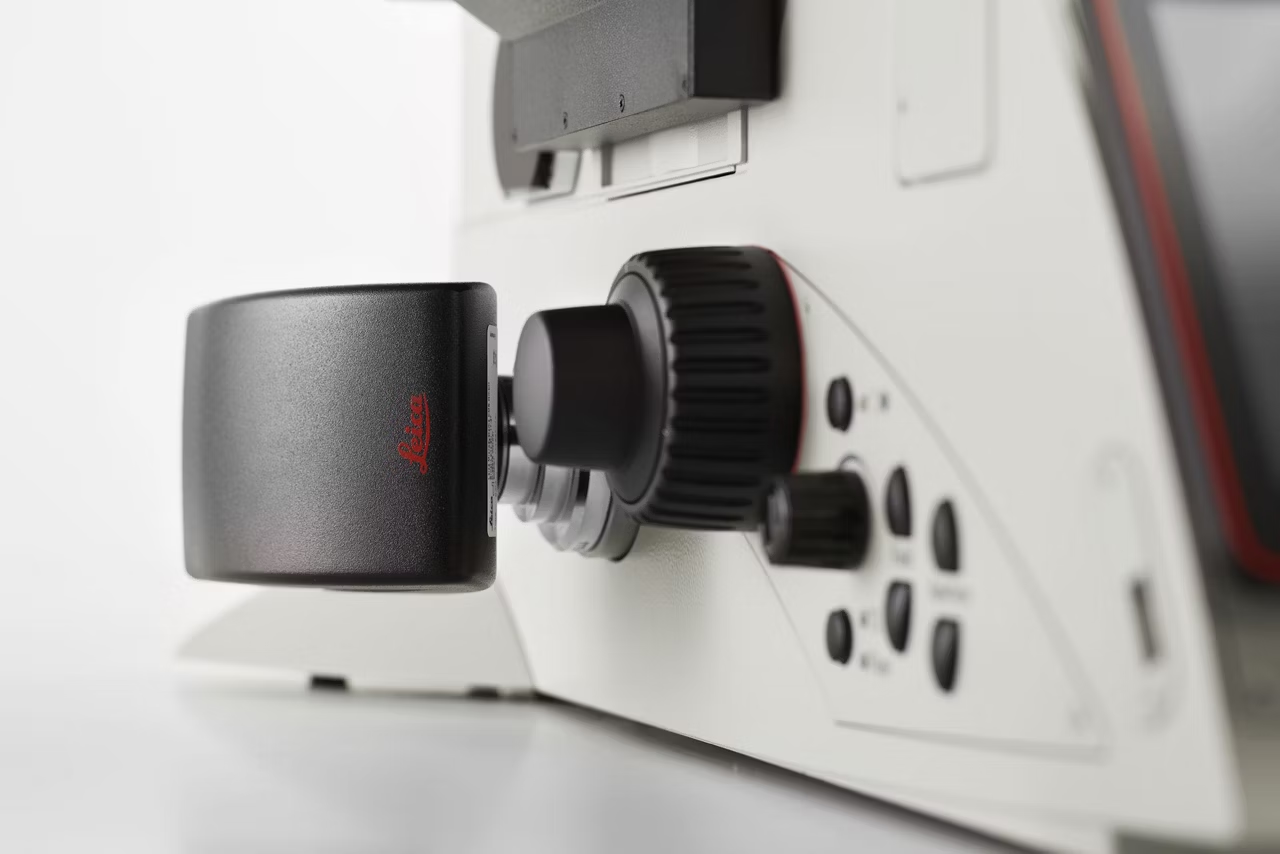
The DMi8 system features closed loop focus with 20 nm re-positioning accuracy.

Combined with an increased focus travel range of 12 mm, choose closed loop focus for the highest repeatability with multi-point time lapse experiments.


Optimized for sCMOS

Every DMi8 comes standard with 19mm field of view (FOV) for all camera ports.

Configure your system with a variety of contrast method, add sophisticated modalities like TIRF.

In addition, see more through the eyepieces with up to 25 mm FOV.


Intelligent automation

When you change the contrast method, the microscope automatically adapts the illumination settings, parfocality, brightness, and diaphragm position to that method.

Intelligent automation goes even further with the new LAS X Synapse real time controller. Run your experiments up to 5x faster, integrate third party triggered components and synchronize the acquisition with the exposure to minimize photodamage.

Make every component work in harmony, at the highest speed possible.


Customization

The Infinity Port Connector, along with complete optomechanical design documentation, opens the Leica DMi8 light path to any accessory you want to add.

Attach Thorlabs Cage Systems or Linos Microbench or Nanobench components directly to the Leica DMi8 by simply connecting them to the Infinity Port Connector.


Fluorescence imaging

For high speed imaging, use the external fluorescent filter wheels, or the patented Fluorescence Intensity Manager (FIM) to achieve fast, accurate fluorescent images.

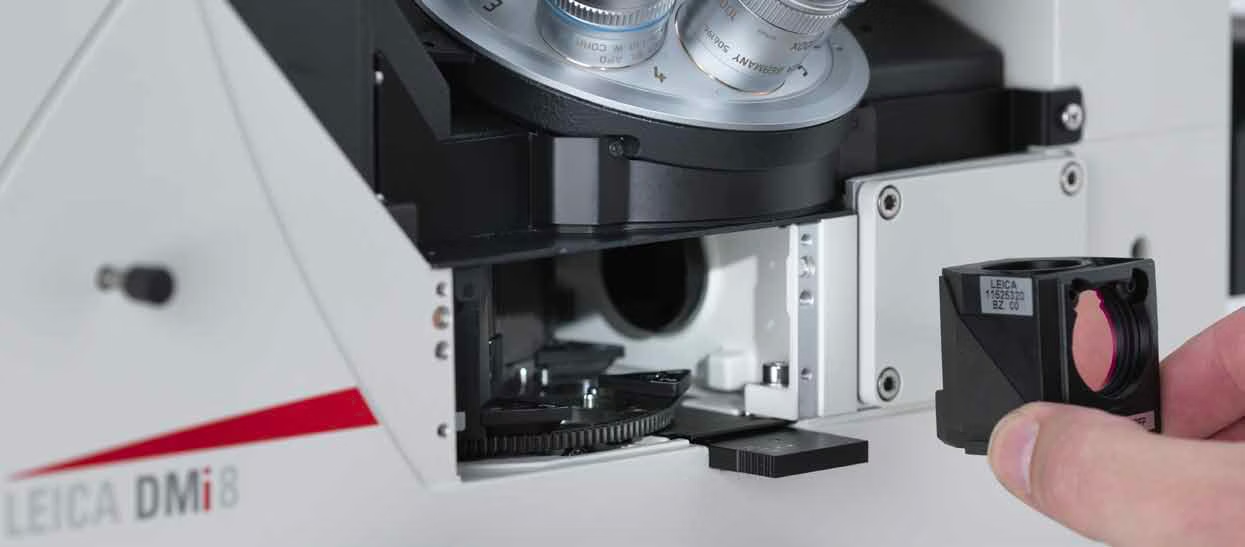
For standard applications, use the easy to install filter cubes with automatic RFID identification.


LAS X Software

Leica Application Suite X (LAS X) is the one software platform for all Leica microscopes: It integrates confocal, widefield, stereo, super-resolution, and light-sheet instruments from Leica Microsystems.

  • Users spend more time researching
  • Imaging tasks become intuitive

From basic documentation to advanced life science research – LAS X directly navigates you to brilliant imaging!


A quantum leap in high speed acquisition

The high speed linear motor stage offers absolutely precise positioning at previously unattainable speeds, e.g. 10 positions per second with a 40x objective. Vibration sensors ensure that the stage stands perfectly still during acquisition. The final results are razor-sharp images taken at the perfect moment, even when acquiring with maximum speed. This dramatic improvement is due to the optimal synchronisation between image acquisition and stage movement.

The Quantum Stage allows you to:

  • Do high speed positioning with absolute precision (< ± 1 µm)
  • Manually move the stage at any time while keeping the precise slide position tracked
What are the main differences between the Leica DMi1, the Leica DM IL, and the Leica DMi8?
The main difference is that they are designed for tasks of different complexity. The Leica DMi1 is conceived for quick cell checks. You can perform cell and tissue checks quickly and efficiently in Brightfield and Phase Contrast. The Leica DM IL enables you to perform more applications, for example involving fluorescence. The Leica DMi8 is the fully modular high-tech instrument which can be equipped for almost every application.
Which software can I use with the Leica DMi8?
The Leica Application Suite X (LAS X) software is suitable for all applications with the Leica DMi8. The microscope software development kit, or SDK, can also be used to control the microscope via other software applications. For information about obtaining an SDK license, please visit our software page.
Can I do ratio imaging?
Yes. Choose options such as FURA objectives maximized for UV detection and a camera image splitter to simultaneously capture two fluorescent channels for ratiometric studies.
Why is modularity important?
You have full flexibility and great freedom to design the system that fits your research best. You can also upgrade the system any time your requirements change. Additionally, you can mix and match manual and motorized components to optimize the system to your budget. The modularity of the Leica DMi8 allows you to do all of this.
What happens if I need to repair the microscope?
Please contact your local Leica sales representative. We will arrange everything for you.
Can I do screening experiments?
Yes, the Leica DMi8 combined with the powerful LAS X software helps you design, set up, and perform screening experiments.
How can I use the Leica DMi8 to build my own research solution?
Fully modular and flexible, the Leica DMi8 can be built exactly as you need. For advanced solutions, this is the platform of choice to integrate additional components such as photomanipulation devices, optogenetics, super-resolution, microspectroscopy, and many more. Homebuilt solutions can be attached via the Cage System 30 mm Infinity Port Connector.
I don’t need fluorescence. Do I have to have an Infinity Port?
No, the fully modular design means you can choose a less expensive configuration without fluorescent light, and thus also without an Infinity Port. If you need fluorescence capabilities later on, you can add them at any time.
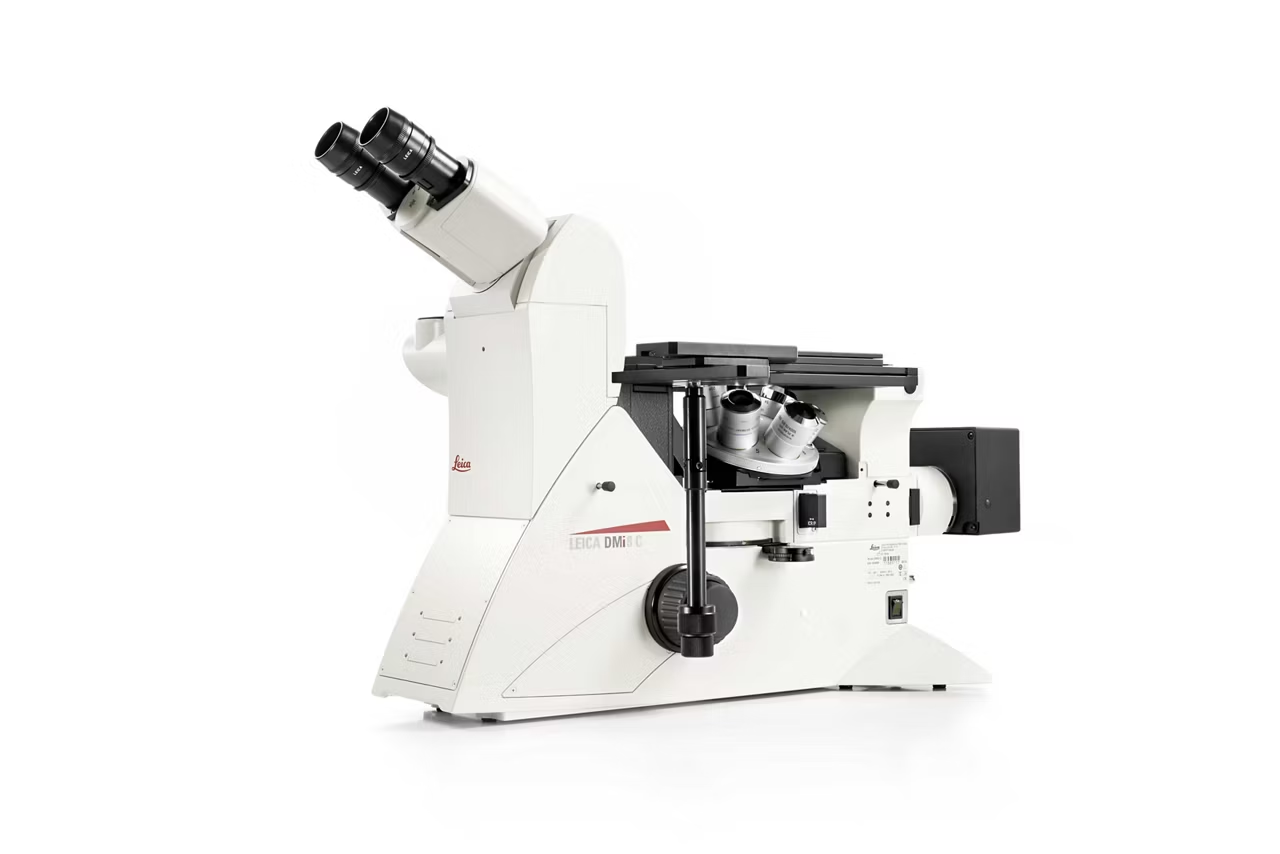
What is an inverted microscope?
An inverted microscope’s main distinguishing feature is the location of the optics. The optics are located below the stage. As a result, the sample is placed on top of the objectives. This means you will look at the sample from below it. Because the optics are underneath the sample, inverted microscopes offer ample working space to view samples of all shapes and sizes.
What is LID?
LID stands for Leica Radio Frequency Identification Device. All filter cubes for the Leica DMi8 are equipped with RFID technology, which can be used with the optional LID equipped fluorescence turret to automatically detect your filter cubes in the Leica Application Suite X (LAS X) software.
Which contrast methods can I use with the Leica DMi8?
All contrast methods are available with the Leica DMi8: Brightfield (BF), Darkfield (DF), Differential Interference Contrast (DIC), Integrated Modulation Contrast (IMC), Polarization, Phase Contrast, Integrated Phase Contrast(IPH), and Fluorescence are all available.
Can I do TIRF experiments?
Yes, you can. The Infinity Port provides direct access to the fluorescent light path, so that the Leica DMi8 is ideally suited to TIRF and similar high-end imaging applications. Choose the Leica AM TIRF system for high-performance TIRF applications, or adapt the Leica DMi8 to your system.
Is there a solution for microinjection?
Applications that require micromanipulation such as transgenics, in-vitro fertilization, and more can be performed using the Leica DMi8 and micromanipulation solutions from Leica Microsystems, Narishige, Eppendorf, and other suppliers.
Can I upgrade my microscope after I purchase it?
Yes, you can. The Leica DMi8 is designed to adapt to your applications, now and in the future. Changing or upgrading most components is possible.
Can I use the Leica DMi8 for in-vitro diagnostics (IVD)?
Yes, the Leica DMi8 is certified for IVD. Contact your local Leica Microsystems partner to find out more.
How can I make use of an Infinity Port?
For routine fluorescence applications, attach either a manual or motorized fluorescence module, which include a liquid light guide connection and access to the field and aperture planes. For adding more advanced solutions, such as photomanipulation or DMD devices, several adapters for the infinity ports are available.
What is Adaptive Focus Control?
The Adaptive Focus Control (AFC) actively keeps the focus stable, even after changing environmental conditions. The systems utilizes an infrared LED to accurately measure the distance between the reflective surface at the image plane and the objective.
I want to use my microscope in a hood, are any modifications needed?
If required, the Leica DMi8 can be configured exclusively for digital imaging, often a great solution when working in a biohazard environment and when remote monitoring via the software is preferred.
What is a T-House?
T-House is the name for the modular component of the Leica DMi8 that the Infinity Port connections and interface for fluorescence illumination. In addition, this component provides the carrier for the stage and transmitted light devices.
How big and heavy can samples be that I put on an inverted microscope?
Inverted microscopes are designed with the objectives and turret positioned below the stage. In theory, the sample could be as high as the ceiling – there is no height limitation. However, the maximum weight of a sample is limited to 30 kg depending on the stage used. This is ten times larger than can be accommodated by an upright microscope: samples can only be up to 80 mm high and weigh up to 3 kg.
How can I use the Leica DMi8 for super-resolution?
The Leica DMi8 is a superb platform on which to build a super-resolution system. For a fully capable system, choose the Leica GSD 3D system, built upon a Leica DMi8. When you need a customized solution, rely on the Leica DMi8 as a stable and capable foundation to build up your own system.
I need to perform a high speed fluorescence experiment. Is the Leica DMi8 the right choice for that?
Definitely, yes. You can choose from a host of options to aid in capturing events as quickly as possible, such as fast external filter wheels, Adaptive Focus Control (AFC), compatibility with high speed sCMOS and EMCCD cameras, and control with the powerful LAS X software. Capturing a high speed multi-color experiment becomes less of a challenge this way.
Can I use the Leica DMi8 for live cell research?
The Leica DMi8 is an optimal microscope for live cell research. Build your system with a wide range of options for live cell imaging – from incubation chambers to keep your cells in an optimum environment, to time-lapse experiments with high speed cameras controlled by dedicated modules in the LAS X software, just to name a few.
What is an Infinity Port?
The Infinity Port gives users direct access to the fluorescence light path. Flexibly add illumination sources, without compromising imaging quality. The concept is unique and currently only available with the Leica DMi8.
What is Closed Loop Focus?
Choose this option when high resolution imaging is required. By directly measuring the focus position, the optional Closed Loop Focus drive ensures highly accurate and reproducible positioning over the entire 12 mm focus travel range. The Closed Loop Focus uses an internal integrated measurement scale at the focus drive of the microscope to achieve precisely referenced positioning of the focus point. With repeated iterative measurements, a precision / reproducibility of better than 20 nm is obtained with the Leica DMi8 Closed Loop for a given value. Using this system to determine the focus position ensures that both gear slippage and hysteresis effects from different focusing directions are reduced to a minimum. Further, this precise reproducibility is independent of the focus step size, microscope optics or specimen used.