JavaScript is disabled in your browser. Please enable JavaScript to view this website.

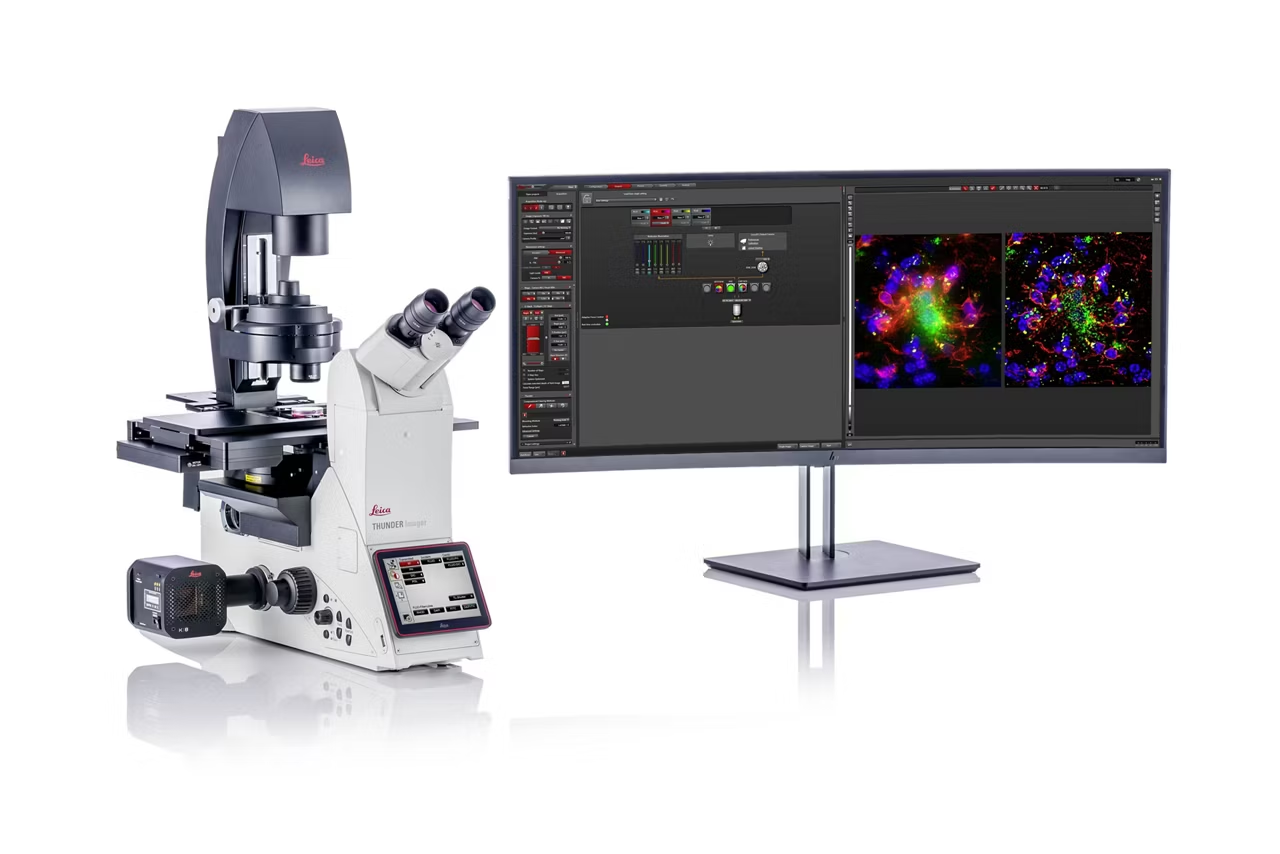
THUNDER Imager Cell Spinning Disk
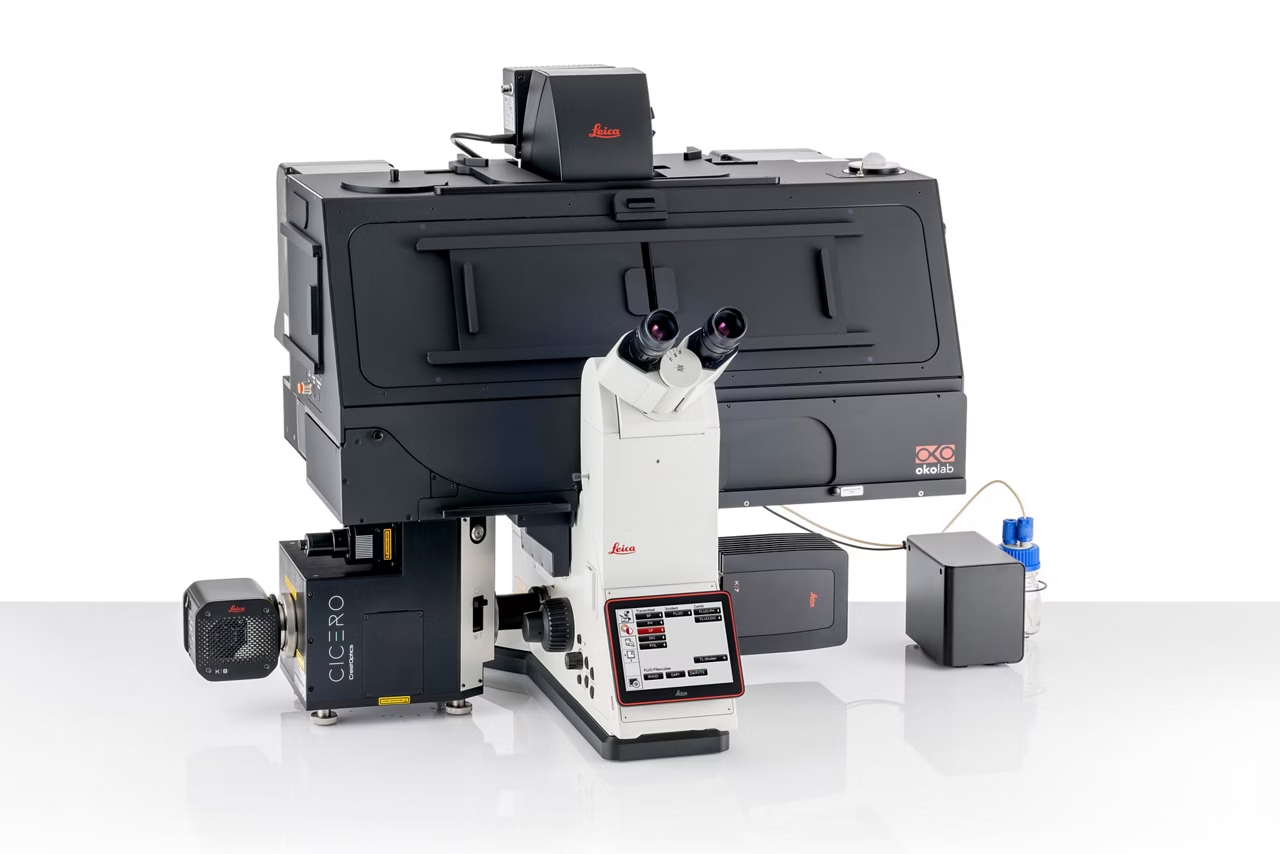
DMi8 Incubator Cicero Kid21757736 1

Spinning Pillar1 Kid21774850

Spinning Pillar2 Kid21774851

Planaria Comparison WF THUNDER THUNDER SD 600x400 Kid21768629

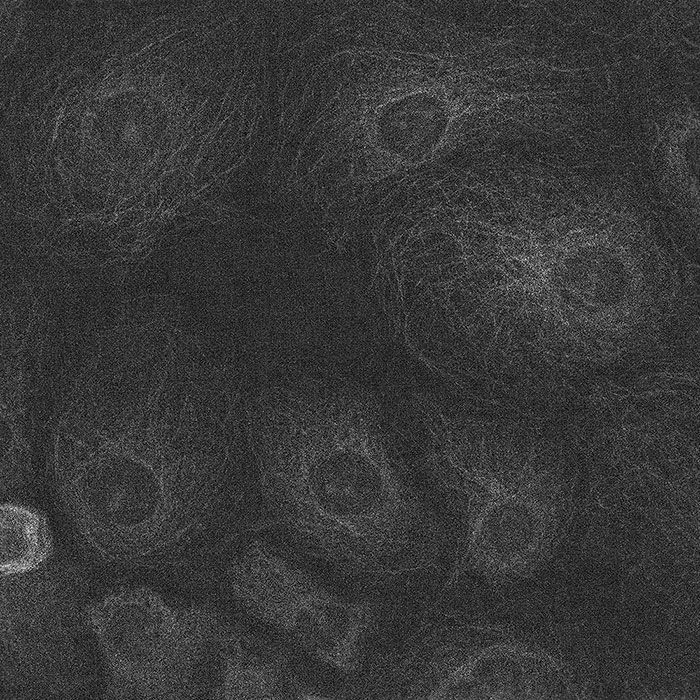
Cultured VERO Cells 20 Kid21756898

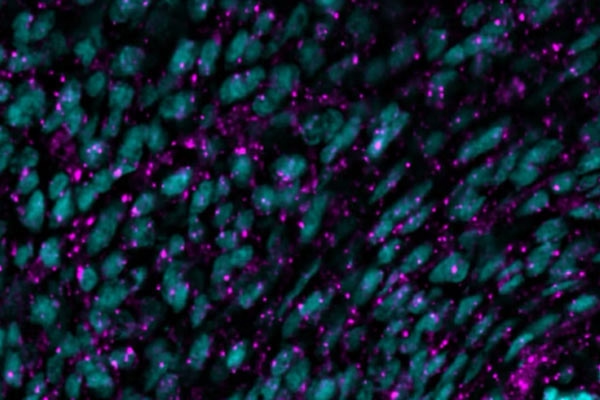
Mouse Lung Organoids 3D 20 Kid21767997

THUNDER Imager Organoid Cluster 1530 Kid21776101

THUNDER Imager 3D Cell Culture Rabies Brain Ferret Highmag LVCC 3D Kid21775729

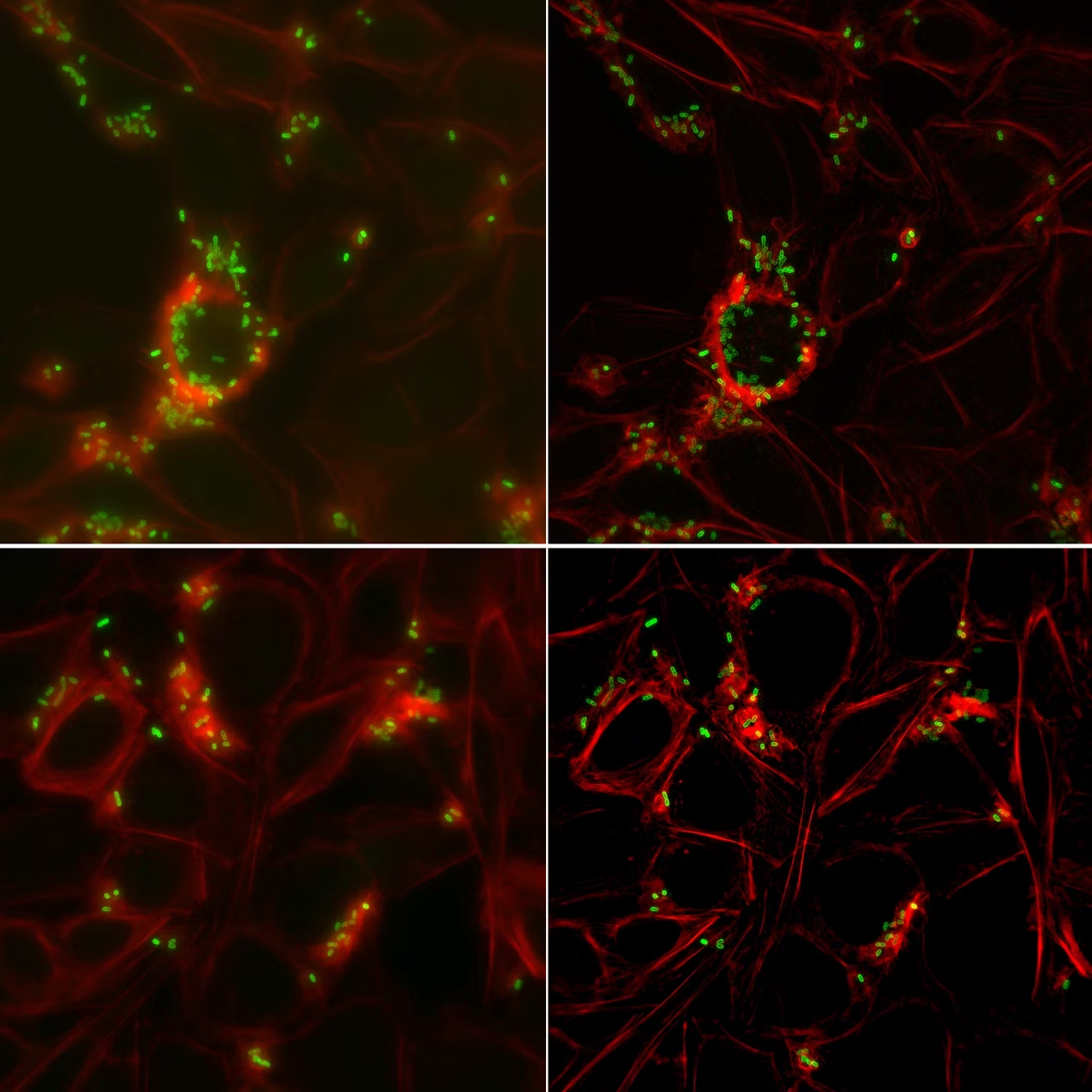
THUNDER Imager Infectious Disease Bacteria Kid21775884

THUNDER Imager Live Cell3 2 Kid21775909

THUNDER Imager Live Cell Detail Logo Product Name ThunderShooting 1070581 Kid21775897

THUNDER Webinar Snippet Marc Stemmler EN Final Kid21776071

Sample Overview Spinning Disk Final Web Kid21769131

Spinning Disk Smart CORR FINAL Captions Added V2 Kid21774849

Yassin Harim Kid21777312

Struggling to navigate complex samples? Discover the power of combining THUNDER technology with the CrestOptics CICERO spinning disk. 

This synergistic pairing allows you to get higher quality data and clearer details from 3D samples, delivering a deeper and more detailed view of your research.

Get a clearer picture with THUNDER and spinning disk

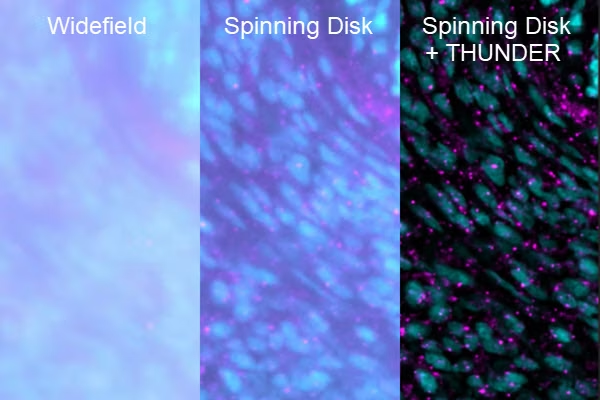
Planaria Comparison WF THUNDER THUNDER SD 600x400 Kid21768629

Extract more convincing high-quality data from 3D samples by applying THUNDER to your spinning disk confocal images.

While spinning disk alone provides powerful optical sectioning, applying THUNDER eliminates residual out-of-focus light for greater contrast and resolution, unlocking even more details.

Imaging diverse and challenging 3D samples

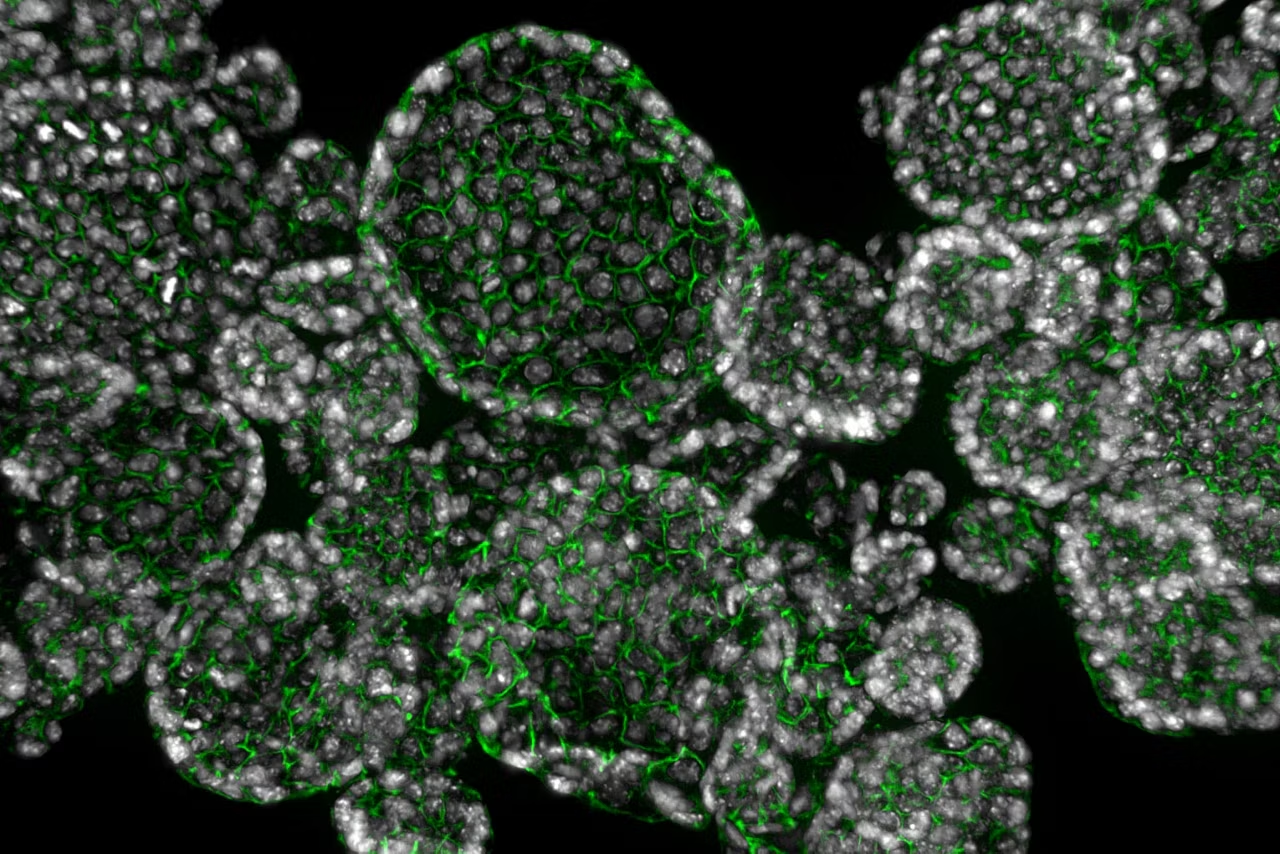
Get more statistically significant data from challenging 3D samples in less time with high-throughput spinning disk confocal. Image a wide variety of sample types with reduced phototoxicity - all in a simple-to-use and versatile platform. 

Image samples such as

  • Live cells
  • 3D cell cultures
  • Organoids and spheroids
  • Model organisms
  • Thick tissue samples

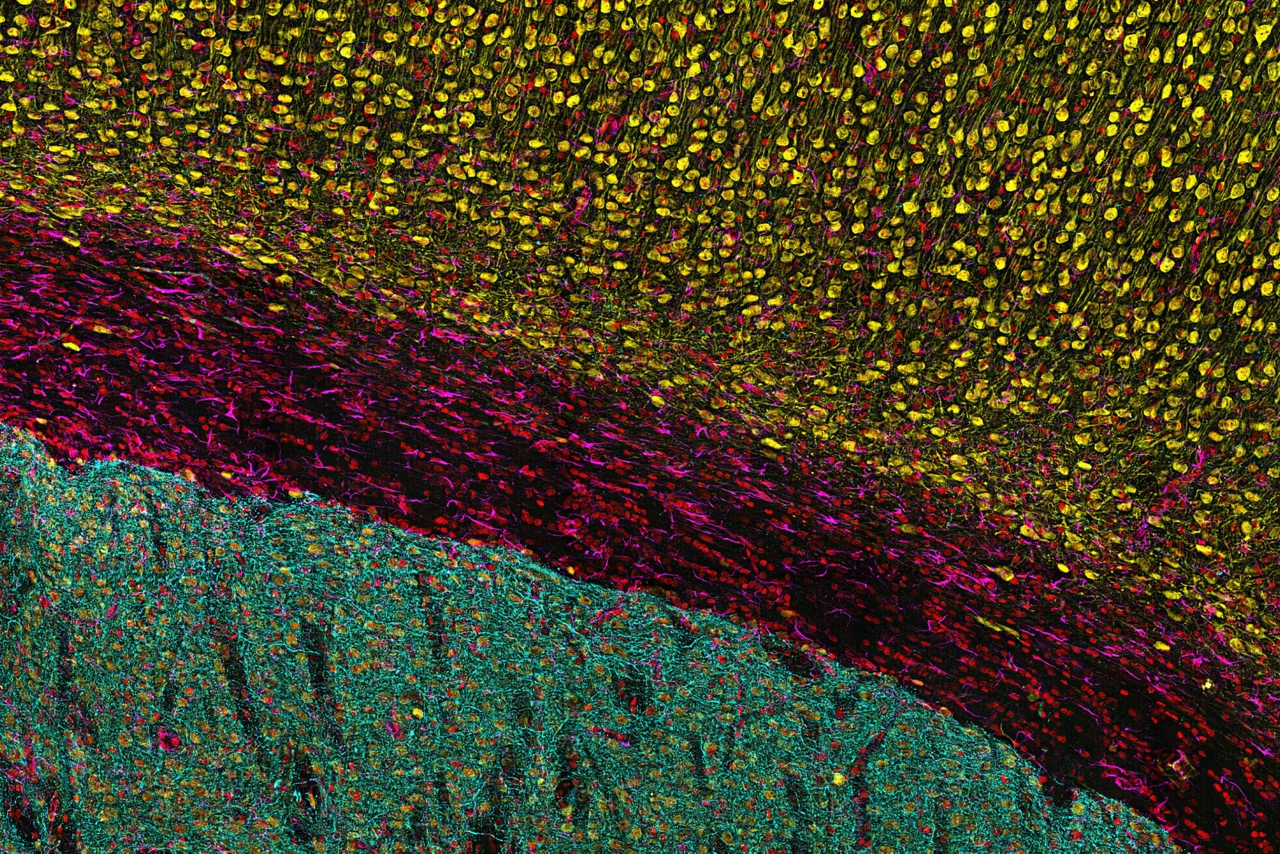
Rat Brain

Composite image of rat brain stained with Hoechst (red), CPCA (cyan), Fox3/Neun and RPCA (magenta).

Zebrafish

Zebrafish (Danio rerio) stained for blood vessels (cyan) and blood cells (magenta).

Live Cells

Live U2OS cells stained for WGA (green), TMRE (magenta) and tubulin (cyan).

Enhance imaging efficiency with intelligent navigation technology

Quickly bring your fragile samples into focus, reducing the time to obtain meaningful results and preserving sample integrity.

Spinning disk systems are commonly used to image large sensitive samples, which can be hard to navigate. Now you can create a rapid, in-focus, overview image of your entire sample with Sample Finder. This powerful feature allows you to pinpoint key regions of interest while preserving the spatial context of your data.

Adaptive Immersion: No compromise

For many spinning disk applications, imaging samples in aqueous media is essential. For the clearest image quality, water immersion objectives are ideal as they minimize optical aberrations. However, using water objectives often proves impractical due to evaporation challenges. 

Now you never have to compromise on your choice of objective because our Adaptive Immersion cap, with its embedded sensor, continuously monitors and maintains immersion throughout your experiments.

More convincing data with SmartCORR

Get stunning, reproducible results with 3D samples every time. Harness the ease and precision of SmartCORR to automatically optimize your objective correction collar to perfectly match your sample, dramatically reducing sample-dependent spherical aberrations and improving image quality. Say goodbye to human error in your data as well as the tedious task of fine-tuning settings.

Get the ultimate live cell imaging system by combining Sample Finder, THUNDER, Adaptive Immersion and SmartCORR with your spinning disk system.

Clarity Through Synergy

Combine spinning disk with THUNDER for greater contrast

Spinning Pillar1 Kid21774850

Get more convincing, high-quality data by combining the power of THUNDER with spinning disk confocal.

Fast, versatile, confocal imaging

Spinning Pillar2 Kid21774851

Obtain more statistically significant data from diverse and challenging 3D samples faster with high-throughput spinning disk confocal.

Streamline workflows with intelligent automation

Csm Snap Sample Overview Spinning Disk Final Web 928d777cce

Boost your productivity by focusing on your experiment, rather than your system, with the DMi8's intelligent automation concept.

What microscope platform is it based on?
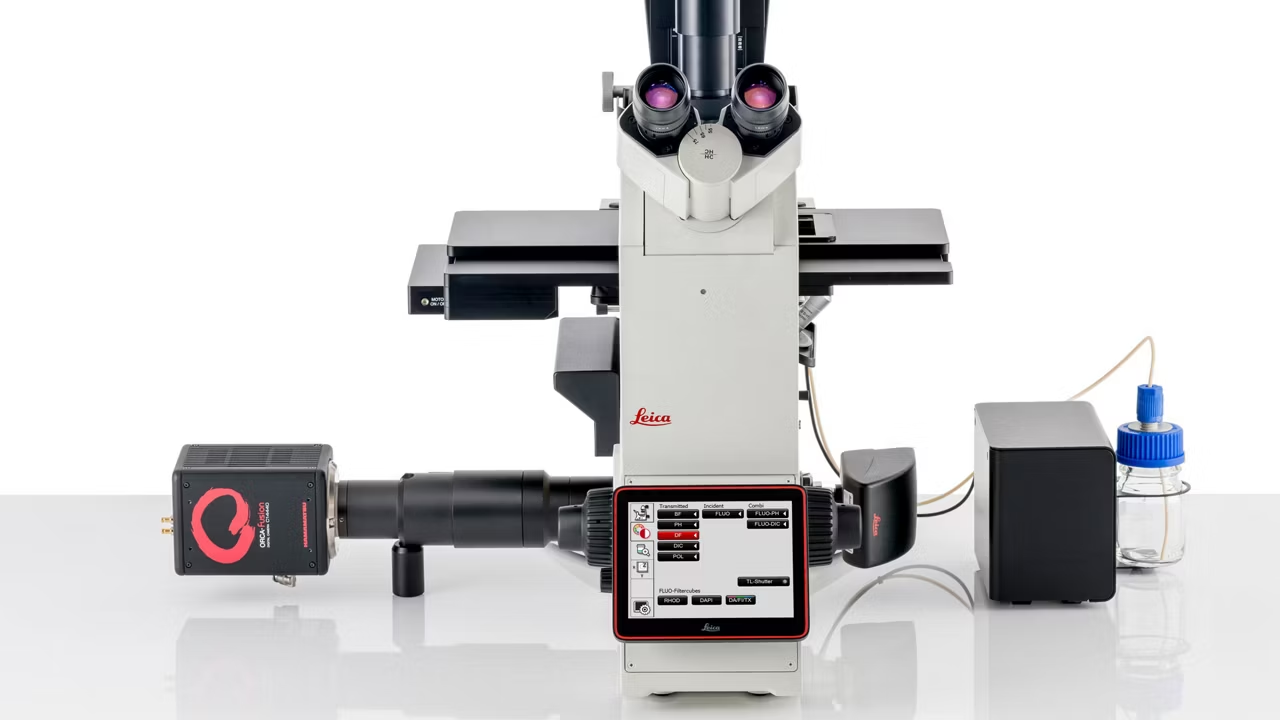
The THUNDER Imager Cell Spinning Disk system is built on Leica Microsystems DMi8 inverted microscope platform, which enables flexible, modular configuration and intelligent automation.
What is spinning disk confocal microscopy?
Spinning disk confocal microscopy is an imaging technique that uses a rapidly rotating disk with multiple pinholes to achieve optical sectioning. This allows only light from the focal plane to be detected, reducing out of focus signal and improving contrast compared to widefield imaging. Because it captures many points simultaneously, spinning disk microscopy enables fast imaging with reduced phototoxicity, making it well suited for live-cell experiments and the study of dynamic processes.
Is THUNDER Imager Cell Spinning Disk easy to use for different experience levels?
Yes. The system combines intuitive controls, guided workflows, and intelligent automation features to help both new and experienced users achieve reliable results more efficiently.
How does the system improve image quality?
Image quality is enhanced through the synergy of: •Optical sectioning via the spinning disk •Computational clearing with THUNDER to reduce out-of-focus blur Together, these technologies enable higher-contrast and clearer visualization of deeper structures in thick specimens.
How is this system different from other spinning disk microscopes?
While spinning disk confocal microscopes provides fast optical sectioning, the synergy with THUNDER computational clearing removes residual out-of-focus light, improving contrast and revealing more structural detail in thick and complex samples.
Can the system be used for fast live-cell imaging?
Yes. Spinning disk technology enables high-speed acquisition with reduced phototoxicity, making it well suited for capturing fast cellular processes. You can get the ultimate live cell imaging system by combining Sample Finder, THUNDER, Adaptive Immersion and SmartCORR with your spinning disk system.
What imaging modes are available?
The system supports both widefield (including THUNDER) and spinning disk confocal imaging, allowing flexibility depending on the sample and experiment. It supports multiple contrast methods (e.g., brightfield, fluorescence, DIC, phase contrast).
What spinning disk technology is used?
The system integrates the CrestOptics CICERO spinning disk unit for fast, versatile confocal imaging.
What are the key optical specifications?
Key technical details include: •Pinhole size/spacing: 50 / 250 µm •Disk rotation speed: 15,000 rpm •Multiple laser lines (e.g., 405 nm, 470 nm, 555 nm, 640 nm) •Multi-position emission filter wheel
What is THUNDER Imager Cell Spinning Disk?
THUNDER Imager Cell Spinning Disk is an imaging system that combines widefield and fast spinning disk confocal microscopy with THUNDER computational clearing to deliver high-resolution, high-contrast images of complex 3D samples.
How does Sample Finder help me?
Sample Finder automatically generates rapid, in-focus, overviews of your entire sample at the click of a button, helping you quickly identify regions of interest while preserving the spatial context of your data. This allows you to set up experiments more efficiently.
Is the system suitable for long-term experiments?
Yes - the platform is designed for long-term live-cell imaging workflows with technologies that help optimize imaging conditions and support consistent data acquisition. The inverted design allows stable imaging of cells in standard culture vessels, while environmental controls help maintain physiological conditions during long-term experiments.
What automation features are included to improve microscopy workflows?
The system includes several intelligent automation tools designed to streamline workflows, including: •Sample Finder for rapid in-focus overviews of your entire sample •SmartCORR for automatic optimization of objective correction collar settings •Game-changing Adaptive Immersion technology which enables you to confidently use optimum water immersion objectives
What is Adaptive Immersion and how does it help me?
Adaptive Immersion technology helps maintain optimal imaging conditions by enabling you to switch to immersion objectives and automatically deploy an immersion droplet without removing the sample. Our Adaptive Immersion cap features an embedded sensor that continuously monitors and maintains immersion throughout your experiment. This prevents wasted time spent manually adjusting static pump flow rates to accommodate dynamic conditions and enables you to confidently use water immersion objectives for the most challenging live cell imaging experiments.
What is SmartCORR and why is it useful?
SmartCORR technology automatically optimizes your objective's correction collar settings to match your experiment. This significantly improves image quality by reducing sample-dependent spherical aberrations, giving you the best possible data every time.
What is THUNDER?
THUNDER is an opto-digital technology that uses the Computational Clearing method to generate high resolution, high contrast images, by removing the out of focus blur inherent to widefield images.
What types of samples can I image?
You can perform complex multi-position experiments on a wide range of sample formats using templates for slides, dishes, and multi-well plates. Image diverse biological samples such as: •Live or fixed cells •3D cell cultures •Organoids and spheroids •Model organisms •Thick tissue samples
Why is THUNDER computational clearing important for 3D imaging?
When imaging thick or complex 3D samples, out‑of‑focus light from above and below the focal plane can reduce contrast and obscure fine details. THUNDER helps address this by selectively removing out-of-focus background signal, improving image clarity and contrast without the need for complex post-processing.
K8 Scientific CMOS Camera
Instruments

K8 Scientific CMOS Camera

Discover the K8 Scientific CMOS Camera for life science imaging. Achieve 95% quantum efficiency, low read noise and reduced phototoxicity. Request a quote!

Aivia AI Image Analysis Software
Software

Aivia AI Image Analysis Software

Explore AI Image Analysis Software transforms image processing with up to 74% faster analysis time. Achieve high-quality, reproducible results effortlessly.

LAS X Life Science Microscope Software Platform
Software

LAS X Life Science Microscope Software Platform

Unified microscope software supporting confocal, widefield, stereo, super resolution, & light sheet systems. Save & recall settings for reliable results. Get quote.
DMi8 Inverted Microscope
Instruments

DMi8 Inverted Microscope

The DMi8 inverted microscope streamlines complex microscopy workflows delivering high quality data tailored to your research needs and budget. Get a quote!