How to Characterize Oligonucleotide Biotransformation with LC–MS
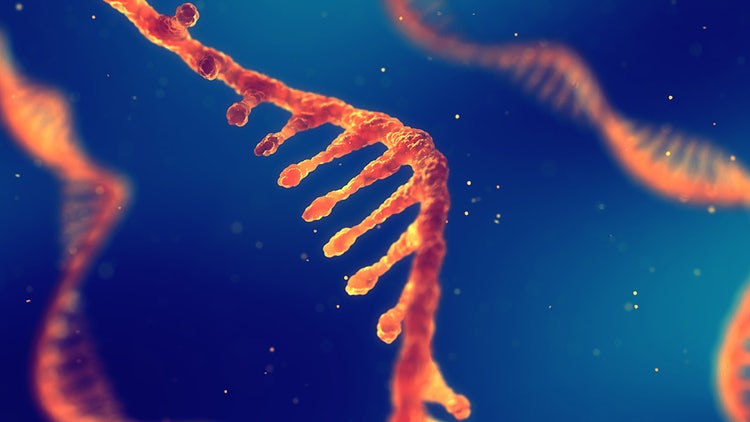
A single expected mass rarely captures what happens to an oligonucleotide in a biological system. Low-abundance products may coelute with related species or be obscured by background signals, making it difficult to distinguish potential biotransformation products and assess assignment confidence. A connected workflow can combine fit-for-purpose recovery, chromatography, high-resolution MS and MS/MS with scalable data analysis. Feature alignment, sample-to-control comparison, biotransformation or mass-shift searches, candidate ranking, filtering and MS/MS-supported review can help your team prioritize plausible products and trace each finding to the supporting evidence. Computational methods may also aid annotation when monoisotopic peaks are difficult to observe.¹

Why is oligonucleotide biotransformation difficult to interpret?
Oligonucleotides are not simply larger small molecules. Their sequence and chemistry shape both biological fate and analytical behavior. Nuclease activity can generate families of cleavage products, while other transformations may affect the oligonucleotide or its conjugated groups. Retention time or intact mass alone may not distinguish the resulting species.
This heterogeneity creates overlapping challenges. A dominant parent can obscure lower-abundance products, while related species and multiple charge states complicate spectral interpretation. Matrix components and adducts can further alter ionization or add background features. As samples and time points multiply, possible assignments can outpace manual review. Automated candidate generation and review can help manage that complexity.2
Define the scientific question before selecting the workflow
Define the decision before selecting the analytical configuration. Searching for unknown biotransformation products differs from measuring the parent compound. Characterization, targeted quantitation and impurity assessment also require different evidence thresholds.
- Exploratory analysis may prioritize broad coverage and information-rich acquisition.
- Structural characterization evaluates accurate mass, isotope pattern, retention behavior and fragmentation together.
- Targeted quantitation focuses on selectivity, recovery, precision, accuracy, stability and calibration. A recent method applied these considerations to parent-oligonucleotide measurement rather than broad metabolite identification.3
Defining the objective early helps your team avoid collecting data for one question and expecting it to answer another. It also clarifies whether a result should be reported as detected, tentatively identified or characterized with higher confidence.
The same analytical principles can be adapted to complex therapeutic modalities, including oligonucleotides, peptides and conjugated therapeutics. The appropriate configuration depends on the molecule, study design, scientific question and available evidence. Transparent processing and review criteria help teams apply the workflow consistently without assuming that one approach fits every modality.
Recover the species that matter
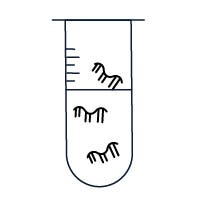
The connected workflow begins before mass spectrometry. Front-end choices determine which species reach the detector and which may be missed. Oligonucleotides can be lost through binding, degradation or extraction bias toward the parent compound. Recovery for one analyte does not ensure even recovery across the metabolite profile. Without fit-for-purpose recovery, later stages cannot characterize species that never enter the analysis.
Sample preparation should therefore be evaluated for the intended species range and matrix. Recovery, sample stability and extract quality all matter. Automation can improve consistency and throughput, but it does not eliminate analyte-dependent bias.
Separate priority products
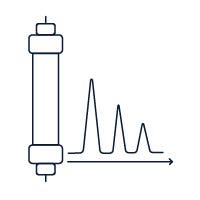
Chromatography carries the recovered mixture into the next stage by adding selectivity. Complete baseline resolution is not always necessary, but separation should reduce matrix coelution, distinguish priority biotransformation products from related species and support interpretable spectra. Ion-pairing reversed-phase LC remains common, although persistent reagents can contaminate the system and suppress electrospray response.4 Non-ion-pair conditions may suit some bioanalytical applications, but current evidence does not support them as a universal replacement.
Generate evidence for structural characterization
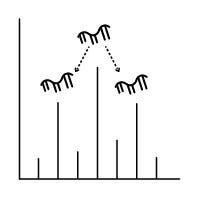
Once relevant species have been recovered and separated, structural characterization draws on multiple lines of evidence. Accurate mass narrows the candidate space, while retention behavior, isotope pattern, controls and MS/MS fragmentation help distinguish related or isobaric species and support a proposed product sequence, cleavage pattern or chemical modification. The strength of an assignment should reflect the evidence available for the analyte, acquisition conditions and signal level.5
Align Identification Confidence with the Evidence
A reproducible feature with an accurate mass consistent with a plausible composition may be described as detected. Support from retention behavior, expected biotransformation and partial fragmentation may justify a tentative identification after considering alternatives. Higher-confidence assignments may require more complete sequence-informative fragmentation, a reference standard or other orthogonal evidence.
Scale data processing and scientific review
As studies grow, overlapping signals, low-level candidates and matrix features can increase review time and make interpretation less consistent. Scalable workflows can help your team detect and annotate candidate metabolites and related species by combining transformation knowledge, aligned sample-to-control comparisons, mass-shift searches, candidate ranking, filtering and MS/MS-supported review. Preserving molecule-, sample- and project-level context can make evidence easier to review, compare and reuse across studies, analysts and sites. Automation supports but does not replace scientific judgment. Rules and thresholds should remain transparent, appropriate to the study and traceable to the underlying data.2
Published customer examples show how automation has been applied in higher-volume oligonucleotide studies. In a Novartis case study, an automated workflow processed, analyzed and reported high-resolution MS data from therapeutic oligonucleotide biotransformation studies, with the reported aim of expanding metabolic insight while reducing analysis time.6 In a Roche example, a UV-LC-MS workflow automated routine processing for sample volumes generated during oligonucleotide process development, reducing hands-on review in that setting and allowing specialists to focus on more complex interpretation.7
Connect characterization to development decisions
The value of a connected workflow is how well it supports your next scientific decision. Traceable analysis can connect findings across samples, time points and studies, helping your team decide which candidates warrant further characterization or targeted measurement. A metabolite profile may also help distinguish likely biotransformation products from impurities or analytical artifacts and flag products that persist, accumulate or appear only under specific conditions.
- Advance a reproducible product to targeted measurement when the evidence supports it
- Investigate an important ambiguous species with better separation, alternative fragmentation, a reference standard or another orthogonal technique
- Consider deprioritizing a low-level feature only after evaluating analytical validity, biological relevance, reproducibility, controls and treatment- or time-related patterns
This decision-based view keeps the method proportionate. Not every feature requires higher-confidence structural characterization and not every question requires the same platform configuration. The analytical evidence and review process should be fit for the decision at hand.
A connected workflow builds confidence
A connected workflow links each analytical step to the evidence needed for your decision. Fit-for-purpose recovery helps retain relevant species. Separation can reduce interference, while high-resolution MS and MS/MS provide compositional and structural evidence. Traceable analysis connects findings across samples, time points and studies. Together, these steps can help your team decide which candidates need deeper characterization, targeted measurement or further investigation.
This evidence can help your team distinguish likely biotransformation products from impurities and analytical background, identify remaining uncertainty and focus resources on findings most relevant to the study. Match the required confidence to the decision whether you are refining a structural assignment, developing a targeted method or investigating a potential exposure or safety concern.
Explore a connected workflow to recover, separate, identify and review oligonucleotide metabolites with evidence matched to your scientific question.
References
- Prostko P, Radziński P, Ciach M, et al. MIND4OLIGOS: determining the monoisotopic mass of oligonucleotides observed in high-resolution mass spectrometry. Anal Chem. 2024;96(23):9343-9352. doi:10.1021/acs.analchem.3c04351.
- Ye X, Jiang L, Xiong Y, et al. Automatic identification of oligonucleotide metabolites in complex biological samples using ultra-high-performance liquid chromatography, high-resolution mass spectrometry, combined with the molecule profiler software. J Chromatogr B Analyt Technol Biomed Life Sci. 2025;1254:124505. doi:10.1016/j.jchromb.2025.124505.
- Yun C, Woo HC, Lovatt D, Parish CA, Spellman DS, Shen H. Development of a versatile high-throughput oligonucleotide LC-MS method to accelerate drug discovery. AAPS PharmSciTech. 2024;25(7):239. doi:10.1208/s12249-024-02934-3.
- Hayashi Y, Sun Y. Overcoming challenges in oligonucleotide therapeutics analysis: a novel nonion pair approach. J Am Soc Mass Spectrom. 2024;35(9):2034-2037. doi:10.1021/jasms.4c00270.
- Blevins MS, Crittenden CM, Chen B. The rise of top-down mass spectrometry for the characterization of oligonucleotide therapeutics. Mass Spectrom Rev. 2026 Jul 9. doi:10.1002/mas.70037.
- Genedata. Automating MS Analysis of Therapeutic Oligonucleotide Biotransformations. Accessed October 9, 2026.
- Genedata. Automating LC-UV-MS-Based Analytics in Therapeutic Oligonucleotide Process Development. Accessed October 9, 2026.