Metabolite Identification by LC-MS: What Users are Asking
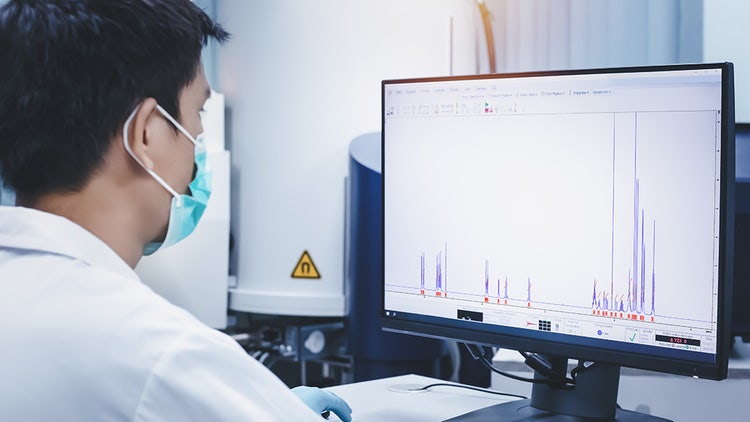
Metabolite identification depends on coordinated sample preparation, separation, LC-MS acquisition and data analysis. These frequently asked questions explain how each stage affects identification, targeted measurement and downstream decisions.
1. What Is the Difference Between Metabolite Identification and Metabolite Monitoring?
Metabolite identification asks what drug-related species formed and what their likely structures are. It commonly uses broad, information-rich LC-MS acquisition to find and characterize expected and unexpected metabolites.
Metabolite monitoring begins after priority species have been selected for follow-up. It asks how much of the parent drug or selected metabolites are present, or how their levels change over time. Depending on the study question, monitoring may use targeted measurement, relative quantitation or a validated quantitative method. The resulting concentration-time data may then support pharmacokinetic analysis. Monitoring is therefore an umbrella term rather than a single universal workflow.
2. What Are the Key Steps in an LC-MS Metabolite Identification Workflow?
A typical workflow starts with the decision your team needs to make. The study objective, modality, matrix, analyte class, expected abundance and stability risks then shape the analytical route. This framework can be applied to metabolites, impurities and related species across small molecules, oligonucleotides, peptides and other therapeutic modalities.
- Prepare the sample: Extract the analytes while reducing proteins, lipids, salts and other matrix components that can affect recovery or ionization
- Separate the components: Use liquid chromatography to distinguish parent drug, metabolites, impurities, isomers and background species
- Acquire MS evidence: Collect accurate-mass and MS/MS data appropriate to the expected chemistry and abundance of the analytes
- Interpret the signals: Compare retention behavior, isotope patterns, fragment ions, controls and predicted biotransformations
- Measure priority species: Move selected analytes into a targeted or quantitative workflow when the study requires comparison across samples or time
- Connect processing, review and reporting: Use configurable workflows to support peak detection, feature alignment, biotransformation and mass-shift searches, candidate ranking and MS/MS review. Consistent criteria and preserved context can help your team trace conclusions and reuse evidence across studies
The exact workflow depends on your modality and objective. Across these stages, Genedata can provide a connected analytical data layer to help teams analyze metabolites, impurities and related species at scale, not only to report results at the end.
3. How Do You Confirm That an LC-MS Signal Is a Metabolite?
First, determine whether the signal is reproducible and distinct from the background. Blanks, controls and relevant sample groups can help your team assess contaminants, artifacts and analytical noise, while consistent retention behavior adds evidence that the feature is real. Configurable workflows can combine these comparisons with biotransformation libraries, mass-shift searches and filtering criteria to prioritize candidate metabolites, impurities and related species for review.
Accurate mass, isotope pattern and a plausible biotransformation can support a tentative assignment. Candidate ranking and MS/MS review can help your team focus on signals with stronger supporting evidence. Proposed structures or metabolic sites still require experimental MS/MS. In silico prediction and automated annotation can guide interpretation, but cannot replace measured fragmentation.
The strongest confirmation matches retention time and MS/MS behavior to an authentic reference standard. Provisional assignments may be sufficient in early discovery, while exposure, safety or regulatory conclusions may require stronger identity evidence and a study-appropriate validated method.

Ready to strengthen your MetID workflow?
Explore how connected sample preparation, separation, LC-MS and data analysis strategies can help your team generate more confident, decision-ready metabolite evidence.
4. How Are Low-Abundance Metabolites Detected and Characterized by LC-MS?
For a low-abundance metabolite, the central challenge is capturing enough reliable signal to support an assignment. The precursor ion must be detected consistently and the MS/MS spectrum must contain enough diagnostic fragments to distinguish plausible structures. If those fragments sit near the noise level, the feature may be visible without being characterizable.
The acquisition method must generate both a reproducible precursor signal and enough diagnostic fragment ions to support structural interpretation. Depending on the application, high-resolution MS and information-rich fragmentation may improve mass accuracy and product-ion coverage, providing additional evidence for low-abundance assignments. Acquisition settings should be evaluated across the expected abundance range. Consistent processing and review criteria can then help your team compare spectra and prioritize features with enough evidence for further characterization.
5. How Do LC-MS Sample Preparation and Chromatography Affect MetID Results?
Sample preparation determines analyte recovery and the matrix burden entering the LC-MS system. Inconsistent extraction adds variability, while phospholipids and other endogenous compounds can cause contamination or ion suppression.
Chromatography should separate the parent drug, metabolites, impurities, matrix components and isomers before detection. Poor retention or co-elution can obscure peak identity and fragment attribution. Choosing separation conditions suited to the matrix and analyte class supports clearer, more reproducible interpretation.
We see a way to improve the recovery and consistency of your biotherapeutic sample by more than 80%, significantly accelerating the drug development process.
Phenomenex | Biozen™ LC Columns
6. When Should Metabolite Discovery Move to Targeted LC-MS Measurement?
Consider targeted follow-up when repeated measurement of a metabolite or related species is needed to answer a defined question about exposure, biological relevance, product quality or safety. Targeted LC-MS measurement can help your team compare selected analytes across matrices, sample groups or time points.
Broad profiling can reveal unexpected species, while targeted methods repeatedly measure defined analytes. As sample volumes grow, automated batch processing, consistent integration rules and longitudinal or PK trend analysis can help your team manage follow-up across studies. Document why each analyte was prioritized and match method sensitivity, precision and validation to the study question.
7. How Can Metabolite Levels Be Estimated Without an Authentic Reference Standard?
Without an authentic standard, metabolite levels can be compared or estimated, but not treated as absolute concentrations. Options include response-normalized trending, a surrogate standard or a parent-equivalent estimate. The reported wording should distinguish qualitative detection, relative change and semi-quantitative estimation.
Because metabolites may respond differently from the parent or surrogate, fully quantitative measurement requires an appropriate calibration strategy and quality controls. Exposure, safety and regulatory conclusions should acknowledge this limitation.
We see a way to reduce time required for HT-MS data analysis by up to 80%
Genedata | Genedata Expressionist
8. How Can Connected MetID Data Workflows Improve Traceability and Cross-Study Analysis?
For your team, traceability starts when data leaves the instrument, not when the final report is generated. Automated, configurable workflows can help standardize peak detection, alignment, annotation, integration, review and reporting while maintaining links among raw data, processing parameters, candidate assignments, MS/MS evidence and analyst decisions.
Connected data and analysis workflows can preserve molecule-, sample-, assay- and project-level context from processing through scientific review. Harmonized methods and review rules can help teams apply analysis more consistently across metabolites, impurities and related species, as well as across modalities, studies, analysts and sites.
Reliable cross-study comparisons still depend on aligned methods, metadata and fit-for-purpose review criteria. When exceptions and manual interventions are documented, your reviewers can reconstruct results and reuse the evidence for trend analysis and follow-up, helping inform development decisions.
See how integrated approaches to sample preparation, separation, LC-MS and data analysis can help build traceable evidence for identification, targeted follow-up and development decisions.