Hybridoma Sequencing

Introduction to Hybridoma Sequencing
Hybridoma technology, first developed by Georges J. F. Köhler and César Milstein, involves fusing a specific antibody-producing B cell with an immortal myeloma cell.1 The resulting hybridoma cell line can continuously produce monoclonal antibodies with defined specificity, forming the backbone of many research, diagnostic and therapeutic tools. Hybridoma sequencing refers to determining the genetic sequence of antibody-producing cells generated through hybridoma technology.2
In modern antibody development, hybridoma characterization requires not only binding properties but also sequence-level verification. Hybridoma sequencing identifies the exact variable region sequences of the heavy and light chains, providing a permanent genetic record of the antibody. This is critical for ensuring reproducibility across laboratories, preventing loss of valuable clones and avoiding genetic drift that can occur during long-term cell culture. Furthermore, hybridoma sequencing also supports antibody engineering methods, such as humanization, affinity maturation and recombinant expression.3
What Is Hybridoma Sequencing?
Hybridoma sequencing is the process of determining the nucleotide sequences of the antibody genes expressed by a hybridoma cell line. Hybridomas are created by fusing an antibody-producing B cell with an immortal myeloma cell, resulting in a stable cell line that continuously produces a single monoclonal antibody.4
Genetic information of antibodies in a hybridoma is encoded in rearranged immunoglobulin genes, which include the variable heavy (VH) and variable light (VL) chain regions that define antigen specificity, as well as the corresponding constant regions that determine isotype and effector function. While hybridoma sequencing typically focuses on VH and VL regions, it may also include constant regions and signal peptides that guide antibody secretion.2
By capturing these sequences, researchers create a molecular blueprint of the antibody, which supports long-term preservation and protects against clone loss or genetic drift. This blueprint also facilitates downstream applications such as antibody humanization, affinity optimization and recombinant antibody production.5,6
Why Hybridoma Sequencing Matters in Research
Hybridoma sequencing is central to maintaining monoclonal antibody fidelity and long-term reliability. Although hybridoma cell lines are designed to be stable, they can undergo genetic drift, light-chain loss or mutations that alter antibody specificity, reduce binding performance, or affect reproducibility across experiments. By sequencing the antibody genes, researchers create a definitive molecular reference that safeguards against such variability.2
In recombinant antibody engineering, hybridoma sequencing offers greater batch-to-batch consistency, scalable manufacturing and flexible engineering options, including isotype switching, affinity maturation and format modification. Therefore, sequence-verified antibodies are especially valuable in diagnostics, drug discovery and functional biology studies, where data reproducibility and regulatory compliance are critical.7
Hybridoma Sequencing Protocol
Overview of Standard Workflow
Hybridoma sequencing typically begins with careful cell preparation. Actively growing hybridoma cells are harvested under sterile conditions to preserve RNA integrity. Next, reverse transcription converts immunoglobulin mRNA into complementary DNA (cDNA). Polymerase chain reaction (PCR) amplification then targets the variable heavy (VH) and variable light (VL) chain regions using framework- or isotype-specific primers.3
Both PCR-based Sanger sequencing workflows and next-generation sequencing (NGS) approaches may be applied. Prior to sequencing, quality control steps, such as RNA integrity assessment, agarose gel verification of amplicon size and purification of PCR products, are critical to ensure accurate downstream results.3
Methods Used in Hybridoma Sequencing
The two key sequencing methods are:2
- Sanger sequencing, which is cost-effective and accurate for single clones
- Next-generation sequencing (NGS) offers deeper coverage and greater sensitivity, which makes it useful for multiple light chains or low-frequency variants
Before sequencing low-yield hybridomas, using optimized RNA extraction protocols, nested PCR strategies, or 5′ RACE (Rapid Amplification of cDNA Ends) techniques may improve success rates. Furthermore, careful primer design and contamination control are essential to prevent amplification of irrelevant immunoglobulin sequences.3
Step-by-Step Hybridoma Sequencing Workflow
Step 1 — Hybridoma Cell Collection & QC
Hybridoma sequencing begins with the collection of actively growing cells under sterile conditions. Quality control measures include checking for viability, RNA integrity, contamination, as well as verifying monoclonality where possible and confirming antibody production via ELISA or Western blot.4
Step 2 — Nucleic Acid Extraction
Total RNA is extracted, and the A260/A280 ratio is measured to assess purity. An approximate 2.0 is required for pure RNA. Following this, RNA integrity is assessed using spectrophotometry or gel electrophoresis before proceeding to reverse transcription.8
Step 3 — Amplification of VH and VL Genes
Reverse transcription converts mRNA into cDNA. PCR amplification targets the variable heavy (VH) and variable light (VL) chain genes using degenerate or framework-specific primers. Nested PCR or 5′ RACE may be used if standard amplification fails, particularly for low-expression or atypical clones.4
Step 4 — Sequencing (Sanger/NGS)
Amplified products are purified before sequencing. Sanger sequencing is widely used for single hybridoma clones and delivers accurate reads of VH and VL regions. Next-generation sequencing (NGS) provides deeper coverage and can detect minor variants or multiple light chains if present.9
Featured Product
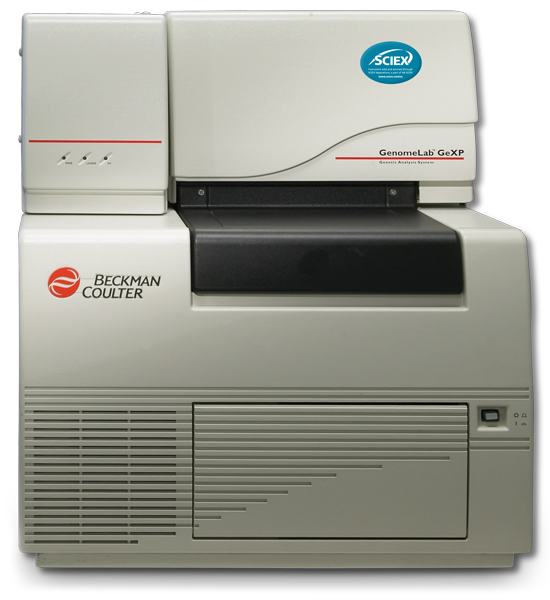
GenomeLab GeXP™ System
Chosen because it is a capillary electrophoresis-based genetic analysis system used for multiplexed gene expression profiling, fragment analysis and sequencing QC, tying directly to this page's subject of hybridoma sequencing.
Step 5 — Bioinformatic Analysis
Raw sequencing datasets are processed and analyzed to evaluate alignment with immunoglobulin reference datasets. The International ImMunoGeneTics Information System (IMGT) is a global bioinformatics resource commonly used for this analysis, as it provides standardized data, nomenclature and tools for antibody analysis. A bioinformatic review ensures correct reading frames and the absence of sequencing artifacts.3
Step 6 — Sequence Verification & Annotation
The complementarity-determining regions (CDRs), which are responsible for antigen-specific binding, are characterized through sequence verification. The three CDRs (CDR1, CDR2 and CDR3) within both heavy and light chains are identified. Constant region sequences are analyzed to determine isotypes. Further investigation identifies stop codons, frameshifts and mutations that may disrupt antibody expression or binding. The finalized, annotated sequence serves as the definitive genetic record for downstream applications.2
Monoclonal Antibody Sequencing Service:
Life sciences partners provide monoclonal antibody sequencing services to identify hybridoma-derived antibodies and accurately preserve their genetic information. When selecting the ideal service, several quality metrics determine reliability and downstream applicability.2
- Accuracy is paramount, typically supported by bidirectional Sanger reads or high-depth NGS coverage
- Chain pairing confidence ensures that the correct heavy (VH) and light (VL) chains are matched, which is critical for functional recombinant expression
- Read depth (in NGS workflows) strengthens confidence in consensus sequences and detects minor variants or aberrant transcripts
- High-resolution CDR identification is essential for preserving antigen-binding specificity and supporting engineering efforts
The workflows and protocols presented by service providers must be validated (ISO 9001-certified) and reproducible. They should comprise a well-explained methodology, established primer sets, contamination controls and standardized bioinformatic pipelines. The final sequencing report should include annotated VH and VL sequences, isotype confirmation, chromatograms or coverage metrics and downloadable sequence files suitable for recombinant antibody production.10,11
Antibody Sequencing Service Capabilities
An antibody sequencing service provides researchers with accurate genetic characterization of monoclonal antibodies derived from hybridomas. By converting antibody-producing cells into defined sequence data, these services help preserve valuable reagents and support reproducible research.2
Typical service offerings include:
- Full-length VH and VL sequencing, capturing complete variable regions along with signal peptides where required
- Isotype determination, which supports antibody subclassification (i.e., IgG, IgM or IgA) through constant region analysis
- Sequence verification and correction, which confirms reading frames and detects aberrant chains
- Some services extend support into recombinant antibody expression, delivering codon-optimized constructs for rapid expression in mammalian systems
When selecting a sequencing partner, researchers should evaluate workflow validation, chain-pairing confidence, data transparency, turnaround time and the clarity of reporting formats to ensure reliability in downstream applications.
Applications of Hybridoma Sequencing
Hybridoma sequencing unlocks a wide range of downstream applications by generating a benchmark for cell-based antibody production. Some examples are listed below:
- Recombinant antibody production: Upon hybridoma sequencing, antibodies can be expressed in controlled mammalian systems, improving batch consistency, scalability and continuity.7
- Antibody engineering and humanization: Hybridoma sequence data support modification of framework regions, affinity maturation, Fc engineering or grafting of complementarity-determining regions (CDRs) into human backbones. These strategies are essential for optimizing binding properties or reducing immunogenicity in translational research settings.7
- Assay development: Sequence-defined antibodies improve reproducibility in ELISA, flow cytometry and Western blot applications, while enabling the implementation of format-switching assays.4
- Development of therapeutic candidates: In a research-use context, hybridoma sequencing provides the molecular foundation for transforming a monoclonal antibody into a potential therapeutic candidate. Having a verified sequence ensures traceability, reproducibility and regulatory-aligned documentation during early-stage discovery.12
- Long-term preservation: Maintaining a complete antibody sequence serves as long-term preservation of intellectual property, protecting valuable discoveries against hybridoma loss or genetic drift.2
Advantages of Hybridoma Sequencing
Hybridoma sequencing offers several critical advantages for modern antibody research and development.
Hybridoma cell lines can be lost due to contamination, freezer failure, genetic drift or declining viability over time. By capturing the exact VH and VL gene sequences, researchers create a permanent genetic record of the antibody. Even if the original cell line is compromised, the antibody can be recreated recombinantly from sequence data.7
Cell-based production may introduce variability across passages or laboratories. Sequence-defined antibodies provide a stable molecular reference, reducing inconsistencies caused by drift, light-chain instability or mixed populations.7
Once sequenced, antibodies can be produced in controlled mammalian expression systems. Recombinant production improves scalability, batch-to-batch consistency and format flexibility, making it more suitable for extensive research programs and translational studies.7
See how Danaher Life Sciences can help
FAQ's
How does hybridoma sequencing work?
Hybridoma sequencing involves extracting RNA from antibody-producing hybridoma cells, converting it to cDNA and amplifying the variable heavy (VH) and light (VL) chain genes using PCR. The amplified products are then sequenced using Sanger or next-generation sequencing to determine the exact antibody gene sequence.
Why is hybridoma sequencing important?
It preserves the precise genetic blueprint of a monoclonal antibody, preventing loss due to cell line instability or genetic drift and supporting reproducible research and recombinant production.
What is the hybridoma sequencing protocol?
The protocol typically includes cell collection, RNA extraction, reverse transcription, VH/VL gene amplification, sequencing and bioinformatic analysis for annotation and verification.
What is the hybridoma technique used for?
The hybridoma technique is used to generate monoclonal antibodies by fusing antibody-producing B cells with immortal myeloma cells, allowing continuous production of specific antibodies for research, diagnostics and therapeutic development.
References
- Köhler G, Milstein C. Continuous cultures of fused cells secreting antibody of predefined specificity. Nature 1975;256(5517):495-497.
- Döring S, Tscheuschner G, Flemig S, Weller MG, Konthur Z. Cost-Effective Method for Full-Length Sequencing of Monoclonal Antibodies from Hybridoma Cells. Antibodies 2025;14(3):72.
- Mitchell KG, Gong B, Hunter SS, Burkart-Waco D, Gavira-O’Neill CE, Templeton KM, et al. High-volume hybridoma sequencing on the NeuroMabSeq platform enables efficient generation of recombinant monoclonal antibodies and scFvs for neuroscience research. Sci Rep 2023;13(1):16200.
- Muhsin A, Rangel R, Vien L, Bover L. Monoclonal antibodies generation: updates and protocols on hybridoma technology. Cancer Immunoprevention: Springer; 2022:73-93.
- Yang X, Chi H, Wu M, Wang Z, Lang Q, Han Q, et al. Discovery and characterization of SARS-CoV-2 reactive and neutralizing antibodies from humanized CAMouseHG mice through rapid hybridoma screening and high-throughput single-cell V (D) J sequencing. Front Immunol 2022;13:992787.
- Sakashita K, Tsumoto K, Tomita M. Advanced hybridoma technology for selective production of high-affinity monoclonal antibodies through B-cell receptors. J Immunol Methods 2022;511:113384.
- Mitra S, Tomar PC. Hybridoma technology; advancements, clinical significance, and future aspects. J Genet Eng Biotechnol 2021;19(1):159.
- Tanyanskiy D, Maltseva O, Trulioff A, Saginbaev U, Evstigneeva P, Voronkina I, et al. The influence of adiponectin on transport of low-density lipoproteins through human endothelial cell monolayer in vitro. Bull Exp Biol Med 2023;176(2):165-169.
- Foreman H-CC, Frank A, Stedman TT. Determination of variable region sequences from hybridoma immunoglobulins that target Mycobacterium tuberculosis virulence factors. PLoS One 2021;16(8):e0256079.
- Lepuschitz S, Weinmaier T, Mrazek K, Beisken S, Weinberger J, Posch AE. Analytical performance validation of next-generation sequencing based clinical microbiology assays using a K-mer analysis workflow. Front Microbiol 2020;11:1883.
- Deneke C, Brendebach H, Uelze L, Borowiak M, Malorny B, Tausch SH. Species-specific quality control, assembly and contamination detection in microbial isolate sequences with AQUAMIS. Genes 2021;12(5):644.
- Han KH, Li Y-C, Parveen R, Venkataraman S, Lin C-W. Technologies for monoclonal antibody discovery and development. Int J Mol Sci 2025;26(21):10470.