Danaher is at SLAS 2024

You’re invited to our Customer Event

cell-line


Visit the Life Sciences companies of Danaher Corporation at SLAS

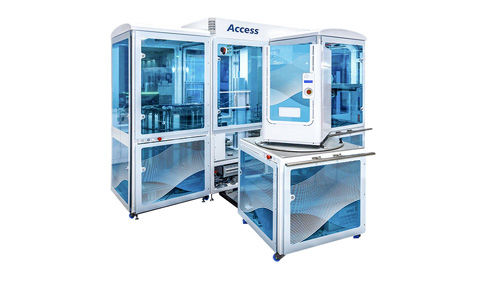
Beckman Coulter Life Sciences

Beckman Coulter Life Sciences

For more than 80 years, Beckman Coulter has been a trusted partner for laboratory professionals, helping to advance scientific research and patient care.

SCIEX

SCIEX

SCIEX is a global leader in analytical and life sciences solutions, specializing in mass spectrometry and capillary electrophoresis technologies. Our precise instruments and innovative software empower scientists and researchers to advance their work with confidence and accuracy.

Molecular Devices

Molecular Devices

Molecular Devices provides high-performance bioanalytical measurement solutions for life science research, pharmaceutical and biotherapeutic development.

Rule line
Leica Microsystems

Leica Microsystems

Leica Microsystems develops leading-edge microscopes and scientific instruments to power technological advances and touch lives in meaningful ways.

IDBS

IDBS

IDBS provides purpose-built software solutions to address the data management challenges prominent across the BioPharma lifecycle and supply chain.

Phenomenex

Phenomenex

Phenomenex chromatography solutions accelerate science and give researchers the tools they require to improve global health and wellbeing.


Rule line
Aldevron

Aldevron

Aldevron provides critical nucleic acids and proteins used to make gene and cell therapies, gene editing technologies, DNA and RNA vaccines. 

Cytiva Pall

Cytiva + Pall

Cytiva and Pall Life Sciences have come together to deliver the breadth, depth, and scale researchers and biopharma need to advance future therapeutics—from discovery to delivery.

IDT

Integrated DNA Technologies (IDT)

IDT manufactures products used in diagnostic tests for many forms of cancer and most inherited and infectious diseases.

Rule line
Aldevron

abcam

​​We believe the scientific community goes further, faster when we go there together. That’s why we partner with life scientists around the world to create innovative research solutions for cancer, neurological disorders, infectious diseases and more.


Rule line

Sign up for our newsletter

Stay up-to-date on the latest news and offerings from the Life Science Companies of Danaher

Rule line

Register now

High Throughput Screening

From screening millions of candidates to characterizing the critical few.

The need for new small molecule drugs to address complex disease phenotypes and emergent infectious diseases is greater than ever before. As screening workflows progress, iterative assays for analyzing candidates increase in complexity. Binary readouts evolve to complex data requiring in-depth statistical analyses. The use of analytical instruments and screening software can help to deliver insights and identify the best candidates for further development.


3D Biology At Scale

Select drug candidates that will confidently proceed through clinical trials during development.

The drug discovery process is undergoing a dynamic shift towards the development and application of clinically relevant human cell-based models. This shift is spurred by historical trends of evaluating drug safety and efficacy with current in vivo models. Leveraging 3D model systems that provide data on drug performance across human tissues and physiological systems brings new challenges in culture and data collection. Fit-for-purpose workflow solutions that enable custom organoid generation, direct 3D cell culture, and complex imaging decrease time required to obtain these groundbreaking data.


Plasmid Library Development

Bio-based drug development is redefining what diseases are possible to treat.

High-quality plasmid vectors are the essential building blocks of life-saving biologics like mRNA drugs, monoclonal antibodies, and immunotherapies. To create these new biologics, plasmid libraries to draw from must be synthesized from oligonucleotide fragments. These libraries must be diverse and require comprehensive testing. Hits must be properly screened and identified before plasmid candidates are scaled in a production environment.


Clone Screening

Antibody drugs, including monoclonal antibodies and antibody-drug conjugates, are changing how we treat cancer and autoimmune diseases.

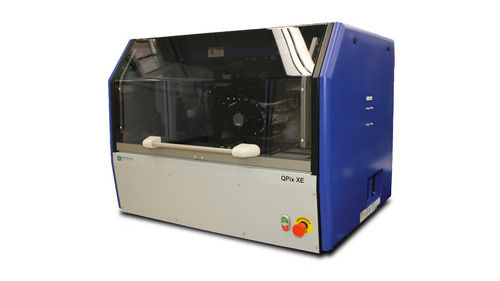
Antibodies are derived from engineered producer cell lines. Screening cell lines to quickly discover the best antibody candidates is no simple task, and more complex antibody designs are extending development timelines. Establishing cell lines is a long process, with numerous steps and challenges. Cell culture, cell line screening, and antibody analysis must be performed in parallel to rationally develop antibodies.


Agenda and Abstracts

Saturday, February 3, 2024

TImeDescriptionRoom / LocationPresenter
8:30 AM – 12:00 PM EST

Level Up Your 3D Cell Culture: From Research to High Throughput

In the last several years, multiple research publications have shown increased value of using 3D cell models compared to traditional 2D systems. Although considered by many as a more representative model of in vivo biology, setup of 3D models can be more challenging, especially when the throughput is further increased. This course will provide an overview of scaffold and scaffold free techniques and key optimizations for increased throughput through imaging technologies and automation. We will offer tips and tricks for improving cell seeding, handling, processing and use of high content imaging and analysis for 3D applications to address the need of higher throughput demands.

Room 152

Hilary Sherman, BS (she/her/hers) – Corning Life Sciences


Oksana Sirenko, PhD (she/her/hers) – Molecular Devices


Angeline Lim, PhD – Molecular Devices

Monday, February 5, 2024

TimeDescriptionRoom / LocationPresenter
4:30 PM – 4:50 PM EST

A novel, automated workflow for top clone selection in cell line development


Screening for the best clones requires a high-throughput approach, and ideally occurs under near-production, fed-batch conditions. However, a lack of automation and effective integration of lab instruments is often one of the main bottlenecks, which limits the number of clones screened, and hence the possibility of overlooking what could be the best candidates. Manual processes and cultivation conditions that don’t align with production conditions lead to delays in identifying the top clone producers. In this talk, we’ll present a novel and innovative workflow for optimizing a clone-screening workflow as part of the cell line development process.

Solutions Spotlight Theater

(Exhibition 1290)

Matthew Davis, MBA, MS, BS (he/him/his) –Sr. Director R&D, Beckman Coulter Life Sciences
12:00 PM – 1:00 PM EST

Development of a Global Reporter on Transcript Abundance (GRETA) for drug discovery and development


Arpeggio Biosciences has developed an automated RNA sequencing platform capable of measuring genome-wide transcript levels for less than $2 per sample. The platform is ideal for measuring the transcriptomic responses to thousands of individual compounds, allowing rapid definition of each compound's mechanism of action. We have successfully used the platform as part of compound screening cascades as well as part of a hit-to-lead campaign resulting in a first-in-class orally bioavailable GPX4 inhibitor for the treatment of drug-resistant cancers. Importantly, GRETA not only quantifies the on-target effects of a compound, but also the diverse off-target effects of a compound - from a single experiment - allowing rapid prioritization of compounds for further exploration.

104B

Tim Read, PhD, BS (he/him/his) – Co-Founder and Chief Technology Officer, Arpeggio Biosciences


John Fuller, PhD (he/him/his) – Commercial Product Manager, Beckman Coulter Life Sciences

Tuesday, February 6, 2024

TImeDescriptionRoom / LocationPresenter
8:30 AM – 10:00 AM EST

Next generation acoustic ejection mass spectrometry: high analytical speed, low sample consumption, robust architecture and flexible applications to remove bottlenecks and accelerate drug discovery across multiple workflows


In this breakfast seminar, we will showcase a new platform which combines the power of contactless, rapid acoustic sampling with the power of accurate mass spectrometry, to confer benefits of fast turn-around-time, reduced sample requirement, flexible scan types and reproducible data generation, in a streamlined workflow that provides insightful answers to scientific questions and empower critical decision making to advance drug discovery research.


Part 1: Ultrahigh Throughput Compound QC Workflow Using Acoustic Ejection Mass Spectrometry with Accurate Mass Detection


Part 2: Combining sound and time - a screener's wish became true

Room 102A

Parikshit Gokhale (he/him/his) Ontario, Canada


Part 1:

Jun Zhang, Scientific Associate Director, Bristol-Myers Squibb


Part 2:

Markus Stoeckli, Senior Principal Scientist, Novartis Institutes for BioMedical Research

12:00 PM – 1:00 PM EST

Powering high-throughput ELISA assays with recombinant technology


In this talk, we’ll delve into the advantages of SimpleStep ELISA technology, which combines the specificity of recombinant antibodies with the CaptSure immobilization technology. We’ll highlight innovation in high-throughput immunoassays, with a particular focus on SureFire® – the pharmaceutical industry’s go-to platform for high-throughput screening in drug discovery research – as well as a new 384-well format of SimpleStep ELISA. Finally, we’ll examine how our immunoassays effectively solve specific customer challenges, enhancing research efficiency and precision within the field.

Room 152

Antony J. Sheehan, PhD, Director of Immunoassays (Site Head), TGR BioSciences Pty Ltd (abcam Company), South Australia, Australia


Jeff Monette, PhD, Head of Immunoassay Platform Innovation, abcam


Mary Wozniak (she/her/hers), Senior Research Associate, Pharmacology, Arkuda Therapeutics

12:00 PM – 1:00 PM EST

How to gain more insights from more clones in cell line development


More and more therapies based on monoclonal antibodies are rapidly gaining importance in the pharmaceutical market. The timely development of new therapeutic antibodies is closely linked to cell line development. Faster and more efficient development of new stable cell lines that produce sufficient titer is key to identifying new treatments for various cancers and auto immune diseases—to name only a few conditions—because it significantly impacts time to market. Screening for the best clones requires a high-throughput approach, and ideally occurs under near-production conditions (fed-batch). However, a lack of automation and effective integration of lab instruments is often one of the main bottlenecks, which limits the number of clones screened, and hence the possibility of overlooking what could be the best candidates. In addition to the manual handling of cultivation vessels in clone screening, another error-prone task is the handling of samples to measure viable cell density as well as the antibody titer. A time-resolved dataset of these parameters is needed to properly evaluate each clone and make a fact-based decision about which clones to transfer to larger scales. In this talk, we show data from cultivations with CHO clones, and present an automated workflow for cultivation and analysis of these clones.

Room 104B

Anna Kress, Manager Applications Cell Health, Beckman Coulter Life Sciences


Dr. Lukas Bialkowski, Global Market Development Manager, Bioprocessing, Beckman Coulter Life Sciences GmbH

12:00 PM – 1:00 PM EST

The future of cell culture: Transforming the complexities of 3D cell culture into reliable and translatable science


The majority of drugs fail in the later stages of the drug development pipeline and in clinical trials because of insufficient predictivity of cell models used to screen drug candidates. Organoids show great promise as a game-changer in disease modeling and drug screening since they better resemble tissue structure and functionality, and show more predictive response to drugs. However, challenges associated with using organoids, such as assay complexity, reproducibility, and the ability to scale up have limited their widespread adoption as a primary screening method in drug discovery.

Room 102A

Oksana Sirenko, PhD (she/her/hers) – Molecular Devices


Felix Spira – Molecular Devices

2:00 PM – 2:20 PM EST

Z-X-Y: Integrating acoustic dispensing with droplet microfluidics for accelerating gene editing workflows


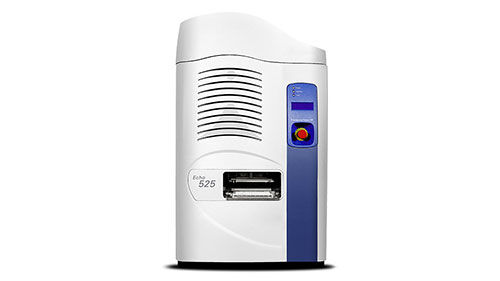
DropGenie has developed a novel microfluidic platform to enable genome-wide arrayed CRISPR screening in primary cells, addressing challenges in precision medicine. This platform minimizes the need for a large number of cells per edit, reducing cellular input requirements from millions to thousands, while maintaining high efficiency and without compromising viability. It can deliver various payloads, such as mRNA, RNP, and DNA, efficiently without affecting cell function. The platform is versatile, working effectively with different primary cell types, including immune cell subsets, stem cells, and other complex cellular systems. The editing cartridge integration with automation enables the execution of thousands of edits per day without human intervention, making drug discovery more cost-effective and efficient at the single-donor level. We present here a workflow with Beckman Coulter Life Sciences to showcase the use of the Echo 655T acoustic liquid handler as well as the Biomek i7 hybrid liquid handler with the DropGenie platform to deliver on the promise of low-volume, high-throughput discovery.

Solutions Spotlight Theater (Exhibition 1290)

Hugo Sinha, MS, BS (he/him/his) – Co-Founder and Chief Operating Officer, DropGenie

Beckman Coulter Life Sciences

2:00 PM – 3:00 PM ESTExhibitor Tutorial - GenedataRoom 102BExhibitor Tutorial - Sponsored By Genedata

Wednesday, February 7, 2024

TImeDescriptionRoom / LocationPresenter
11:00 AM – 11:30 AM EST

High-Throughput Identification of Protein Covalent Binders with Acoustic Ejection Mass Spectrometry


Covalent drugs offer significant therapeutic advantages, including enhanced potency and novel selectivity, making them valuable for tackling challenging diseases traditionally considered "undruggable." The identification of covalent binders to target proteins typically involves directly measuring protein covalent modifications using high-resolution mass spectrometry. As interest in this approach has grown, and with a continually expanding library of compounds, conventional mass spectrometry platforms such as LC-MS or SPE-MS have become limiting factors for high-throughput covalent ligand screening. Acoustic ejection mass spectrometry (AEMS) has emerged as a promising solution for a wide range of drug discovery assays, and in this study, we introduce a prototype high-resolution AEMS system for the rapid screening of a covalent modifier library comprising 10,000 compounds against a 50 kDa-sized target protein. The screening samples were arranged in a 1536-well format, each with a volume of 3 µL. The sample buffer, containing high-concentration salts, was directly analyzed without necessitating any cleanup steps. This allowed for direct analysis without the need for extensive cleanup, minimizing sample preparation efforts and ensuring protein stability. The entire screening process could be completed within a mere 17 hours. An automated data analysis tool facilitated batch quantitation of the protein samples and the assessment of the extent of formation of various covalent protein-ligand adducts. The screening results displayed a high degree of fidelity, with a Z' factor of 0.8 and a hit rate of 2.3%. These identified hits underwent orthogonal testing via the IC50 assay, revealing that 54% of them exhibited biological functionality. Notably, a comparative analysis with LC-MS showcased the AEMS platform's low risk of false positives or false negatives. This innovative platform has enabled robust high-throughput covalent modifier screening, featuring a 10-fold increase in library size and a 10- to 100-fold increase in throughput when compared to similar reports in the existing literature.

Room 210C
Chang Lui, Sciex