From Metabolite Findings to Defensible Decisions

Detecting a metabolite or impurity is only the beginning. The greater challenge is generating enough evidence to determine what the finding means and what action should follow. Whether a team is evaluating an unexpected human metabolite, an impurity above a reporting, identification or qualification threshold or a difference between species, the analytical workflow must support a decision that can withstand scientific and regulatory review.
Although these scenarios share core analytical evidence requirements, each follows a distinct regulatory pathway with different expectations for evaluation and action. The following three scenarios show how sample preparation, separation, LC-MS acquisition and traceable data analysis work together to turn an analytical finding into a defensible development decision.
Three decisions metabolite data must support
In each, a defensible decision depends on the evidence established by the analytical workflow. Across all three scenarios, apply ALCOA+ data integrity expectations, 21 CFR Part 11 requirements for electronic records and EU GMP Annex 11, where applicable.
1. An unexpected human-specific metabolite
The finding: A circulating metabolite not previously observed in nonclinical safety species has been detected in human plasma.
The decision: Confirm identity before further assessment. Assess human exposure and nonclinical coverage to determine whether further safety evaluation is needed. Treat parent-equivalent exposure estimates as preliminary and state the response-factor assumptions behind them.
The evidence it rests on:
- Separation from parent and interfering species
- Fragmentation evidence strong enough to assign structure
- Documented controls and processing records supporting exclusion of batch artifacts
Relevant standards: ICH M3(R2) and FDA Safety Testing of Drug Metabolites guidance for exposure coverage; ICH M10 for the method behind the exposure estimate; records that are attributable and original.
2. An impurity above an ICH threshold
The finding: A related species in a drug substance or product batch exceeds an ICH threshold. Which threshold is crossed determines the required response: above the reporting threshold, the impurity must be reported; above the identification threshold, its structure must be determined; above the qualification threshold, its biological safety at the observed level must be established.
The decision: Characterize before disposition. Confirm the level with an appropriate quantitative method, then match the response to the threshold crossed. Above the identification threshold, assign the structure and likely origin. Above the qualification threshold, either reduce the level through process change or qualify it with supporting safety data and justify the specification accordingly.
The evidence it rests on:
- Recovery and selectivity at threshold level
- Calibration appropriate for the intended quantitative use
- Traceability from raw file to reported level
Relevant standards: ICH Q3A(R2)/Q3B(R2) for reporting, identification and qualification thresholds; ICH Q2(R2) for the fit-for-purpose quantitative method; records complete and accurate, including failed or invalidated runs and their investigations.
3. Cross-species differences in metabolite profiles
The finding: A circulating metabolite is present at greater exposure in humans than in the nonclinical safety species, raising the question of whether existing toxicology studies provide adequate coverage.
The decision: Reassess cross-species relevance. Compare profiles using methods demonstrated to perform well in each matrix, normalize responses and then evaluate whether additional nonclinical coverage or mechanistic investigation is needed or whether the exposure argument should be revised.
The evidence it rests on:
- A consistent or appropriately cross-validated method across matrices
- Internal standards controlling matrix differences
- The same processing rules on every dataset
Relevant standards: ICH M3(R2) and FDA metabolite-safety guidance for exposure coverage; ICH M10 validation and cross-validation as applicable; consistent, enduring and reviewable records.
Workflow requirements for each scenario
These scenarios differ, but they expose the same underlying risk: a decision can only be as defensible as the evidence generated upstream. Each scenario determines what the workflow must deliver and each stage must preserve the analytical evidence needed by the next stage. A clean separation cannot compensate for inconsistent processing and a rigorous audit trail cannot recover a species that was never resolved.
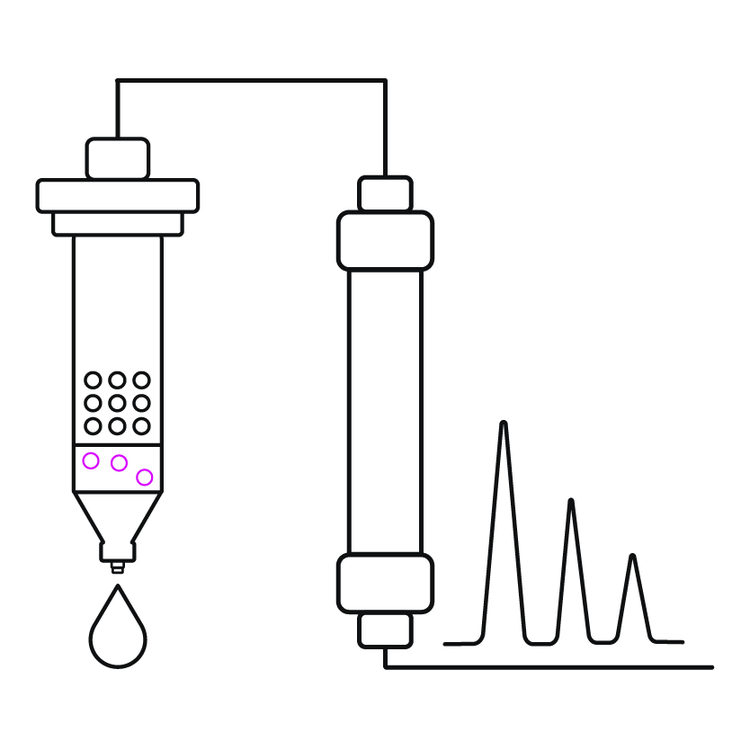
Sample prep and separation: resolve the finding
SCENARIOS 1 & 2
For both scenarios, the first risk appears at the front end of the workflow, but the appropriate chemistry depends on the analyte and modality. For small-molecule metabolites and impurities, Phenomenex Strata SPE cleanup, paired with Kinetex or Luna Omega columns, can enable selective cleanup and separation. For oligonucleotide therapeutics and their related impurities, Clarity OTX SPE and selected Biozen columns may be more relevant.
The specific phase and conditions should be selected for the molecule, matrix and required resolution. In either case, the goal is to resolve a low-abundance human metabolite or a threshold-level impurity from the parent compound, as well as isobaric interferences. If the species co-elutes, downstream evidence may not be sufficient to support the decision.
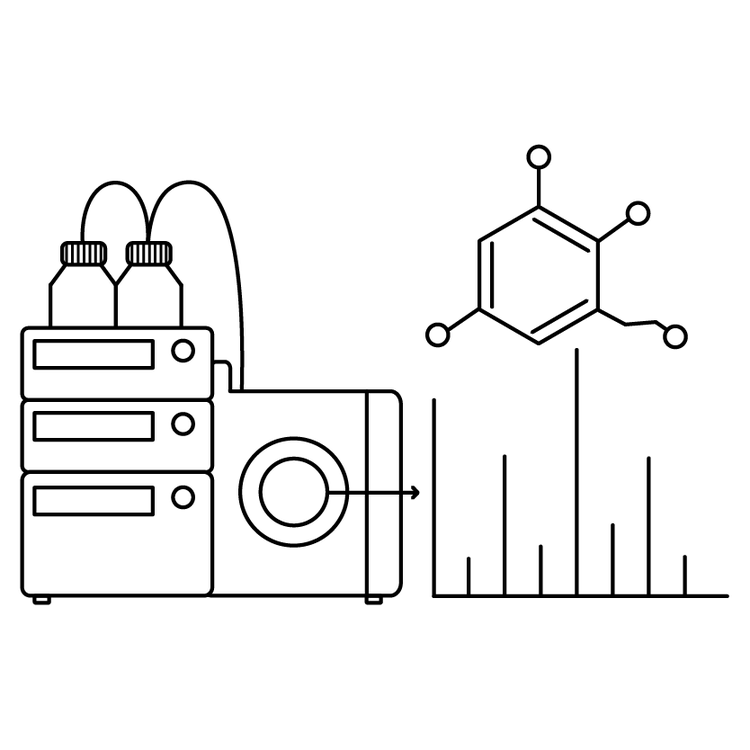
LC-MS acquisition: establish structural evidence
SCENARIOS 1, 2 & 3
Structural characterization supports identity, but identity alone does not establish exposure or impurity level. Exposure- or level-based decisions should rely on a validated or otherwise fit-for-purpose quantitative method appropriate to the intended use. Platform and fragmentation choices should be matched to the analyte, expected abundance and structural question. For routine accurate-mass and MS/MS characterization, the SCIEX X500 QTOF system can support metabolite or impurity assignments.
When greater sensitivity or complementary EAD fragmentation is needed, including for structurally challenging metabolites or therapeutic oligonucleotide impurities, the ZenoTOF 8600 system may provide additional evidence. Scenario 3 also depends on consistent acquisition conditions and internal standards that help control matrix-related differences, enabling more reliable comparison of cross-species profiles.
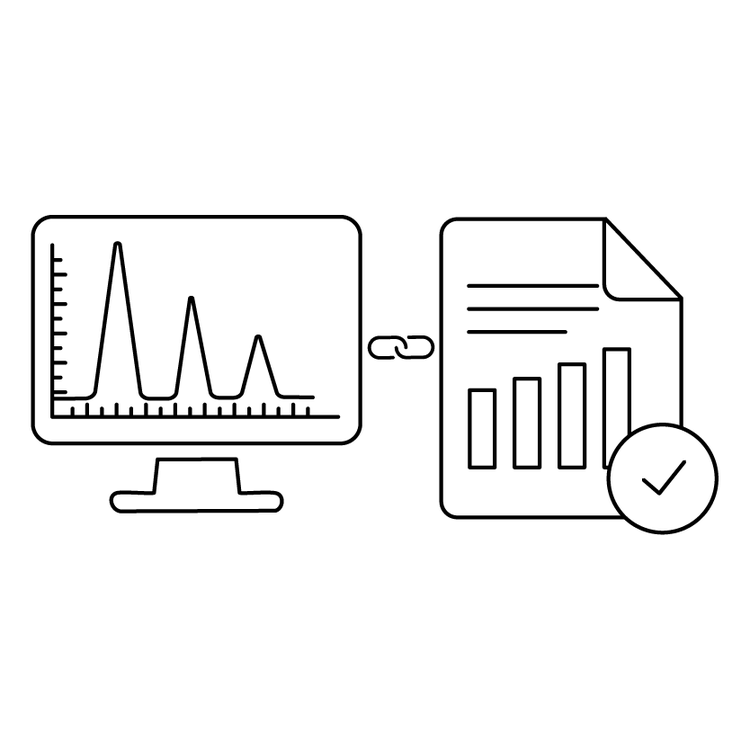
Data analysis and reporting: standardize and trace the results
SCENARIOS 2 & 3
Genedata Expressionist enables standardized processing of human and nonclinical animal data across sample batches, helping reduce analyst-dependent variation and support more reliable profile comparisons. Traceable processing records allow reviewers to reconstruct how results were generated. This also supports Scenario 2 by linking reported impurity levels to the underlying raw data.
Genedata Expressionist enables standardized processing of human and nonclinical animal data across sample batches, helping reduce analyst-dependent variation and support more reliable profile comparisons. Traceable processing records allow reviewers to reconstruct how results were generated. This also supports Scenario 2 by linking reported impurity levels to the underlying raw data.
Putting the workflow into practice: impurity evidence for development decisions
The following case study illustrates Scenario 2, applied here to oligonucleotide impurity profiling. It shows how integrated analytical evidence can help teams move from an impurity signal to a prioritized and supportable next step.
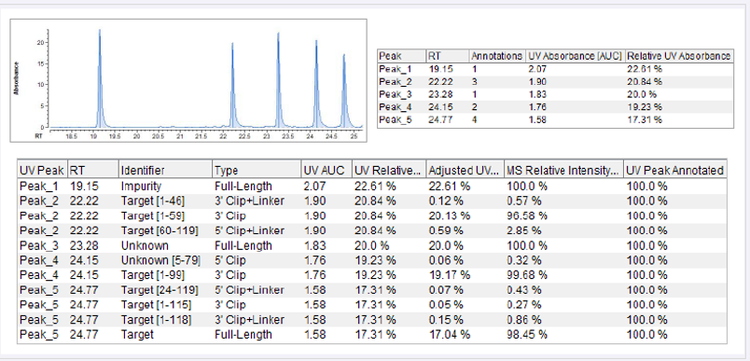
In this case study (Automated Candidate Creation Workflow for Intact Mass Mapping of Oligo Therapeutics), Genedata Expressionist links each UV peak to its annotated MS components and their relative intensities. This supports Scenario 2 by helping teams prioritize impurities for further characterization. Before deciding on process changes or qualification, confirm impurity levels using an appropriate quantitative method.
Build the evidence around the decision
Human-specific metabolites, threshold-level impurities and cross-species differences raise distinct questions; no single instrument result or workflow stage can resolve them alone. Defensible decisions depend on selective sample preparation, reliable separation, structurally informative MS evidence, consistent processing and traceable reporting working together.
When these elements are aligned with the decision from the beginning, teams can investigate findings more efficiently, communicate confidence more clearly and determine the next development step with evidence that withstands review.
Read the eBook to explore how integrated separation, LC-MS and data-processing workflows can help your team turn metabolite and impurity findings into decision-ready evidence.