LC-MS Integrated Solutions
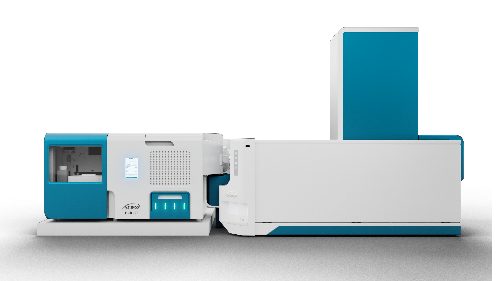
We See a Way to fully characterize intact proteins 95% faster*
Discover How
https://lifesciences.danaher.com/us/en/we-see-a-way/intabio-zt-95-faster.html
Features
Essential features of our LC-MS Integrated solution
- Traditionally, the procedure for identifying and understanding the structural distinctions of individual charge variant components is a time-consuming process, lasting weeks and necessitating the use of multiple instruments and involving numerous manual steps. However, LC-MS systems streamline this process by enabling the LC separation, quantification, and identification of individual charge variants in a matter of minutes, all within a single platform.
- We offer MS systems that deliver consistent and precise reproducibility in challenging matrices, offering high specificity for confident results, reducing the need for re-runs, maintaining data quality, and saving on reagent costs compared to other technologies.
- Our robust and sensitive high-resolution QTOF technology helps achieve superior detection of metabolites, whether small or large molecules, offering rapid, high-resolution MS/MS data for all identifiable analytes.
- Our LC-MS solutions help achieve high-sensitivity quantification and flexible analytical flow usability, offering expert results across a wide flow-rate range without manual adjustments. Our tool-free setup and innovative source are supported by industry-leading quantitative mass spectrometers and compliant software.
- Our solutions leverage LC system downtime by merging two LC systems into one Mass Spec, effectively doubling throughput while also mitigating carryover and pinpointing samples for potential retesting, resulting in reduced sample analysis time.
- Our LC-MS integrated systems are tailored to address a wide range of biologics quantitation challenges, featuring top-tier hardware with exceptional sensitivity and a linear dynamic range to accurately quantify biotherapeutics in both pre-clinical and clinical sample matrices.
Applications
Applications of our LC-MS Integrated solution
- Our solutions allow you to achieve highly sensitive quantitation without compromising speed and reliability while providing substantial signal-to-noise benefits and eliminating the challenges and intricacies associated with setting up low-flow assays. We offer comprehensive solutions to transition to large molecule bioanalysis with quicker, precise results.
- Our accurate mass spectrometer integrated with liquid chromatography solutions can be used to monitor and analyze the metabolic profiles of cell lines to ensure optimal growth and productivity during cell line development and to characterize and quantify monoclonal antibodies during mAb development and production.
- During mRNA development and manufacturing, LC-MS lab equipment can assist in verifying the purity and integrity of mRNA molecules, critical for mRNA-based therapeutics and vaccines, and identifying the purity of antisense oligonucleotides during antisense oligonucleotide development and manufacturing, which are essential components of gene-targeted therapies.
- Coupling of MS with LC is instrumental in pDNA quality control, enabling the assessment of the quality and integrity of plasmid DNA, a critical component in applications like gene therapy and recombinant protein production.
- Our LC-MS machines offer sensitive and robust analysis for therapeutic peptides like glucagon and insulin glargine, as well as high-quality quantitation of antibody drug conjugates, ensuring accurate and reliable results in biopharmaceutical research and development.
What is the workflow involved in LC-MS analysis?
The LC-MS analysis workflow typically involves the separation of analytes by liquid chromatography (LC) followed by their detection and identification using tandem mass spectrometry (MS).
How do HPLC systems differ from standard LC systems in LC-MS?
High-performance liquid chromatography (HPLC) systems are a subset of standard LC systems that are designed to handle higher pressure and flow rates, making them more suitable for coupling with LC-MS to achieve enhanced separation and analytical capabilities.
What is the role of "analyte" in the context of sample analysis, and what are "complex samples"?
The "analyte" refers to the specific molecule or compound of interest being analyzed in a sample. For example, analysis of a drug, biomarker, or other substance; "complex samples" typically refer to samples containing a wide range of molecules, such as biological samples, which often require advanced techniques like LC-MS for precise identification and quantification of analyte molecules within them.
What are the key components in a typical LC-MS system, and what roles do they play?
In an LC-MS system, key components include:
- The detector - Identifies and quantifies analytes.
- The solvent - Carries the sample through the chromatography column.
- The ionization source - Converts analytes into ions for MS analysis.
- The triple quadrupole mass spectrometer - A type of mass analyzer used for precise quantitation and compound identification in tandem mass spectrometry (MS/MS) experiments.