Ionization Methods: Principles, Types and Applications

Introduction to Ionization Methods
Ionization is a crucial process in analytical chemistry, as it allows molecules to acquire a charge so that they can be detected and analyzed by mass spectrometry. The choice of ionization method directly affects sensitivity, reproducibility and the range of analytes that can be studied. Over the years, advances in mass spectrometry technology have led to the development of various ionization techniques, each tailored to different molecular types and experimental needs, cementing the significance of ionization in modern structural characterization workflows.1
What Are Ionization Methods?
Ionization methods are techniques used to convert neutral molecules into charged ions, which can then be analyzed by mass spectrometry and other analytical platforms. This process is fundamental because most detection technologies rely on charged species to measure molecular mass, abundance and structure. By efficiently generating ions without causing excessive fragmentation, ionization methods ensure that the molecules remain representative of their original form for accurate characterization.1
In analytical chemistry, ionization plays a central role in applications ranging from small molecule quantification to complex-mixture analysis. It contributes to biological research by streamlining the characterization of proteins, peptides, metabolites and nucleic acids, often providing insights into molecular interactions and biological pathways.1
Several interrelated factors influence the effectiveness of an ionization method.2
- Molecular stability determines how easily a molecule can be ionized without disintegration
- Chemical properties, such as polarity, molecular weight and functional groups, determine how readily a molecule gains or loses a charge
- Instrument characteristics, such as the ion source, vacuum level and detector sensitivity, affect the efficiency of ion generation and capture
High ionization efficiency is essential because it directly impacts sensitivity, allowing even trace analytes to be detected. It also reduces signal noise, ensuring that the detected ions accurately reflect the sample rather than background interference.2
Types of Ionization Methods
Several ionization techniques are employed in analytical laboratories, each optimized for specific molecular properties and experimental goals. They are broadly classified into soft and hard ionization methods.
- Soft ionization techniques, such as electrospray ionization (ESI) and matrix-assisted laser desorption/ionization (MALDI), gently ionize molecules with minimal fragmentation, preserving the intact molecular ion. These methods are ideal for analyzing large biomolecules such as proteins, peptides and nucleic acids.3
- Hard ionization methods, including electron ionization (EI), impart higher energy to molecules, often causing extensive fragmentation. They can provide detailed structural information for small molecules and complex mixtures.4
The choice of ionization method depends on multiple factors. 5
- Analyte type and molecular weight influence how readily a molecule can be ionized without decomposition
- The sample phase, whether solid, liquid or gas, determines the suitability of specific techniques
- Finally, the desired fragmentation pattern informs whether a soft or hard approach is preferable
Types of Ionization Techniques in Mass Spectrometry
Mass spectrometry relies on a variety of soft and hard ionization techniques, each tailored to specific molecular types and analytical objectives.
The most commonly used soft ionization techniques are:6
- Electrospray Ionization (ESI)
- Matrix-Assisted Laser Desorption/Ionization (MALDI)
- Atmospheric Pressure Chemical Ionization (APCI)
- Atmospheric Pressure Photoionization (APPI)
- Chemical Ionization (CI)
Hard ionization methods for mass spectrometry include:7
- Electron Ionization (EI)
- Inductively Coupled Plasma Ionization (ICP)
Choosing the appropriate ionization method depends on several criteria such as molecular size, polarity and sample composition. Furthermore, researchers should decide whether to prioritize structural elucidation or molecular integrity. Ultimately, matching the ionization technique to the analyte and experimental goal ensures accurate, reproducible and meaningful mass spectral data for both research and clinical applications.7
Soft Ionization Methods
Electrospray Ionization (ESI)
Electrospray ionization works by applying a high voltage to a liquid sample, creating a fine spray of charged droplets. As the solvent evaporates, droplets shrink, increasing their charge density. Thus, analyte molecules acquire multiple charges, enabling the detection of high-mass biomolecules within the mass spectrometer. ESI is highly compatible with peptides, proteins, metabolites and other polar biomolecules. The ability to produce both positive and negative ions, along with reduced fragmentation, makes it ideal for both quantitative analysis and high-throughput applications, such as proteomics and metabolomics workflows.8
Matrix-Assisted Laser Desorption/Ionization (MALDI)
The analyte is co-crystallized in a matrix and irradiated by a UV-range laser. The evaporating matrix transfers energy to the analyte, facilitating the ionization of the molecules within. The high sensitivity of this technique is particularly suitable for complex biological samples containing high-mass biomolecules, including proteins and large peptides. MALDI's ability to generate intact molecular ions makes it valuable for imaging mass spectrometry, enabling spatial mapping of biomolecules in tissue sections and other complex samples. 9
Atmospheric Pressure Chemical Ionization (APCI)
APCI operates by carrying a liquid sample from a liquid chromatography (LC) system to the ionization chamber and nebulizing it. The solvent passes through a corona discharge, which ionizes the solvent molecules and generates ions, primarily from moderately polar compounds. It is often used in liquid chromatography-mass spectrometry (LC-MS) workflows. It is particularly effective for small to mid-sized molecules and low-concentration samples that are less amenable to ESI.10
Atmospheric Pressure Photoionization (APPI)
APPI is another ionization technique that can be coupled to liquid chromatography. In this technique, a vacuum ultraviolet (VUV) light source that operates at atmospheric pressure is used to ionize molecules. It is especially suited for nonpolar molecules that are difficult to ionize by ESI or APCI. The ability to polarize molecules across a broad polarity range makes APPI helpful in analyzing a wide range of samples, from petroleum compounds and pesticides to lipids and hydrocarbons in drug metabolites.11
Chemical Ionization (CI)
CI is a soft, indirect ionization method that involves introducing a reagent gas, such as methane or ammonia, into the sample. High-energy electrons initially ionize the gas, producing reagent ions that interact with sample molecules to form molecular and/or adduct ions. CI produces minimal fragmentation and is helpful for small molecules that require the intact molecular ion. Because the reagent gas can be ionized to produce positive or negative ions, CI can be used to analyze various samples.12
Featured Product
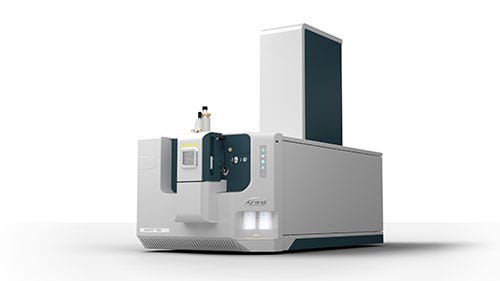
ZenoTOF 7600 System for Mass Spectrometry
Chosen because it is a high-resolution QTOF mass spectrometer used for deep, quantitative protein/peptide characterization, tying directly to this page's subject of ionization methods.
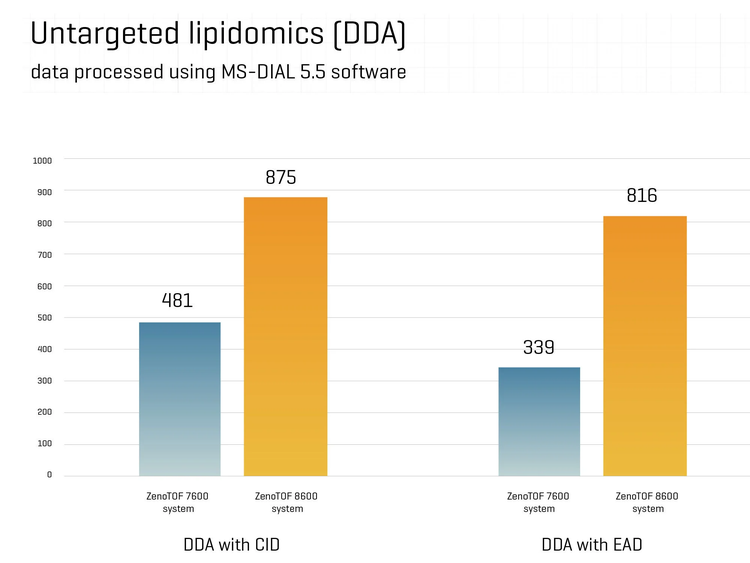
ZenoTOF 8600 system for Mass Spectrometry
Chosen as a complementary second option because it is a next-generation high-resolution QTOF system offering electron-activated dissociation for deeper structural/ionization studies, also directly relevant to ionization methods.
Hard Ionization Methods
Electron Ionization (EI)
Hard ionization techniques involve imparting high energy directly to molecules, often causing extensive fragmentation. They can be particularly useful when the priority is structural information about the analyte, rather than simply detecting its molecular mass.13
Electron ionization is the most frequently used hard method in mass spectrometry. The sample molecules are bombarded with electrons of ~70 eV energy, emitted from a heated cathode in the ionization chamber. The impact of these electrons causes chemical bonds to break and sample molecule electrons to be emitted. Secondary (fragment) ions can also form from the parent molecular ion. Thus, EI generates a series of fragment ions that provide detailed structural information about the molecule. Because of its consistent fragmentation profiles, EI is widely used for compound identification, library matching and elucidation of molecular structures in both research and industrial applications.13
Inductively Coupled Plasma (ICP)
ICP is a hard-ionization technique often used for trace-element analysis. The sample is initially nebulized into a gaseous state and then exposed to an inductively coupled plasma at very high temperatures. This interaction breaks the sample into its atoms, producing singly charged ions. ICP is particularly effective at ionizing metals. Its broad elemental coverage is ideal for environmental monitoring, food safety, geochemistry and industrial quality control.14
Comparison of Mass Spectrometry Ionization Methods
Applications of Ionization Methods
Ionization techniques are central to a wide range of applications in research, industry and clinical practice.
- Drug discovery - soft ionization methods such as ESI and APCI are widely used for metabolomics studies, pharmacokinetic profiling and the analysis of lead compounds, allowing accurate measurement of molecular masses and structural characterization of metabolites15
- Proteomics - ESI and MALDI facilitate peptide fingerprinting, protein identification and structural proteomics, preserving molecular integrity while generating high-quality mass spectra16
- Clinical diagnostics - ionization methods enable sensitive detection of biomarkers and support high-throughput screening assays, helping identify disease states or monitor therapeutic responses5
- Bioprocess monitoring and product quality assessment - mass spectrometry coupled with appropriate ionization methods allows precise characterization of biologics, ensuring consistency and safety17
The integration of ionization techniques with high-resolution mass spectrometry further enhances sensitivity, mass accuracy and the ability to resolve complex mixtures, expanding the scope of analytical capabilities across chemistry, biology and medicine.18
Factors to Consider When Choosing an Ionization Method
Selecting the appropriate ionization method is a critical step in designing a mass spectrometry experiment, as it directly affects sensitivity, accuracy and data quality.
One key factor is the complexity and chemical properties of the sample, including molecular weight, polarity and stability, which collectively influence how readily the analyte can be ionized without degradation. Ionization efficiency is also crucial, as higher efficiency improves sensitivity and reduces noise, particularly for low-abundance analytes. The degree of fragmentation required determines whether a soft or hard ionization approach is preferable: soft methods preserve intact molecular ions, while hard methods provide detailed structural information through fragment ions.19
Additional considerations include throughput and workflow requirements. ESI coupled with LC-MS supports high-throughput analyses, whereas MALDI or EI may require more specialized sample preparation. Finally, compatibility with separation techniques, including liquid chromatography, gas chromatography, or direct infusion, must be considered to ensure seamless integration, optimal ionization and reliable spectral data.20
Challenges in Ionization Techniques and Solutions
Technical challenges may obscure ionization efficiency and limit the reliability of mass spectrometry analysis.
Sample preparation is often time-consuming and can lead to incomplete ionization or excessive fragmentation. This challenge is amplified when working with small-volume samples. Ambient ionization approaches, such as Desorption Electrospray Ionization (DESI)21 and Direct Analysis in Real Time (DART)22, allow samples to be analyzed with minimal preparation, facilitating rapid acquisition of mass spectral data directly from surfaces or bulk materials. Furthermore, ionization systems can be adapted to miniaturized and microfluidic formats, allowing integration with small-volume samples and supporting high-throughput analytical workflows.23
Reproducibility and consistency are critical for drug discovery workflows and diagnostics involving omics profiling. Lab automation is essential for streamlining sample introduction, ion generation, instrument calibration and data acquisition, reducing variability caused by manual handling, particularly in experiments requiring large numbers of samples or repeated measurements. By standardizing routine processes, automation ensures consistent ionization efficiency and data quality, resulting in reliable analytical results across a range of applications.24
See how Danaher Life Sciences can help
FAQ's
What does “ionization method” mean in mass spectrometry?
An ionization method is the technique used to convert neutral molecules into charged ions so they can be detected and analyzed by a mass spectrometer.
What is the difference between “soft” and “hard” ionization methods?
Soft ionization produces intact molecular ions with minimal fragmentation, while hard ionization imparts higher energy, generating extensive fragment ions for structural analysis.
Why is ionization necessary for mass spectrometry?
Mass spectrometers measure mass-to-charge ratios of ions. Without ionization, neutral molecules cannot be manipulated or detected by the instrument’s electric and magnetic fields.
What are the standard ionization methods for GC–MS?
Electron Ionization (EI) and Chemical Ionization (CI) are the most common, both operating in the gas phase.
What are the standard ionization methods for LC–MS?
Electrospray Ionization (ESI), Atmospheric Pressure Chemical Ionization (APCI) and Atmospheric Pressure Photoionization (APPI) are widely used for liquid-phase samples.
- Banerjee S. Empowering clinical diagnostics with mass spectrometry. ACS omega 2020;5(5):2041-2048.
- Rozanova S, Barkovits K, Nikolov M, Schmidt C, Urlaub H, Marcus K. Quantitative mass spectrometry-based proteomics: an overview. Quantitative methods in proteomics 2021:85-116.
- Poteshin SS, Zhilyaev DI, Borisov RS. A simple soft ionization approach for GC-MS assisted by capillary array. Talanta 2023;253:123924.
- Devata S, Cleaves HJ, Dimandja J, Heist CA, Meringer M. Comparative evaluation of electron ionization mass spectral prediction methods. J Am Soc Mass Spectrom 2023;34(8):1584-1592.
- Thomas SN, French D, Jannetto PJ, Rappold BA, Clarke WA. Liquid chromatography–tandem mass spectrometry for clinical diagnostics. Nat Rev Methods Primers 2022;2(1):96.
- Mase C, Sueur M, Lavanant H, Rüger CP, Giusti P, Afonso C. Ion Source Complementarity for Characterization of Complex Organic Mixtures Using Fourier Transform Mass Spectrometry: A Review. Mass Spectrom Rev 2025;44(5):808-829.
- Suarez-Criado L, Queipo-Abad S, Rodriguez-Cea A, Rodriguez-Gonzalez P, Alonso JIG. Comparison of GC-ICP-MS, GC-EI-MS and GC-EI-MS/MS for the determination of methylmercury, ethylmercury and inorganic mercury in biological samples by triple spike species-specific isotope dilution mass spectrometry. J Anal At Spectrom 2022;37(7):1462-1470.
- Prabhu GRD, Williams ER, Wilm M, Urban PL. Mass spectrometry using electrospray ionization. Nat Rev Methods Primers 2023;3(1):23.
- Chen X-F, Hou X, Xiao M, Zhang L, Cheng J-W, Zhou M-L, et al. Matrix-assisted laser desorption/ionization time of flight mass spectrometry (MALDI-TOF MS) analysis for the identification of pathogenic microorganisms: a review. Microorganisms 2021;9(7):1536.
- Hiraoka K, Shimada H, Kinoshita K, Rankin-Turner S, Ninomiya S. What is the advantage of alternative current (AC) corona discharge for APCI mass spectrometry? Int J Mass spectrom 2024;504:117299.
- Vinci G, Piccolo A, Bridoux M. Complementary ESI and APPI high resolution mass spectrometry unravel the molecular complexity of a soil humeome. Anal Chim Acta 2022;1194:339398.
- Xu L, Coggon MM, Stockwell CE, Gilman JB, Robinson MA, Breitenlechner M, et al. Chemical ionization mass spectrometry utilizing ammonium ions (NH 4+ CIMS) for measurements of organic compounds in the atmosphere. Atmos Meas Tech 2022;15(24):7353-7373.
- Famiglini G, Palma P, Termopoli V, Cappiello A. The history of electron ionization in LC-MS, from the early days to modern technologies: A review. Anal Chim Acta 2021;1167:338350.
- Van Acker T, Theiner S, Bolea-Fernandez E, Vanhaecke F, Koellensperger G. Inductively coupled plasma mass spectrometry. Nat Rev Methods Primers 2023;3(1):52.
- Wang Y, Hummon AB. MS imaging of multicellular tumor spheroids and organoids as an emerging tool for personalized medicine and drug discovery. J Biol Chem 2021;297(4):101139.
- Darie-Ion L, Whitham D, Jayathirtha M, Rai Y, Neagu A-N, Darie CC, et al. Applications of MALDI-MS/MS-based proteomics in biomedical research. Molecules 2022;27(19):6196.
- Joseph JA, Akkermans S, Van Impe JF. Processing method for the quantification of methanol and ethanol from bioreactor samples using gas chromatography–flame ionization detection. Acs Omega 2022;7(28):24121-24133.
- Lai YH, Wang YS. Advances in high‐resolution mass spectrometry techniques for analysis of high mass‐to‐charge ions. Mass Spectrom Rev 2023;42(6):2426-2445.
- Unsihuay D, Mesa Sanchez D, Laskin J. Quantitative mass spectrometry imaging of biological systems. Annu Rev Phys Chem 2021;72(1):307-329.
- Dueñas ME, Peltier‐Heap RE, Leveridge M, Annan RS, Büttner FH, Trost M. Advances in high‐throughput mass spectrometry in drug discovery. EMBO Mol Med 2023;15(1):e14850.
- Morato NM, Cooks RG. Desorption electrospray ionization mass spectrometry: 20 years. Acc Chem Res 2023;56(18):2526-2536.
- Pardi-Tóth V, Kuki Á, Kordován MÁ, Róth G, Nagy L, Zsuga M, et al. Molecular data storage using direct analysis in real time (DART) ionization mass spectrometry for decoding. Sci Rep 2023;13(1):16576.
- Fan X, Jiao B, Zhou X, Zhang W, Ouyang Z. Miniaturization of mass spectrometry systems: an overview of recent advancements and a perspective on future directions. Anal Chem 2025;97(17):9111-9125.
- Karki S, Meher AK, Inutan ED, Pophristic M, Marshall DD, Rackers K, et al. Development of a robotics platform for automated multi‐ionization mass spectrometry. Rapid Commun Mass Spectrom 2021;35:e8449.