Decoding Histone Modifications: Epigenetic Mechanisms, Detection and Drug Discovery

Key Takeaways
- Histone modifications are reversible chemical changes that regulate chromatin structure and gene expression without altering the DNA sequence
- Major histone PTMs, including acetylation, methylation, phosphorylation and ubiquitination, control processes such as transcription, DNA repair and cell differentiation
- Histone acetylation is generally associated with open chromatin and active gene expression, whereas specific methylation marks can either activate or repress transcription
- Histone modifications are deposited, recognized and removed by specialized writer, reader and eraser proteins that coordinate epigenetic regulation
- Dysregulated histone modifications contribute to diseases such as cancer and have become important targets for epigenetic therapies, including HDAC inhibitors
- Techniques such as Western blotting, ChIP-seq and mass spectrometry are widely used to detect, quantify and map histone modifications
See how Danaher Life Sciences can help
Introduction to Epigenetics and Histone PTMs
Epigenetics describes heritable changes in gene expression that occur without altering the DNA sequence. A key mechanism of epigenetic regulation involves post-translational modifications of histones (histone PTMs), also known as epigenetic histone marks. These chemical modifications, including acetylation, methylation, phosphorylation and ubiquitination, occur primarily on histone tails and influence the degree of DNA packaging, ultimately affecting gene expression.1
Chromatin exists in two dynamic states: euchromatin, which is loosely packed and transcriptionally active and heterochromatin, which is condensed and generally transcriptionally silent. Together with ATP-dependent chromatin remodeling complexes, histone PTMs regulate transitions between these states by controlling DNA accessibility.2
The "histone code" hypothesis proposes that combinations of histone PTMs function as a language that indicates DNA accessibility. These patterns are recognized by specialized proteins that coordinate processes such as gene activation, gene silencing, DNA repair and cell differentiation. Together, histone modifications provide a dynamic and reversible mechanism for controlling chromatin structure and cellular function.3
The Mechanics of Chromatin: How Modifications Drive Gene Expression
DNA is packaged into chromatin by wrapping around histone proteins to form nucleosomes, the basic structural units of the genome. The positioning and stability of nucleosomes determine how accessible DNA is to transcription factors and other regulatory proteins. When nucleosomes are tightly packed, gene expression is generally repressed, whereas a more relaxed chromatin structure promotes transcription.2
Among histone PTMs impacting nucleosome architecture, acetylation is strongly associated with transcriptional activation. The addition of acetyl groups to lysine residues neutralizes their positive charge, weakening histone–DNA interactions. This results in a more open chromatin structure that allows transcription factors and RNA polymerase easier access to DNA, promoting gene expression.4
In addition to histone PTMs, histone variants contribute to chromatin regulation by altering nucleosome properties. For example, the histone variant H2A.Z is often enriched near gene promoters, where it influences nucleosome stability and facilitates rapid changes in gene expression. Histone variants and PTMs frequently act together to fine-tune chromatin organization and cellular responses.5
Core Histone Modification Types and Their Functions
Histone Acetylation
Histone acetylation involves the addition of acetyl groups to lysine residues on histone tails by histone acetyltransferases (HATs). Acetylation neutralizes lysine's positive charge, weakening its interaction with negatively charged DNA. As a result, chromatin adopts a more relaxed, open conformation, facilitating transcription factor binding and gene expression. Histone deacetylases (HDACs) reverse this process by removing acetyl groups, promoting chromatin compaction and transcriptional repression.6
Several acetylation marks are closely linked to active chromatin. H3K27ac is a hallmark of active enhancers and promoters, distinguishing active regulatory elements from inactive or poised ones.7 H3K9ac is enriched in euchromatin and is strongly associated with transcriptionally active genes.8
Histone Methylation
Histone methylation is the addition of one, two or three methyl groups to lysine residues or one or two methyl groups to arginine residues by histone methyltransferases. Unlike acetylation, methylation does not alter the charge of histones. Instead, its biological effects depend on the modified amino acid, the degree of methylation and the proteins that recognize the mark.9
Lysine residues can undergo mono-, di- or trimethylation, each producing distinct regulatory outcomes, while arginine residues are typically mono- or dimethylated in either symmetric or asymmetric configurations.10 Well-characterized lysine methylation marks include
- H3K4me3, which marks active promoters11
- H3K9me3, a signature of constitutive heterochromatin and gene silencing12
- H3K27me3, deposited by Polycomb Repressive Complex 2 (PRC2) to maintain stable transcriptional repression during development13
Histone Phosphorylation and Ubiquitination
Histone phosphorylation occurs primarily on serine, threonine and tyrosine residues through the action of protein kinases. These modifications regulate diverse cellular processes, including transcription, DNA damage repair, chromosome condensation and mitosis. Depending on the modified residue and cellular context, phosphorylation can either promote or repress gene expression.14
Histone ubiquitination typically involves the attachment of a single ubiquitin molecule to lysine residues. H2AK119 monoubiquitination (H2AK119ub) is commonly associated with Polycomb-mediated gene repression, whereas H2BK120 monoubiquitination (H2BK120ub) promotes transcriptional elongation and facilitates subsequent histone methylation events through modification crosstalk.15
Emerging Histone Modifications
Advances in epigenetics continue to reveal new histone modifications, expanding our understanding of chromatin regulation. Although these modifications are less extensively characterized than acetylation and methylation, they represent important mechanisms of epigenetic regulation.16
- Histone crotonylation is a lysine modification associated with active transcription and is particularly enriched in highly expressed genes
- Histone SUMOylation generally contributes to transcriptional repression by recruiting chromatin-silencing complexes
- Histone citrullination, catalyzed by peptidylarginine deiminases (PADs), converts arginine to citrulline and influences chromatin decondensation and immune responses
- O-GlcNAcylation involves the attachment of N-acetylglucosamine to histones, linking chromatin regulation to cellular metabolism and nutrient sensing
The Epigenetic Machinery: Writers, Readers and Erasers
Three groups of proteins dynamically regulate histone modifications: writers, readers and erasers.17
- Writers deposit chemical modifications onto histones
- Erasers remove these modifications
- Readers recognize these marks to recruit proteins that regulate transcription, DNA repair, replication and chromatin organization
Together, these enzymes establish and interpret the epigenetic landscape, allowing chromatin structure and gene expression to respond to developmental and environmental signals.
Histone Acetyltransferases (HATs)
Histone acetyltransferases (HATs) are writer enzymes that transfer acetyl groups from acetyl-coenzyme A (acetyl-CoA) to lysine residues on histone tails. This reaction neutralizes lysine's positive charge, reducing the affinity between histones and negatively charged DNA. The resulting relaxation of chromatin increases DNA accessibility and generally promotes gene transcription. Major HAT families include the GNAT, MYST and p300/CBP families, each with distinct substrate specificities and regulatory functions.18
Histone Deacetylases (HDACs) & Methyltransferases (HMTs)
Histone deacetylases (HDACs) are eraser enzymes that remove acetyl groups from histones, restoring the positive charge of lysine residues. This strengthens histone–DNA interactions, promotes chromatin compaction and is generally associated with transcriptional repression. The balance between HAT and HDAC activity provides a reversible mechanism for regulating gene expression in response to cellular signals.19
Histone methyltransferases (HMTs) are writer enzymes that catalyze the addition of methyl groups to lysine or arginine residues. Rather than directly altering chromatin accessibility, these methylation marks recruit reader proteins that establish either active or repressive chromatin states. Because many methylation patterns are maintained through cell division, HMTs play a central role in preserving cellular identity and epigenetic memory during development and differentiation.20
Gene Regulation and Transcription Dynamics
Histone acetylation is one of the best-characterized mechanisms linking chromatin structure to gene expression. By increasing DNA accessibility, acetylation promotes the recruitment of transcription factors, RNA polymerase II and chromatin-remodeling complexes, making it a key regulator of transcriptional activation across diverse cell types.4
The activation process begins when histone acetyltransferases (HATs) transfer acetyl groups to lysine residues on histone tails. Acetylation neutralizes lysine's positive charge, weakening histone–DNA interactions and creating a more open chromatin conformation. In addition to relaxing chromatin, acetylated histones serve as binding sites for bromodomain-containing reader proteins, which recruit transcriptional machinery and further enhance gene expression.4
Although histone acetylation is broadly associated with active chromatin, specific acetylation marks have distinct regulatory roles. Acetylation at gene promoters facilitates transcription initiation, while enhancer-associated marks regulate the activity of distal regulatory elements.4
Histone acetylation is essential throughout development because it provides a reversible mechanism for controlling gene expression. Developmental programs require different sets of genes to be activated or silenced at specific times and dynamic changes in histone acetylation allow cells to rapidly respond to differentiation signals while maintaining appropriate patterns of gene expression. This flexibility is equally important in adult tissues, where histone acetylation regulates processes such as cell proliferation, stress responses and tissue homeostasis.4
Histone Modifications in Disease, Cancer and Therapeutics
Disruption of normal histone modification patterns is a hallmark of many diseases, particularly cancer. Abnormal histone acetylation can alter chromatin accessibility, leading to inappropriate activation of oncogenes or silencing of tumor suppressor genes. These epigenetic changes contribute to uncontrolled cell proliferation, impaired differentiation, genomic instability and resistance to apoptosis.1
Aberrant histone acetylation has been reported in numerous malignancies, including breast, colorectal, prostate and hematological cancers. In breast cancer, altered acetylation patterns and dysregulated expression of histone acetyltransferases (HATs) and histone deacetylases (HDACs) have been associated with tumor progression, metastasis and treatment resistance. Similar epigenetic abnormalities have also been identified in other solid tumors and blood cancers, highlighting the widespread role of histone acetylation in cancer biology.21
Because histone acetylation is reversible, it has become an attractive target for therapeutic intervention. HDAC inhibitors restore acetylation levels by blocking the removal of acetyl groups, promoting chromatin relaxation and reactivation of silenced tumor suppressor genes.22
Several HDAC inhibitors have been approved for the treatment of certain hematological malignancies. In contrast, many others are being evaluated in clinical trials for solid tumors, often in combination with chemotherapy, immunotherapy or targeted therapies. These advances underscore the growing importance of epigenetic therapies in precision oncology.23
Advanced Detection Methods and Laboratory Workflows
Sample Preparation
Reliable analysis of histone post-translational modifications begins with careful sample preparation. Histone extraction protocols should preserve PTM integrity by minimizing enzymatic degradation and artificial modification during processing. This is typically achieved through rapid sample handling, low-temperature workflows and the inclusion of protease, phosphatase and deacetylase inhibitors. Consistent extraction methods are essential for generating reproducible and comparable results across experiments.24
Analytical Techniques
Histone acetylation can be detected using several complementary techniques.
- Western blotting provides a straightforward method for measuring global acetylation levels or specific histone acetylation marks using modification-specific antibodies25
- Mass spectrometry offers highly sensitive and quantitative profiling of multiple PTMs simultaneously, making it the gold standard for comprehensive histone modification analysis24
- Chromatin immunoprecipitation followed by sequencing (ChIP-seq) maps histone acetylation marks across the genome, allowing researchers to identify active promoters, enhancers and other regulatory elements7
Together, these approaches provide both quantitative and genome-wide insights into histone acetylation dynamics.
Featured Product
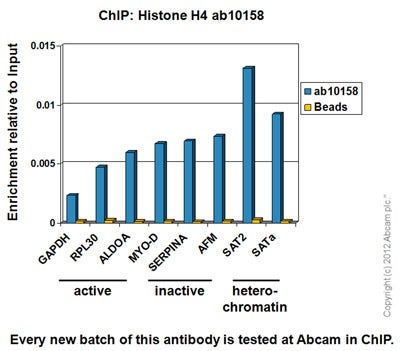
Anti-Histone H4 antibody - ChIP Grade(AB10158)
Chosen because it is a ChIP-validated antibody against histone H4, suited to chromatin immunoprecipitation studies of histone modification, tying directly to this page's subject of histone modifications.
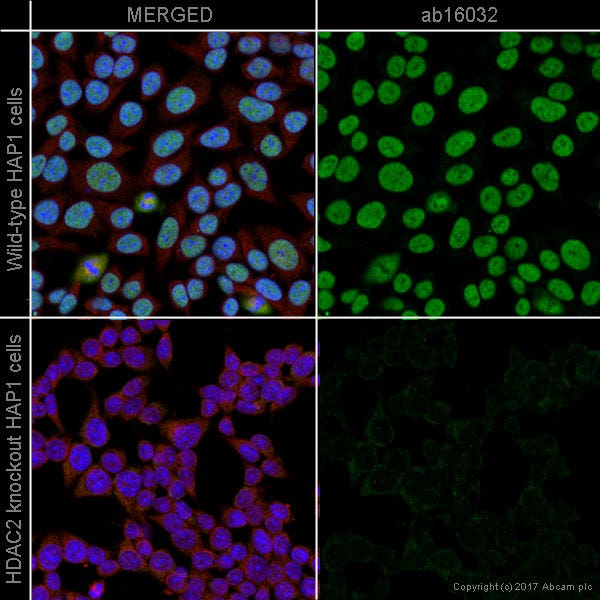
Anti-HDAC2 antibody(AB16032)
Chosen as a complementary second option because it is an antibody against HDAC2, a key histone deacetylase enzyme that removes the acetyl marks being studied, also directly relevant to histone modifications.
High-Quality Tools and Reagents
The quality of antibodies and reagents significantly impacts the reliability of histone PTM studies. Antibodies should be thoroughly validated for their intended applications, including Western blotting and ChIP-seq, with demonstrated specificity for individual histone modifications and minimal cross-reactivity. Using well-characterized antibodies, standardized antibody production and histone extraction protocols and appropriate positive and negative controls improves reproducibility and confidence in experimental results, particularly when comparing findings across laboratories.26
See how Danaher Life Sciences can help
FAQ's
What are histone modifications?
Histone modifications are chemical changes to histone proteins that alter chromatin structure and regulate gene expression without changing the DNA sequence.
How do histone modifications differ from DNA methylation?
Histone modifications alter histone proteins, while DNA methylation adds methyl groups directly to DNA. Both regulate gene activity, but through distinct molecular mechanisms.
How do environmental factors affect histones?
Diet, stress, toxins, exercise, aging and other environmental factors can influence histone modifications, leading to changes in gene expression and cellular function.
How does histone acetylation affect gene expression?
Histone acetylation relaxes chromatin by weakening histone–DNA interactions, increasing DNA accessibility and generally promoting transcription.
How are histone modifications analyzed in the lab?
Common methods include Western blotting, chromatin immunoprecipitation sequencing (ChIP-seq), immunofluorescence and mass spectrometry to identify, quantify and map histone modifications.
References
- Zaib S, Rana N, Khan I. Histone modifications and their role in epigenetics of cancer. Curr Med Chem 2022;29(14):2399-2411.
- Grewal SI. The molecular basis of heterochromatin assembly and epigenetic inheritance. Mol Cell 2023;83(11):1767-1785.
- Geng H, Chen H, Wang H, Wang L. The histone modifications of neuronal plasticity. Neural Plast 2021;2021(1):6690523.
- Shvedunova M, Akhtar A. Modulation of cellular processes by histone and non-histone protein acetylation. Nat Rev Mol Cell Biol 2022;23(5):329-349.
- Cole L, Kurscheid S, Nekrasov M, Domaschenz R, Vera DL, Dennis JH, et al. Multiple roles of H2A. Z in regulating promoter chromatin architecture in human cells. Nat Commun 2021;12(1):2524.
- Liu R, Wu J, Guo H, Yao W, Li S, Lu Y, et al. Post‐translational modifications of histones: Mechanisms, biological functions, and therapeutic targets. MedComm 2023;4(3):e292.
- Sankar A, Mohammad F, Sundaramurthy AK, Wang H, Lerdrup M, Tatar T, et al. Histone editing elucidates the functional roles of H3K27 methylation and acetylation in mammals. Nat Genet 2022;54(6):754-760.
- Montero-Del-Toro JA, Serralta-Interian AA, Nic-Can GI, Lamas M, Rivera-Solís RA, Rodas-Junco BA. Histone H3 lysine 9 acetylation plays a role in adipogenesis of periodontal Ligament-Derived stem cells. Epigenomes 2025;9(2):15.
- Li Y, Chen X, Lu C. The interplay between DNA and histone methylation: molecular mechanisms and disease implications. EMBO Rep 2021;22(5):EMBR202051803.
- Giaimo BD, Ferrante F, Borggrefe T. Lysine and arginine methylation of transcription factors. Cell Mol Life Sci 2024;82(1):5.
- Wang H, Helin K. Roles of H3K4 methylation in biology and disease. Trends Cell Biol 2025;35(2):115-128.
- Padeken J, Methot SP, Gasser SM. Establishment of H3K9-methylated heterochromatin and its functions in tissue differentiation and maintenance. Nat Rev Mol Cell Biol 2022;23(9):623-640.
- Kraft K, Yost KE, Murphy SE, Magg A, Long Y, Corces MR, et al. Polycomb-mediated genome architecture enables long-range spreading of H3K27 methylation. PNAS 2022;119(22):e2201883119.
- Li J, Mahata B, Escobar M, Goell J, Wang K, Khemka P, et al. Programmable human histone phosphorylation and gene activation using a CRISPR/Cas9-based chromatin kinase. Nat Commun 2021;12(1):896.
- Oss-Ronen L, Sarusi T, Cohen I. Histone mono-ubiquitination in transcriptional regulation and its mark on life: emerging roles in tissue development and disease. Cells 2022;11(15):2404.
- Yao W, Hu X, Wang X. Crossing epigenetic frontiers: the intersection of novel histone modifications and diseases. Signal Transduct Target Ther 2024;9(1):232.
- Dan J, Chen T. Writers, erasers, and readers of DNA and histone methylation marks. Epigenetic Cancer Therapy: Elsevier; 2023:39-63.
- Li N, Hamor C, An Y, Zhu L, Gong Y, Toh Y, et al. Biological functions and therapeutic potential of acylation by histone acetyltransferases. Acta Mater Med 2023;2(2):228-254.
- Singh R, Rathore AS, Dilnashin H, Keshri PK, Gupta NK, Prakash SAS, et al. HAT and HDAC: enzyme with contradictory action in neurodegenerative diseases. Mol Neurobiol 2024;61(11):9110-9124.
- González-Suárez M, Aguilar-Arnal L. Histone methylation: At the crossroad between circadian rhythms in transcription and metabolism. Front Genet 2024;15:1343030.
- Lian B, Chen X, Shen K. Inhibition of histone deacetylases attenuates tumor progression and improves immunotherapy in breast cancer. Front Immunol 2023;14:1164514.
- Miziak P, Baran M, Borkiewicz L, Trombik T, Stepulak A. Acetylation of histone H3 in cancer progression and prognosis. Int J Mol Sci 2024;25(20):10982.
- Parveen R, Harihar D, Chatterji BP. Recent histone deacetylase inhibitors in cancer therapy. Cancer 2023;129(21):3372-3380.
- Zhao W, Zhang J, Chen K, Yuan J, Zhai L, Tan M. Mass spectrometry-based characterization of histone post-translational modification. Curr Opin Chem Biol 2025;88:102622.
- Zhu Z, Han Z, Halabelian L, Yang X, Ding J, Zhang N, et al. Identification of lysine isobutyrylation as a new histone modification mark. Nucleic Acids Res 2021;49(1):177-189.
- Berryhill CA, Hanquier JN, Doud EH, Cordeiro-Spinetti E, Dickson BM, Rothbart SB, et al. Global lysine methylome profiling using systematically characterized affinity reagents. Sci Rep 2023;13(1):377.