What is Immunofluorescence?
Immunofluorescence refers to the use of fluorescently tagged antibodies to detect and visualize target proteins based on the light emitted by the fluorescent labels. It is one of the benchmark high-content imaging methods for monitoring the presence, location and abundance of biomolecules within cells and tissues. By combining the precision of antibody-based detection with the sensitivity of fluorescence microscopy, it provides valuable insights into molecular events in biological samples.1
Immunofluorescence has numerous applications in biomedical research and can be employed to study protein expression, arrangement, signaling pathway dynamics and disease-related changes. Drug discovery and diagnostics, in particular, rely on this method to validate protein targets in cancer, infectious and autoimmune diseases, as well as to characterize cellular responses to drug candidates.1
Principle of Immunofluorescence
Immunofluorescence is based on the specific interaction between an antibody and its corresponding antigen. Antibodies are conjugated to fluorescent dyes, also known as fluorophores, which emit light when excited by a particular wavelength. When labeled antibodies bind their target molecules within a sample, the fluorophores generate a bright, detectable signal that marks the precise location of the antigen.2
Immunofluorescence has several advantages over other biomarker detection tools. The high sensitivity of fluorescence microscopy helps researchers detect low-abundance proteins. Additionally, this technology offers versatility for the multiplex detection of multiple biomarkers using different fluorophores. It can be adapted to a range of microscopy platforms, including widefield fluorescence microscopes, confocal systems for optical sectioning and super-resolution microscopy for nanoscale visualization.3
Types of Immunofluorescence
Immunofluorescence can be performed in various formats, depending on the experimental goals, required sensitivity and the number of biomarkers being analyzed. The three major types are direct, indirect and multiplex immunofluorescence, each offering distinct advantages in research, diagnostics and high-content imaging.
Direct immunofluorescence
Direct immunofluorescence uses a primary antibody directly conjugated to a fluorophore. Once the antibody binds its target antigen, the fluorescent signal can be visualized immediately. This method is fast and reduces background noise due to fewer binding steps. However, it may have lower sensitivity because only one fluorophore is attached per antibody.2
Indirect immunofluorescence
Indirect immunofluorescence involves linking an unlabeled primary antibody to a fluorophore-conjugated secondary antibody. This approach amplifies the signal because multiple secondary antibodies can bind to a single primary antibody, thereby increasing the signal strength. As a result, it offers greater sensitivity and flexibility than direct immunofluorescence, especially when detecting low-abundance proteins. That is why it is the widely used method in both research and clinical diagnostics.2
Featured Product
Goat Anti-Rabbit IgG H&L (Alexa Fluor® 594)(AB150080)
Chosen because it is a fluorophore-conjugated secondary antibody used for immunofluorescent/immunolabelling detection of rabbit primaries, tying directly to this page's subject of immunofluorescence.
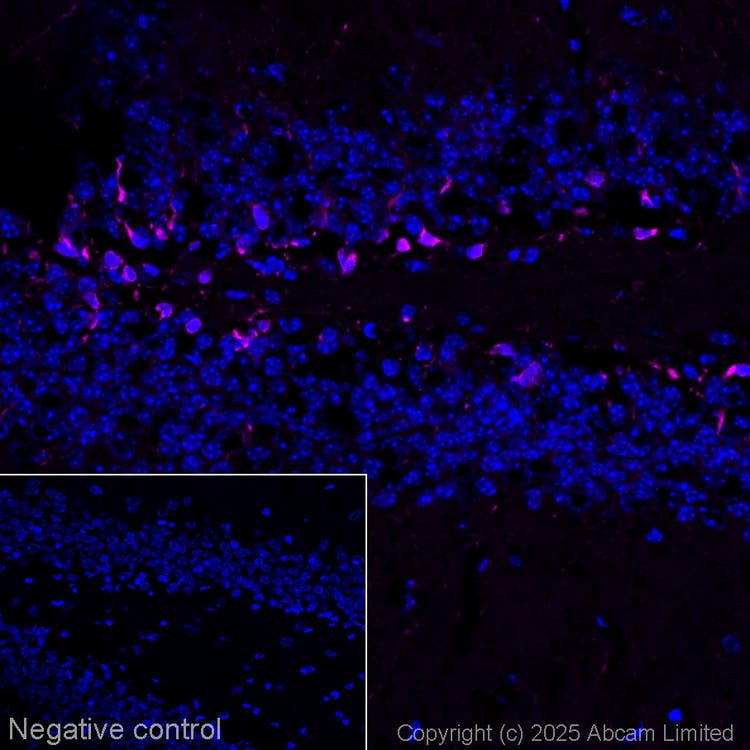
Goat Anti-Mouse IgG H&L (Alexa Fluor® 488) preadsorbed(AB150117)
Chosen as a complementary second option because it is a fluorophore-conjugated, cross-adsorbed secondary antibody used for multicolor immunofluorescence co-staining, also directly relevant to immunofluorescence.
Choosing the Right Antibodies for Your Assay
The successful implementation and interpretation of immunofluorescence experiments relies on the choice of antibodies.
First and foremost, antibodies must be validated to confirm their specificity for the target antigens. Weak or non-specific antibodies may lead to incorrect staining and a high background. Therefore, positive and negative antibody controls must be integrated into quality control measures.5
The choice also depends on the assay format. Direct immunofluorescence is the ideal choice when speed and simplicity are priorities and the target antigens are highly abundant, which eliminates the need for signal amplification.6 On the other hand, indirect immunofluorescence is preferred when high sensitivity is required to visualize difficult-to-detect antigens or fluorophore-conjugated primary antibodies are not readily available. When the latter method is selected, researchers must ensure that the secondary antibody matches the species and isotype of the primary antibody to achieve optimal signal amplification and minimize background.7
A key consideration is whether to use monoclonal or polyclonal antibodies. Monoclonal antibodies offer high specificity by recognizing a single epitope, making them ideal for precision-focused drug discovery and diagnostic applications, where cross-reactivity must be minimal. Polyclonal antibodies, which recognize multiple epitopes, should be selected if broad specificity is needed for biomarker discovery. Furthermore, polyclonal antibodies offer higher signal intensity by binding to the target protein at multiple epitopes, which is particularly useful when detecting low-abundance proteins.8
Another critical consideration is spectral overlap, which might cause cross-reactivity, especially in multiplex immunofluorescence. Non-overlapping fluorophores must be selected to generate clean and interpretable image data.4
Requirements for Successful Immunofluorescence Experiments
Aside from antibody selection, successful immunofluorescence also requires careful sample preparation, validated reagents and optimized imaging conditions. Researchers need a suitable fluorescence microscope, high-quality primary and secondary antibodies and photostable fluorophores that are matched to the instrument’s filter sets.2
Immunofluorescence can be performed on a variety of sample types, including cultured cells, tissue sections, organoids and whole-mount preparations. Both fixed and live-cell samples can be visualized in IF, although fixed samples provide better stability and preservation of cellular structures.2
Proper fixation and permeabilization are crucial for preserving morphology while allowing antibodies to access target antigens. Paraformaldehyde fixation maintains structure but may require antigen retrieval due to protein crosslinking that may mask antigenic epitopes. On the other hand, methanol fixation simultaneously preserves the structure and exposes hidden epitopes. Alongside fixation reagents, detergents such as Triton X-100 or saponin can be added to facilitate controlled permeabilization for intracellular targets.9
Immunofluorescence Staining: Techniques and Steps
Immunofluorescence staining is a crucial process that enables the successful visualization of specific proteins within cells or tissues using fluorescently labeled antibodies. Although protocols vary depending on sample type and experimental design, most workflows follow the same core sequence: 10
- Sample preparation: Samples are fixed to preserve cellular architecture and permeabilized to allow antibodies to access intracellular epitopes. Furthermore, blocking solutions are incorporated to reduce non-specific binding and background fluorescence.2
- Antibody labelling: Depending on the assay, either fluorophore-conjugated primary antibodies (direct IF) or primary antibodies linked to labeled secondary antibodies (indirect IF) are applied.2
- Staining: After incubation with fluorescently-tagged antibodies, samples are washed to remove excess reagents. Counterstains are used to accentuate target proteins, organelles and cellular structures. Examples include DAPI and Hoechst for nuclei, wheat germ agglutinin (WGA) for plasma membranes and phalloidin for the cytoskeleton.11
- Imaging: Fluorescence signals are visualized using widefield, confocal or super-resolution microscopy.12
Applications of Immunofluorescence
The versatility of immunofluorescence makes it widely applicable across biomedical research, clinical diagnostics and drug development.
Research
Immunofluorescence-based visualization offers a deep insight into protein localization, revealing where molecules reside within cells and how their distribution changes in response to various stimuli. It is also essential for understanding mechanisms of cell signaling, allowing researchers to track activation states, translocation events and pathway crosstalk. Researchers can infer the impact of these events on cytoskeletal organization and organelle function, which empowers a holistic understanding of cellular processes. 13-15
Diagnostics
Clinically, immunofluorescence plays a key role in identifying disease biomarkers. In particular, multiplex assays are effective in detecting molecular signatures of autoimmune diseases, such as lupus and pemphigus, as well as identifying host-pathogen interactions in patient samples. In cancer diagnostics, immunofluorescence aids the assessment of cancer biomarkers to guide treatment decisions. 16,17
Drug discovery
In pharmaceutical research, immunofluorescence plays a significant role in target validation, mechanism-of-action studies and phenotypic screening by visualizing how compounds affect cells at the molecular level. It can be integrated into high-content imaging workflows, where automated microscopy generates multiparametric datasets. More importantly, the implementation of AI/ML algorithms enables researchers to correlate immunofluorescence outputs with other quantitative datasets, thereby improving the predictive accuracy of drug response models.18,19
Common Immunofluorescence Challenges
Technical and reagent issues can compromise signal quality and image interpretation. Common pitfalls include:
- Non-specific staining and background: These issues often result from insufficient blocking, overly concentrated antibodies or cross-reactive secondary antibodies. Researchers can minimize unintended fluorescence by carefully selecting isotype-specific antibodies, optimizing antibody dilutions and using blocking buffers to prevent non-specific binding.3
- Weak or no signal: Signal can be compromised when the antigen is rare, poorly preserved or inaccessible due to suboptimal fixation. Improper antibody concentration or expired fluorophores can also contribute to this issue. Solutions include amplification through indirect detection, optimizing fixation/permeabilization, validating antibodies for antigen affinity and using signal-enhancing reagents such as tyramide for amplification.5
- Fluorescence quenching and photobleaching: Degradation of fluorophores due to prolonged light exposure can reduce signal intensity during imaging. Therefore, researchers must prevent photobleaching by using anti-fade mounting media and using photostable fluorophores. Additionally, adjusting microscopy settings is crucial for optimizing light intensity and detector sensitivity.20
Achieving a high signal-to-noise ratio remains a challenge in immunofluorescence experiments. Below is a list of possible solutions:2
- Insufficient antibody amounts generate weak signals, while excessive antibody concentration may increase background. Researchers must perform a series of titrations to identify the ideal antibody dilution ratio.
- Researchers must select bright, photostable fluorophores with minimal spectral overlap to increase signal clarity, especially in multiplex experiments.
- Proper blocking and washing steps are essential to remove unbound antibodies and reduce non-specific interactions.
- Adjustments can be made on imaging workflows by using appropriate filter sets, minimizing exposure times and using anti-fade mounting media. Furthermore, if possible, confocal microscopy should be preferred to diminish out-of-focus light.
See how Danaher Life Sciences can help
FAQ's
Why is immunofluorescence important?
Immunofluorescence is essential because it enables highly specific visualization of proteins within cells and tissues, helping researchers understand cellular organization, signaling and disease mechanisms with high spatial resolution.
What is the difference between Immunocytochemistry (ICC), Immunohistochemistry (IHC) and Immunofluorescence (IF)?
While all three methods are antibody-based, they differ in labelling, detection and readouts. In IHC, antibodies are linked to enzymes that catalyze a color-producing reaction when the antibody binds its target antigen. It differs from IF, which uses fluorescently linked antibodies instead of enzyme-linked antibodies. Furthermore, while both ICC and IF use primary antibodies for antigen detection, ICC primarily employs isolated cells, while the application of IF can extend to tissue sections.16
What are the types of immunofluorescence?
The main types are direct immunofluorescence, indirect immunofluorescence and multiplex immunofluorescence.
What is the difference between direct and indirect immunofluorescence?
Direct IF uses a fluorophore-labeled primary antibody, while indirect IF uses an unlabeled primary followed by a fluorescent secondary antibody for signal amplification.
What is immunofluorescence used for in research and diagnostics?
It is used to study protein localization, cell signaling and biomarker expression and to diagnose autoimmune diseases, infections and cancers.
References
- Sheng W, Zhang C, Mohiuddin T, Al-Rawe M, Zeppernick F, Falcone FH, et al. Multiplex immunofluorescence: a powerful tool in cancer immunotherapy. Int J Mol Sci 2023;24(4):3086.
- Piña R, Santos-Díaz AI, Orta-Salazar E, Aguilar-Vazquez AR, Mantellero CA, Acosta-Galeana I, et al. Ten approaches that improve immunostaining: a review of the latest advances for the optimization of immunofluorescence. Int J Mol Sci 2022;23(3):1426.
- Wilson CM, Ospina OE, Townsend MK, Nguyen J, Moran Segura C, Schildkraut JM, et al. Challenges and opportunities in the statistical analysis of multiplex immunofluorescence data. Cancers (Basel) 2021;13(12):3031.
- Cho W, Kim S, Park Y-G. Towards multiplexed immunofluorescence of 3D tissues. Mol Brain 2023;16(1):37.
- Laberiano-Fernández C, Hernández-Ruiz S, Rojas F, Parra ER. Best practices for technical reproducibility assessment of multiplex immunofluorescence. Front Mol Biosci 2021;8:660202.
- Mahmood MN. Direct immunofluorescence of skin and oral mucosa: guidelines for selecting the optimum biopsy site. Dermatopathology 2024;11(1):52-61.
- Allinovi M, Lugli G, Rossi F, Palterer B, Almerigogna F, Caroti L, et al. Accuracy of serum PLA2R antibody detected by indirect immunofluorescence in diagnosing biopsy-proven primary membranous nephropathy: a single-center experience and a systematic review of the literature. J Nephrol 2023;36(2):281-283.
- Malhotra N, Chahal A, Jain A, Sharma P, Saini P, Hasan MR, et al. Monoclonal Antibodies: Purification, Application in Conventional Methods and Cutting Edge Technology. Biomed Mater Devices 2025;3(1):367-380.
- Yoshida SR, Maity BK, Chong S. Visualizing protein localizations in fixed cells: caveats and the underlying mechanisms. J Phys Chem B 2023;127(19):4165-4173.
- Harms PW, Frankel TL, Moutafi M, Rao A, Rimm DL, Taube JM, et al. Multiplex immunohistochemistry and immunofluorescence: a practical update for pathologists. mod Pathol 2023;36(7):100197.
- Kolesova H, Olejníčková V, Kvasilová A, Gregorovičová M, Sedmera D. Tissue clearing and imaging methods for cardiovascular development. Iscience 2021;24(4).
- Gooz M, Maldonado EN. Fluorescence microscopy imaging of mitochondrial metabolism in cancer cells. Front Oncol 2023;13:1152553.
- Ren H, Ou Q, Pu Q, Lou Y, Yang X, Han Y, et al. Comprehensive review on bimolecular fluorescence complementation and its application in deciphering protein–protein interactions in cell signaling pathways. Biomolecules 2024;14(7):859.
- Messias N. Immunofluorescence use and techniques in glomerular diseases: a review. Glomerular Dis e 2024;4(1):227-240.
- Kuznetsov AV, Javadov S, Grimm M, Margreiter R, Ausserlechner MJ, Hagenbuchner J. Crosstalk between mitochondria and cytoskeleton in cardiac cells. Cells 2020;9(1):222.
- Hussaini HM, Seo B, Rich AM. Immunohistochemistry and immunofluorescence. Oral biology: molecular techniques and applications: Springer; 2022:439-450.
- Li N, Jiang Y, Lv T, Li G, Yang F. Immunofluorescence analysis of breast cancer biomarkers using antibody-conjugated microbeads embedded in a microfluidic-based liquid biopsy chip. Biosens Bioelectron 2022;216:114598.
- Norkin M, Ordóñez-Morán P, Huelsken J. High-content, targeted RNA-seq screening in organoids for drug discovery in colorectal cancer. Cell Rep 2021;35(3).
- Vahadane A, Sharma S, Mandal D, Dabbeeru M, Jakthong J, Garcia-Guzman M, et al. Development of an automated combined positive score prediction pipeline using artificial intelligence on multiplexed immunofluorescence images. Comput Biol Med 2023;152:106337.
- Samueli B, Kezerle Y, Dreiher J, Osipov V, Steckbeck R, Vaknine H, et al. Shining Light on Photobleaching: An Artifact That Causes Unnecessary Excitation Among Pathologists. Arch Pathol Lab Med 2024;148(4):e63-e68.