Engineering an mRNA Prime Editing platform with broad utility in genome editing
Why This Matters
Traditional CRISPR/Cas9 systems, which rely on the SpCas9 nuclease from Streptococcus pyogenes, are highly effective for genome editing but introduce double-stranded DNA breaks (DSBs). These breaks raise concerns around toxicity and off-target effects.
Prime editing was developed to address this limitation by enabling precise genome modifications without DSBs or external donor DNA templates. Despite this advantage, its broader use has been constrained by relatively low potency and efficiency.
To overcome these limitations, researchers at Integrated DNA Technologies (IDT) developed an optimized mRNA-based prime editing platform that integrates chemically optimized guide RNAs with engineered mRNA-encoded prime editor variants.
A Three-Pronged Optimization Strategy for Prime Editing
To improve performance and broaden applicability, the platform was engineered across three key components.
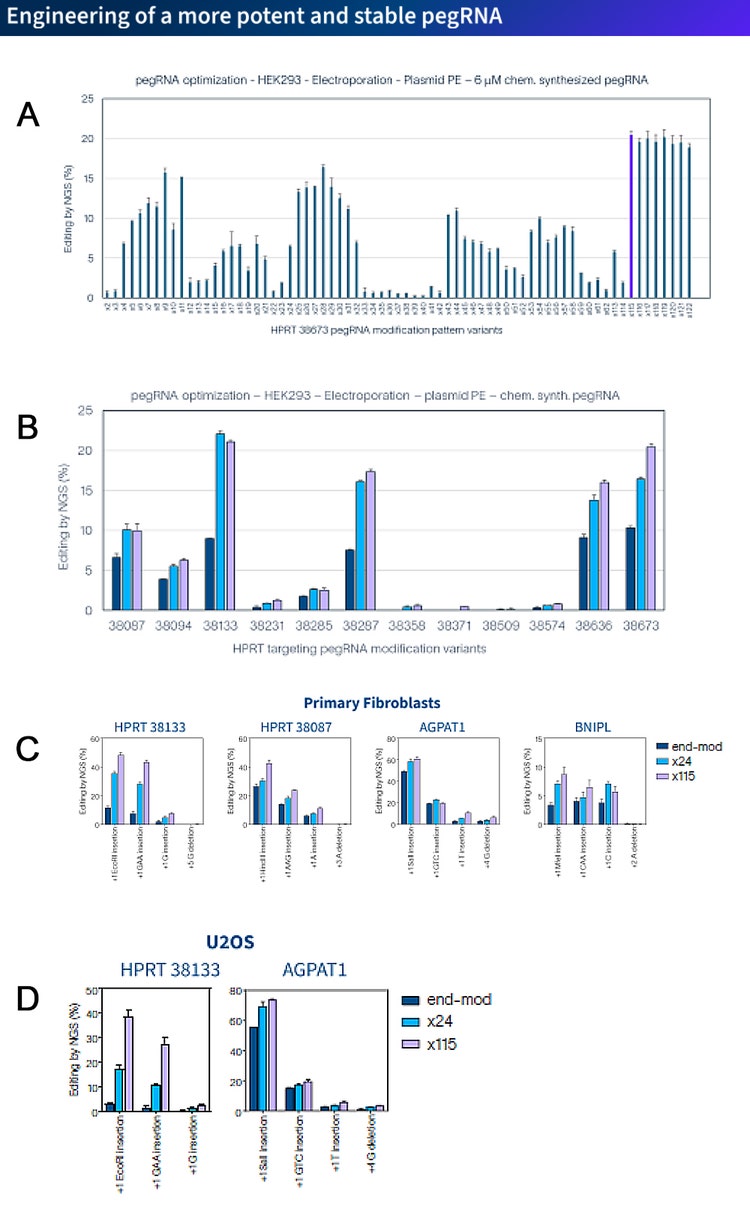
First, a large library of chemically modified pegRNAs was screened, identifying a top-performing architecture (x115) that improved stability and activity across multiple cell types.
Second, the prime editor mRNA was systematically engineered through iterative modifications of domains and linkers. This process generated a series of enhanced variants (IDT PE V1–V5) with improved editing activity compared with standard constructs.
Finally, the mRNA encoding the prime editor was optimized to improve intracellular expression and stability.
Key enhancements included codon optimization, the 5’ enzymatic incorporation of a Cap -1 structure and a 120nt poly(A) tail.
What They Found
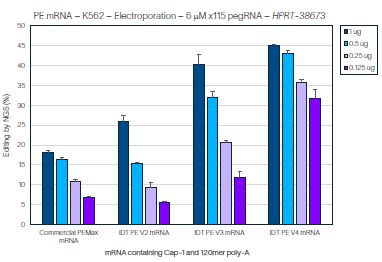
Across multiple experimental systems, the engineered IDT prime editing mRNA variants consistently outperformed commercial PEMax mRNA.
Key observations included:
- In K562 cells (electroporation-based delivery), IDT variants showed higher prime editing efficiency across all tested dose ranges
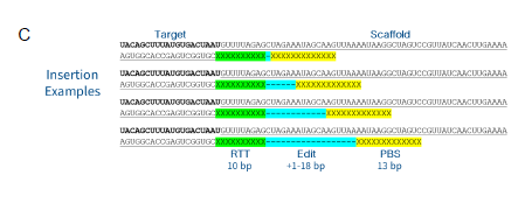
- In HEK293 cells, the system supported a broad spectrum of small edits, with a preference for ~6-bp insertions
- Insertions and sequence replacements were generally more efficient than deletions within this platform format
- For deletion workflows using a nicking sgRNA, IDT variants again showed superior performance across multiple loci
- The platform maintained low non-homologous end-joining (NHEJ) activity, indicating high precision and reduced indel formation

Benefits of Gene Editing
By combining optimized pegRNA chemistry with engineered mRNA prime editor variants, this platform delivers a more potent and precise approach to genome editing across diverse loci and cell types. Key implications include:
- Safer therapeutic potential due to avoidance of double-strand breaks
- Higher precision with reduced off-target indels and improved editing fidelity
- Broad applicability across multiple cell types
- Potential to correct a wide range of disease-causing small insertions, deletions and point mutations

Learn how IDT is advancing next-generation genome editing tools through optimized prime editing systems designed to improve efficiency, precision and translational potential across research and therapeutic applications.
Contact an expert to discover how these engineered mRNA prime editing platforms can support your genome editing workflows and help accelerate the development of safer and more effective genetic interventions.