Scaling Gene Editing Delivery through LNPs
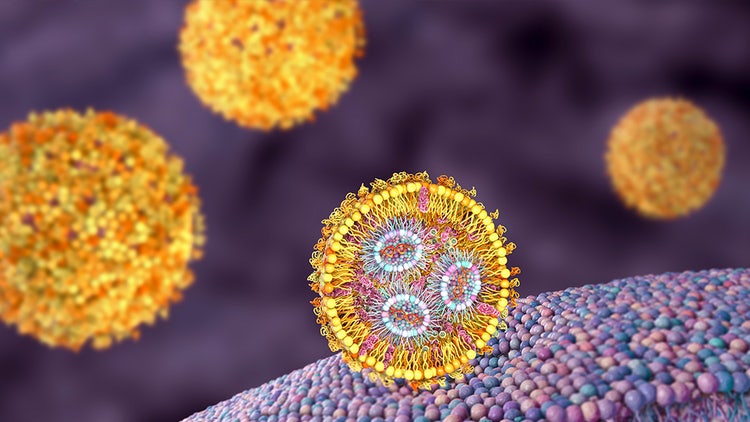
For more than a decade, electroporation has been the key method for gene editing. It is well-known, reliable and deeply integrated into laboratory and clinical workflows. From initial proof‑of‑concept studies to first‑in‑human trials, electroporation has enabled the field of gene editing to progress quickly.
But as cell and gene therapies move from one‑off programs to scalable platforms, the limitations of electroporation become clear.
The hard part of getting therapies to market is often the manufacturing package and process.
The future of programmable medicine relies on delivery systems that are effective, reproducible and scalable. Lipid nanoparticles (LNPs) are becoming a promising alternative for developing delivery methods that align with manufacturing, regulation and patient access.
Platform Thinking Changes the Delivery Question
As gene editing advances into rare diseases, personalized therapies and mutation-specific interventions, the development model is shifting.
The critical question is: “How can we expand gene editing programs reproducibly, quickly and safely, again and again?”
Platform-based approaches depend on reuse:
- Reuse of manufacturing processes
- Reuse of analytical assays
- Reuse of regulatory learnings
In this model, the delivery method must ensure consistency without causing unnecessary stress on cells or operational complexity. LNP-based delivery becomes a design choice for scalability.
From Bench to Platform: Lessons Learned
In collaborative academic–industry settings, LNP‑based delivery is increasingly evaluated as a practical way to support efficient editing in primary human cells while prioritizing viability. Importantly, this approach can also reduce the need for expert level handling, lowering barriers to adoption and enabling more standardized workflows. Importantly, these efficiencies can be achieved without requiring expert‑level handling, lowering barriers to adoption and enabling more standardized workflows.
Using standardized mRNA and gRNA inputs, teams can explore transitions from electroporation to LNP based delivery in sensitive primary cell types, including hematopoietic stem and progenitor cells (HSPCs). By changing the delivery method while keeping upstream components constant, teams reduce overall cellular stress and improve reproducibility and scalability. By changing the delivery method while keeping upstream components constant, teams reduce overall cellular stress and improve reproducibility and scalability.
These findings reinforce a clear directional shift:
- Move from electroporation toward LNP-based delivery as the preferred approach
- Standardize delivery as part of a broader, platform-oriented workflow
The goal is to develop LNP workflows that enable scalable and repeatable gene editing.

Key Insights
Most CRISPR workflows are based on the same core biology and process design. Platforms focus on isolating changes to the genetic payload, without requiring rebuilding of the entire system.
Delivery Is a CMC Question
As programs move closer to the clinic, delivery decisions shift from technical optimization to foundational CMC decisions.
Delivery affects:
- Cell viability and functional potency
- Batch‑to‑batch consistency
- Process transferability across sites
- Regulatory review
As programs adopt platform designations and accelerated regulatory pathways, LNPs reinforce that 'what remains consistent' outweighs ‘what changes’. LNP‑based delivery enables modular payload changes within a stable, well‑characterized system.
Designing for the Future of Gene Editing
The shift from electroporation to LNP-based delivery demonstrates the field's overall growth. As gene editing technologies become more programmable, delivery systems must be engineered not only for performance but also for repeatability, manufacturability and accessibility.
LNPs are about creating delivery strategies that support future therapies, where aspects like time, consistency and access are just as important as efficiency. The next phase of gene editing will be defined by what therapeutics can be reliably delivered to patients, again and again.
Discover how the life science companies of Danaher approach the platform-first mindset and how delivery, manufacturing and analytics are coordinated to work seamlessly together.