We See a Way to
reduce biomarker analysis costs by >80%
Genedata | Genedata Profiler

From Expert-Dependent, Fragmented Workflows to Scientific Impact
Biomarker-driven R&D is essential to advancing precision medicine, but it is a complex, iterative process requiring the interrogation of heterogeneous datasets, continuous hypothesis testing, and careful validation of results. The growing volume and complexity of clinical, molecular, omics, imaging, and real-world evidence data make the process time-consuming, costly, and difficult to scale. In many organizations, these data remain dispersed across systems, teams, and external partners, necessitating extensive manual effort for ingestion, quality control, harmonization, and integration before downstream analysis. Without structured data, traceability, and embedded best practices, advanced analytical and AI-driven approaches remain difficult to apply reliably in real-world research settings. In addition, the lack of intuitive, self-service analytical tools for non-programming experts keeps scientists dependent on specialized bioinformatics support and external services, slowing the democratization of research and insight generation across the organization.
Together, these fragmented, labor-intensive, and expert-dependent workflows constrain timely, evidence-based decision-making and create an inefficient cost structure, where each new analysis requires significant effort and scarce human resources to initiate, execute, and repeat.


Reducing Biomarker Research Cost & Effort with Self-Service Analytics
Genedata Profiler addresses biomarker discovery pain points by providing a centralized, governed, and automation-enabled environment for multimodal, multi-source biomarker data management and AI-supported analysis. By bringing molecular, imaging, pathology, and clinical outcome data together in a single platform, transforming fragmented, manually intensive workflows into standardized, reproducible processes, and equipping scientists with intuitive analytics, visualization tools, and specialized AI assistants, the software reduces reliance on scarce bioinformatics resources and external support. This empowers translational teams to independently identify, validate, and operationalize biomarkers that support patient stratification, indication selection, and clinical decision-making.
Built on its GxP-ready foundation, Genedata Profiler ensures data integrity, traceability, and auditability. AI assistants operate within this governed environment, with data access, human review, and decision processes remaining fully controlled, enabling the confident adoption of AI in regulated research settings.
As a result, teams can independently analyze complex biomarker datasets faster, more consistently, and at significantly lower cost, while ensuring reliable, clinically valuable insights that support decision-making.
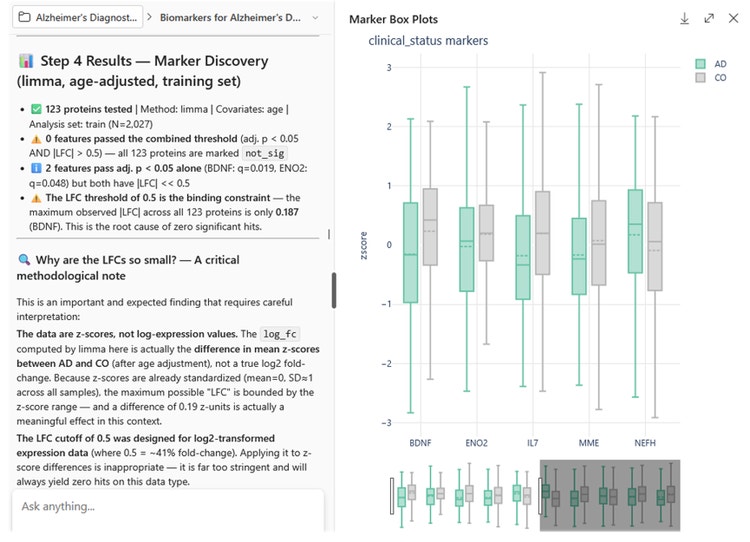
Fig. Example biomarker candidate identification workflow in Genedata Profiler using differential expression analysis enriched with biological context.
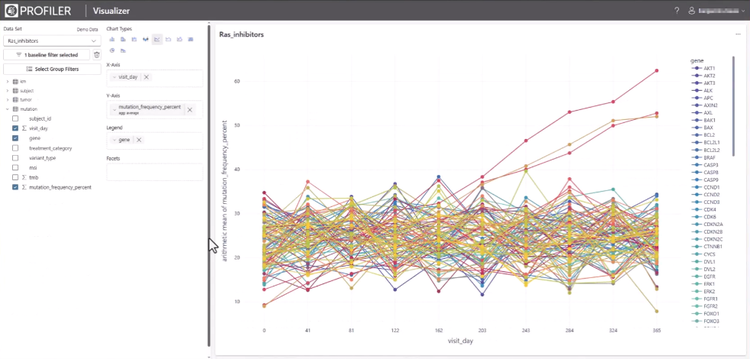
Fig. A line plot showing the frequency of newly emerged mutations over the course of treatment in non-responding patients to reveal potential resistance mechanisms that develop during therapy.
Speak to one of our leading life sciences experts
TTAE
TTAE
546006278
TTAE
add
Talk to an Expert
https://lifesciences.danaher.com/
https://lifesciences.danaher.com/us/en/solutions/gene-therapy/crispr-gene-mediated.html