We See a Way to
turn weeks of analytical work into high-quality results in just 1–2 days.
Genedata Biopharma Platform

Advanced Modalities Challenge Metabolic Profiling
Understanding biotransformation and degradation pathways is critical, as the resulting metabolites can alter a drug’s efficacy and safety profile.
As therapeutic modalities become more complex, so do the analytical assays and the data they generate. Their diverse biotransformation pathways can produce a wide range of metabolites, fragments, degradation products, and other analytes, making confident identification and characterization increasingly difficult.
High-resolution MS provides the sensitivity, selectivity, and accuracy needed to detect and characterize these analytes, but it also generates large, complex datasets that can make metabolic profiling increasingly resource- intensive. Other DMPK workflows often rely on significant manual processing and expert review. Results from individual assays, instruments, and data systems may also remain fragmented and disconnected from molecule registration, sample batch, and experimental context. This makes it difficult to maintain traceability and efficiently turn complex, multi-assay data into comprehensive, high-quality metabolic profiles that support confident downstream decisions.

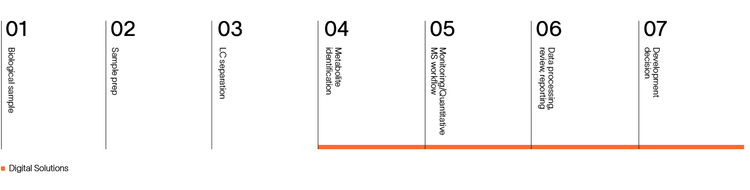
From Complex DMPK Data into Confident Metabolite Insights in Days
Genedata provides an integrated, modality-flexible approach to biotransformation analysis and broader DMPK workflows, connecting high-performance data processing, multi-assay management, and molecule-centric context from data import through reporting.
Genedata Expressionist accelerates MS-based metabolic profiling by rapidly processing complex datasets through configurable, high-performance workflows tailored to the analytical task and sample. Automatically generated analyte libraries—derived from a parent drug structure, oligonucleotide sequence, or predefined metabolic reactions—speed metabolite identification and create a reusable knowledge base. Stepwise searching and rule-based filtering narrow the results requiring expert assessment, while intuitive visualizations support efficient review and help scientists focus on the most relevant findings. Customizable reports can then be generated automatically for project teams and regulatory authorities.
Beyond MS analysis, Genedata Screener brings results from other DMPK assays into structured, traceable sessions linked to sample batches, quality control information, and experimental metadata. Harmonizing assay data and context streamlines performance monitoring, trend analysis, and cross-assay visualization, providing a more complete view of candidate behavior without time-consuming manual consolidation.
Genedata Biologics connects these results to registered therapeutic candidates, preserving molecule-, sample-, batch-, and project-level context. This eliminates the need to reconstruct candidate histories and keeps findings traceable, reviewable, and ready to support downstream decisions.
Together, these capabilities address the complexity of advanced modalities by replacing fragmented data and manual steps with configurable automation, guided review, and connected scientific context. The result is a substantially faster path from raw data to the comprehensive, high-quality metabolic profiles required for candidate selection, risk assessment, safety, toxicology, and further development.
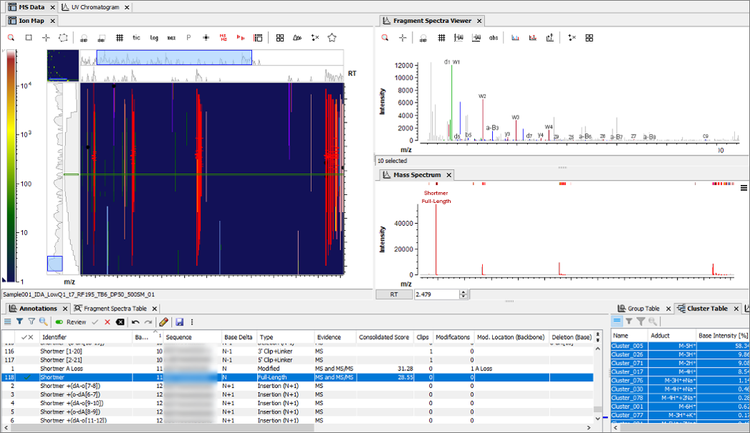
Fig. LC-MS/MS-based oligonucleotide analysis with automated detection and identification of full-length products, shorter species, sequence variants, and their supporting fragment evidence.
Speak to one of our leading life sciences experts
TTAE
TTAE
546006278
TTAE
add
Talk to an Expert
https://lifesciences.danaher.com/
https://lifesciences.danaher.com/us/en/solutions/gene-therapy/crispr-gene-mediated.html