QPix® Microbial Colony Pickers
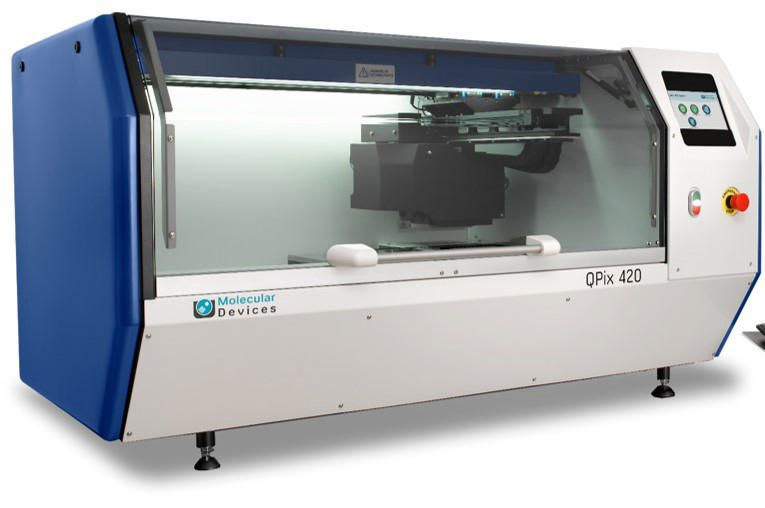
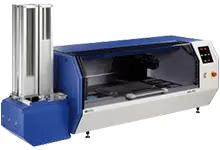
Automated microbial screening system capable of picking up to 3000 colonies per hour

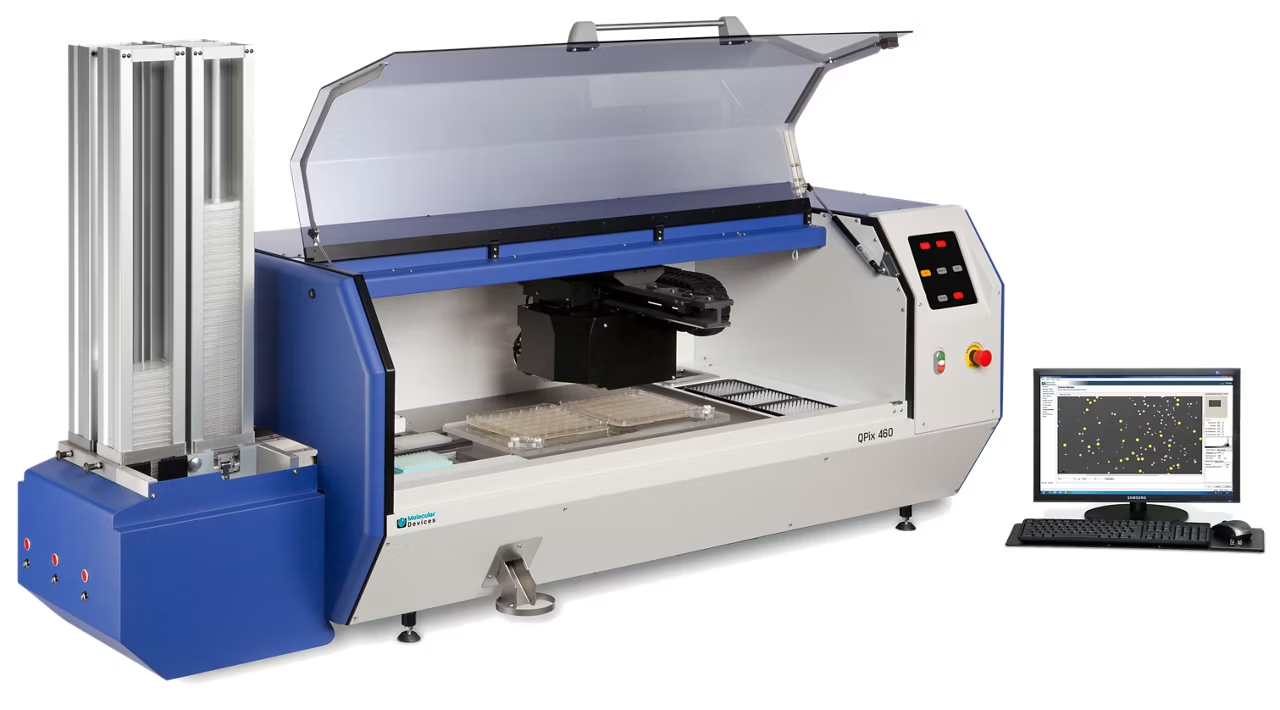
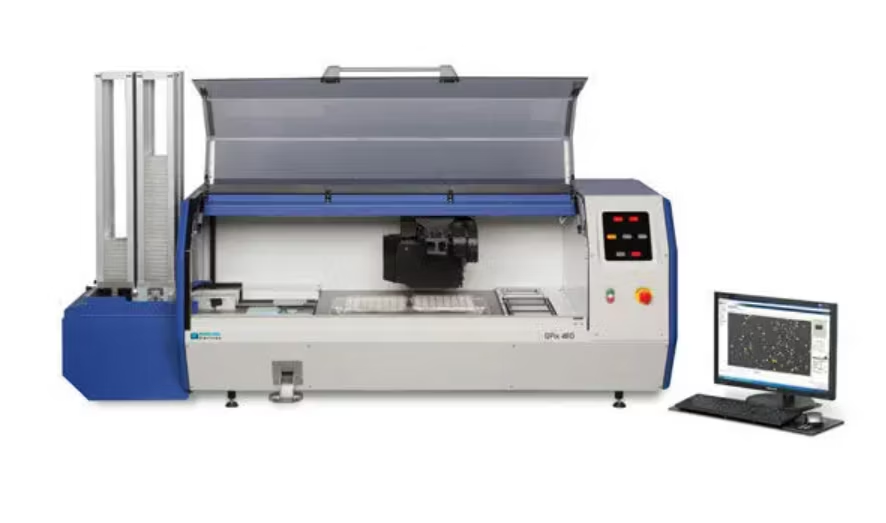
QPix 460 Microbial Colony Picker
QPix Microbial Colony Pickers Automated microbial screening system capable of picking up to 3000 colonies per hour
QPix® 450 Microbial Colony Picker
QPix Microbial Colony Pickers Automated microbial screening system capable of picking up to 3000 colonies per hour

QPix® FLEX™ Microbial Colony Picking System
QPix® FLEX™ Microbial Colony Picking System Optimized for precision, flexibility, and hypoxic workflows
Automated microbial screening system capable of picking up to 3,000 colonies per hour
The QPix® Microbial Colony Picker leverages best-in-class colony picking technology to alleviate bottlenecks and quickly, accurately, and efficiently screen through massive genetic libraries. The easy-to-use, intuitive software guides users through setting up colony picking runs where precision robotics pick the right colonies every time.. In addition to microbial screening, the system automates several sample preparation and plate handling processes such as the transfer of bacterial liquid culture and plating on agar.
Data is automatically recorded into the machine’s database, providing users with a complete audit trail and sample tracking, ensuring that no data is ever lost. Our modular, scalable series of colony pickers allows groups of all sizes to increase the accuracy and throughput of their workflow, while still allowing for future throughput growth.
Identify colonies with a desired phenotype
The QPix colony pickers support a wide variety of microorganisms and multiple selection modalities, including fluorescence intensity, blue/white selection, size and proximity, and zone of inhibition.
Select colonies efficiently
A suite of an organism-specific pin and agar sensor ensure efficient picking. The system delivers a picking efficiency of >98%, allowing you to walkaway with confidence.
Maintain Sterility

A host of sterility features are available including a UV light for sanitizing the interior of the instrument, as well as pin washing, and halogen drying of pins.
Key Features of QPix Microbial Colony Pickers
Organism-specific pins
Different shape and picking area pins maximize efficiency for E. coli, phage, and yeast. Plating-specific pins ensure uniform distribution of liquid culture onto agar.
Multiple imaging modes
Colonies can be picked based on pre-specified parameters using white light, fluorescence, and color. The use of filters enables applications such as blue-white colony screening.
Plating and Spreading
Automated plating and streaking of 96 samples can be done in 30 minutes, providing greater walk-away time.
Replication, grid and hit picking
Automated plate handling and tracking streamlines downstream assay and sample management. QPix colony pickers provides flexible plate replication, gridding, and hit-picking capabilities.
Agar sensing
Ultrasonic agar height sensor detects differences in height resulting from variable pouring volume enabling maximum picking efficiency.
Scalable automation options
The QPix HT model is a robot compatible solution with a modular deck. The Advanced Workflow Engineering Solutions Team can tailor a colony picker with a variety of custom services.
Automate your workflow with the QPix colony picker
Colony picking is an essential step in biological research as scientists often isolate microbial clones in order to mass produce DNA or proteins to be used in a variety of applications downstream. Traditionally, colony picking is performed manually using sterile pipette tips or inoculation loops, which are usually slow, labor-intensive, and time-consuming. Not only will automated colony pickers make the entire process quicker, but the results are more consistent and reliable.
Ensure sterility and superior performance with QPix's pin-washing process
The revolutionary QPix pin-washing process ensures optimal laboratory efficiency and stringent sterillity standards. With its innovative cleaning and sterilzation methods, QPix system maintains zero cross-contamination and promotes sustainability in lab environments.
Join Carola, our Field Application Specialist as she walks you through step-by-step, the QPix system's sterility workflow. And, download our application note demonstrating extensive testing and validation studies, Ensure sterility with QPix Microbial Colony Pickers.
Applications of QPix 400 Series Microbial Colony Pickers
Antibiotic Zone of Inhibition
The effectiveness of an antibiotic-producing bacterial strain on a target bacterial strain can be measured by the size of the clearing zone it produces on a lawn of bacteria. QPix Software allows you to rapidly identify, rank, and pick microbial colonies producing clearing zones. Intelligent image analysis enables measurement of clearing zones within a lawn and ranking based on colony size, halo diameter, and compactness.
Biofuels
One of the most prominent alternative energy resources is biodiesel, an energy-rich portable fuel mainly composed of triacylglycerols. Biodiesel production from lipid producing microbial systems involves screening thousands of clones through a multitude of tests such as bicinchoninic acid (BCA) assays, optical density measurements, and gas chromatography assays. QPix colony pickers automate the task of colony picking, a laborious and error-prone process, effectively shortening timelines to find suitable candidates.
Blue-White Screening
Screening of bacterial transformants that contain recombinant plasmids with cloned gene inserts is an essential step in molecular cloning. A colorimetric reporter method called “blue-white screening” allows convenient identification of recombinant and non-recombinant colonies based on color. QPix colony pickers offer an automated solution especially designed for accurate blue-white colorimetric screening using white light imaging for effective monitoring of transformation efficiency. Other colorimetric approaches such as “red-white screening” can also be implemented on the systems.
DNA Sequencing
Sequencing is the reading of the precise order of adenine (A) guanine (G) cytosine (C) and thymine (T) nucleotides within a molecule of DNA. Shotgun sequencing is a method whereby DNA is fragmented into one kilobase pieces, are then sub-cloned into circular plasmids, and transformed into bacteria. Automated colony picking is essential for increased throughput and plasmid isolation for sequencing. QPix colony pickers are renown for reliability and accuracy, and were used by many sequencing centers during the Human Genome Project. Many areas of research, such as vaccine development, continue to utilize traditional sequencing techniques.
Drug Discovery & Development
For every drug that makes it to the finish line, another nine don’t succeed. This alarming failure rate can be traced to reliance on 2D cell cultures that don’t closely mimic complex human biology, often leading to inaccurate predictions of a drug’s potential and extended drug development timelines.
- Assessing viability and real-time apoptosis/necrosis in an in vitro model of malignant glioma
- Harnessing Microplate Assays for Streamlined High-Throughput Drug Screening in Cancer Research
- Cell-based measurement of ERK1/2 phosphorylation with THUNDER TR-FRET assay
Monoclonal Antibodies (mAbs)
Monoclonal antibodies (mAbs) originate from one unique parent cell, thus binding only to a single epitope. Monoclonal antibody discovery typically refers to the screening and identification of specific antibodies that target a specific epitope for the diagnosis and treatment of diseases, like the coronavirus for COVID-19.
Phage display
Phage display is a technique used to study the interaction of proteins displayed on the surface of a bacteriophage with other molecules such as peptides, DNA, and other proteins. Phage display is commonly used to find high-affinity interactions between antibodies and antigens, which play a critical role in viral pathogenesis, vaccines, and other treatments.
Plasmid engineering in synthetic biology
Plasmids are small, circular DNA molecules that operate independently from chromosomal DNA. Central to molecular biology, they enable the study, manipulation, and production of genes, playing a vital role in cloning, gene therapies, and vaccine development.
Protein Evolution
Protein evolution describes the changes over time in protein shape, function, and composition. Directed evolution of proteins has proven to be an effective strategy for altering or ameliorating the activity of macromolecules for industrial, research, and therapeutic applications. With multiple fluorescent filters, the system is compatible with a wide range of fluorescent cloning vectors. This enables QPix colony pickers to reveal unique information about individual colonies when studying protein folding, enzyme evolution, and protein localization. This includes searching for transformation markers and screening for mutations.
Synthetic Biology
Synthetic biology is a broad term that refers to the manipulation of genetic pathways to harness the power of existing biological systems in novel ways (often to manufacture molecules or proteins). Synthetic biology applies principles that are derived from engineering, specifically design-build-test-learn cycles, to biological systems. By leveraging high-throughput workflows, synthetic biologists can accelerate this process.
| Clone Screening System Type | Microbial Colony Picking |
| Compressed Air Description | Clean, oil-free with sub-micron filtration |
| Minimum Operating Pressure (Imperial psi) | 90-100 psi |
| Minimum Operating Volume Rate (Metric L/min) | 80 L/min |
| Destination Microplate Capacity Description | Picking: 12 plates; replicating and re-arraying, maximum of 20 plate positions |
| Software Description | Fusion Qpix 450, Fusion Apix 420, or Fusion Qpix 460 |
| Camera Sensor Type | CCD |
| Image Resolution (Metric pixels/mm) | 22-24 pixels/mm |
| White Light Only Field of View Size (Metric mm) | 62-64 x 46 mm mm |
| White Light and Fluorescence Field of View (Metric mm) | 32-34 x 24 mm mm |
| Fluorescent Imaging Details | Ex /Em: 377 /447 nm for DAPI /Hoechst |