Coulter Counters
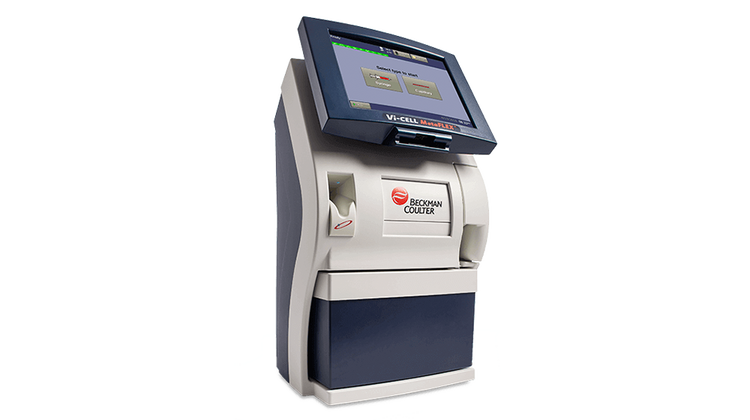
Features
Essential Features of Our Coulter Counter
These Coulter Counters offers remarkable versatility, exemplifying outstanding performance and quality through the following features:
- Multiple aperture options and the data overlay capability facilitate the analysis of complex samples with a wide particle size distribution.
- Our Coulter particle size analyzer provide extensive sample detection capabilities, enabling the analysis of materials in both aqueous and non-aqueous solvents, making them suitable for various applications.
- With impressive high sampling rates, these Coulter Counter particle size analyzers enable efficient analysis and precise counting of particles in a wide diametric range. They can handle small sample volumes, accommodating limited sample availability.
- Our particle size counters offer convenient data management with easy storage and re-analysis of digital pulse data, ensuring compliance with CFR 21 Part 11 for audit control and security, and providing accurate measurements.
Applications
Applications of Coulter Counter
- These instruments are extensively used in cellular analysis to measure and count various types of cells, including mammalian cells, bacteria, and yeast.
- Our Coulter particle size analyzers ensure high measurement precision and accuracy in research.
- These indtruments excel in particle size analysis, providing valuable insights into particle size distribution and enabling the characterization and optimization of various materials, such as abrasives, toner particles, large protein aggregates, and cell aggregates.
How do you use a Coulter counter?
To use a Coulter counter for particle sizing, wear disposable latex gloves and safety glasses at all times, prepare the sample and suspension medium, calibrate the instrument using known standards, introduce the sample into the counter chamber, initiate the measurement process, and analyze the resulting data for particle size distribution and concentration, ensuring proper cleanup and maintenance of the instrument for future use.
What is the Coulter counter method also known as?
The technique commonly referred to as resistive pulse or electrical zone sensing is commercially known as the Coulter counter. This apparatus operates on the fundamental principle established by its inventor, Wallace H. Coulter.
What are the components of a Coulter counter?
A Coulter counter instrument consists of an aperture tube immersed in a beaker containing particles suspended in a low-concentration electrolyte. It utilizes two electrodes, one inside the aperture tube and one outside (but still inside the beaker), to create an electric field. Count- and pulse-height analyzer circuits are used to measure the number and volume of particles passing through the aperture, while modern instruments, such as the Multisizer™ 3 and 4 Coulter counter and sizing instruments, digitize and store pulse data along with key parameters for further analysis.
What is the working principle of the Coulter counter?
The working principle of a Coulter counter involves detecting and measuring changes in electrical impedance as particles pass through a small aperture in an electrolyte solution. When a particle traverses the aperture, it displaces a volume of electrolytes, causing a temporary change in electrical resistance, which is detected and measured to determine the particle count and size.
What are the different types of Coulter counters?
When considering the broadest definition of "type", Coulter counters can be categorized into two main types: manual and automated. In recent times, automated cell counting has gained popularity as it provides more reliable results and significantly reduces the time required compared to manual counting methods. Automated cell counters can further be classified into:
- Image-based cell counters: These employ microscopes and image analysis software to analyze captured images.
- Flow cytometers: These measure individual cell or particle characteristics as they pass through a focused light source.
- Coulter counter: An example of a modern cell counting tool is the Coulter particle size analyzer, such as the Multisizer 4e, known for its exceptional accuracy and versatility with a sizing range of 0.2 - 1600 μm.