Cell Viability Analyzer
Browse All Products
Our cell viability analyzers offer features such as fully automated sample preparation, fast processing time, versatile sample delivery options, and data integrity tools for efficient and reliable assessment of cell viability.
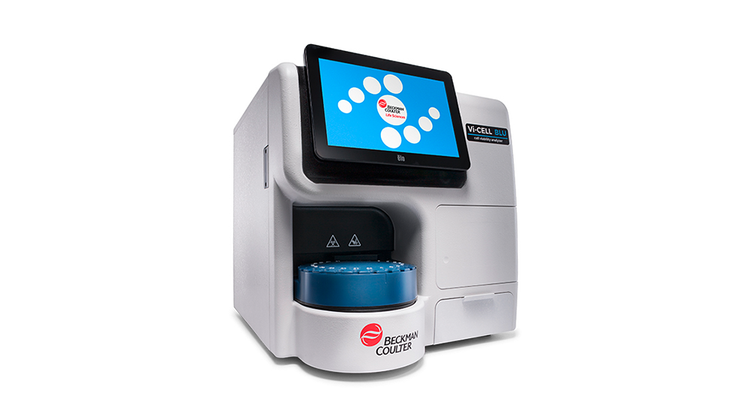
These cell viability counters and analyzers increases productivity with their FAST mode, allowing rapid analysis and processing of samples. They provide flexibility in sample introduction, accommodating different experimental setups. Our instruments ensure data integrity and compliance through features like audit trails, error log files, electronic signature capability, secure user sign-on, user-level permissions, and administrative configuration tools, meeting the stringent requirements of regulated environments.
product-family
Need help designing your solution?
Request a Quote
modal
Features
Essential Features of Our Cell Viability Analyzers
- Our cell viability analyzers excel in terms of performance, quality, and durability. They have been meticulously designed with user feedback to ensure optimal performance and user satisfaction. The instruments' updated technology and improved processing speed enable faster analysis and processing times, meeting the demands of researchers for efficiency.
- In terms of quality, these cell viability machines maintain a high level of accuracy and reliability. They offers strong instrument-to-instrument correlation with minimal variation, ensuring consistent and trustworthy measurements across multiple cell viability analyzing instruments in the laboratory. This reliability allows researchers to have confidence in the integrity of their data.
- Durability is another key aspect of the cell viability instruments. They are built with robust materials and rigorous quality control and designed to withstand the demands of a laboratory environment. The sturdy construction ensures long-term durability, reducing the need for frequent repairs or replacements and providing researchers with a reliable and long-lasting solution for cell viability analysis.
Applications
- These instruments can be utilized for activity testing through bioassay screening in the context of oligonucleotide development. This involves assessing the cell viability and effectiveness of oligonucleotide treatments to determine their impact on gene expression modulation, aiding in the selection and optimization of potential therapeutic candidates.
- The cell viability analyzer finds application in stable transfection processes, particularly in cell line development or monoclonal antibody (mAb) manufacturing. By analyzing cell cultures post-transfection, these analyzers can distinguish between dead and living cells.
- They are very useful in pool screening during cell line development or monoclonal antibody (mAb) manufacturing. These machines enable researchers to assess cell viability and monitor cell growth by analyzing cell cultures in pools. This aids in the identification of high-performing cell pools with optimal viability and growth characteristics.
- The cell viability analyzer plays a crucial role in selection based on stability and expansion in cell line development or monoclonal antibody (mAb) manufacturing. It allows researchers to evaluate the growth and stability of cell cultures by precisely measuring the viable cell concentration.
- These analyzers are instrumental in the scale-up process for cell growth and expansion in cell line development or monoclonal antibody (mAb) manufacturing and enable researchers to monitor and optimize cell viability during the scale-up process.
- Our cell viability analyzers are essential for establishing a GMP master cell bank in cell line development or monoclonal antibody (mAb) manufacturing. They allow accurate assessment of cell viability and concentration to ensure the quality and stability of the master cell bank for consistent production of biologics.
Key Factors
Key factors to consider when selecting a cell viability analyzer
- Researchers should consider the compatibility of the cell viability analyzer with their specific assay requirements. It is crucial to ensure that the analyzer supports the desired viability assay method.
- The choice of detection platform is also important. Researchers should evaluate the detection capabilities and choose a platform that best meets their requirements for sensitivity, resolution, and multiplexing capabilities.
- The throughput requirements of the research project should be considered. High-throughput analyzers with automation capabilities may be beneficial for large-scale experiments.
- The usability and user-friendly interface of the cell viability analyzer are essential factors. A user-friendly interface reduces the learning curve and ensures a smooth operation of the analyzer, enhancing productivity and efficiency.
- The data analysis capabilities of the cell viability analyzer should align with the research requirements. Advanced data analysis capabilities, including statistical analysis or integration with data management systems, may be advantageous for in-depth data interpretation.
FAQs
Can I customize analysis parameters with cell viability analyzers?
Yes, cell types can be customized with cell viability analyzers. You can start with choosing a default cell type to count and measure the viability precision by analyzing each image visually.
What is the normal range of cell viability?
Researchers generally consider favorable cell viability to be within the range of 80-90% for most cell lines, although the specific range can vary based on factors such as cell type, culture conditions, and the particular assay methods employed.
What types of cells can be analyzed using a cell viability analyzer?
A cell viability analyzer is compatible with a wide range of cell types, including mammalian cells (e.g., CHO, HEK293, Jurkat), primary cells, stem cells, insect cells, yeast cells, and more.