Paracrine Signaling
Cell signaling affects not only the structure and function of individual cells in isolation but also how they communicate with each other to drive collective cellular behaviour within tissues and biological systems.
What is Paracrine Signaling
Paracrine signaling refers to a form of cell-to-cell communication in which a cell releases signaling molecules, such as growth factors, cytokines or neurotransmitters, that act on nearby target cells within the same tissue. Unlike endocrine signals, which travel through the bloodstream to distant organs, paracrine signals act locally, diffusing through the extracellular space.1
The key characteristics of paracrine signaling are:1
- Local action: Signals act on nearby cells, usually within the same tissue microenvironment
- Short-lived signals: Due to the rapid degradation of signaling molecules by enzymes
- Gradient-based effects: Signal strength decreases with distance
- Molecular diversity: The carriers of paracrine signaling include growth factors, cytokines, chemokines and neurotransmitters
- Role in development and homeostasis: Paracrine signaling has a crucial role in tissue development, regeneration, wound healing, organ functioning and inflammation
Mechanism of Paracrine Signaling
Generation of Paracrine Signals
Paracrine signaling begins when a cell produces and releases local signaling molecules, which then act on neighbouring cells. This production stems from the intracellular signaling pathways that activate the genes expressing paracrine signals, including:
- Growth factors (e.g., FGF, VEGF)2
- Cytokines and chemokines (e.g., IL-6, TNF-α)3
- Neurotransmitters that diffuse beyond the synaptic clefts4
After synthesis, these molecules are packaged into vesicles or released directly into the extracellular space. Once secreted, they diffuse through the local tissue environment, forming short-range concentration gradients that nearby cells can detect.5
Binding and Cellular Response
Target cells express specific receptors that recognize and bind these paracrine ligands. For instance, growth factors are identified by growth factor receptors on the cell surface, such as EGFR, FGFR and NGFR.6,7
Receptor-ligand interaction triggers intracellular signal transduction pathways, such as the MAPK/ERK, JAK/STAT or PI3K–AKT pathways, within the target cells. These signaling pathways trigger diverse cellular outcomes, including changes in gene expression, proliferation, differentiation, migration or survival, depending on the ligand and cellular context.8,9
Regulation of Paracrine Action
Paracrine signaling is tightly regulated to ensure precise local effects and cellular responses. The distance a signal can travel is limited by several factors, including rapid degradation and uptake by nearby cells, as well as diffusion constraints within the tissue. Concentration of the secreted ligand determines the spatial extent of the response. Cells also employ feedback loops to fine-tune the intensity of signals. In addition, termination mechanisms such as enzymatic breakdown of ligands, receptor internalization or inhibitor production ensure that paracrine signals remain short-lived and spatially restricted.10Dysregulation in any of these regulatory mechanisms leads to constitutive signaling, which underlies cancer, autoimmune diseases and neurodegenerative disorders. 11-13
Examples of Paracrine Signaling
Development and Growth
Paracrine signaling plays a crucial role in determining cell fate and tissue patterning during embryonic development. Growth factors such as fibroblast growth factors (FGFs), bone morphogenetic proteins (BMPs) and hedgehog proteins act locally to instruct nearby cells on proliferation, differentiation and migration. Thus, paracrine signals enable cells to adopt appropriate identities based on their location within the embryo, ultimately establishing body axes, facilitating limb formation and promoting organogenesis. 14-16
Nervous System
Neurotransmitters, such as serotonin, dopamine and GABA, which transmit signals between neurons to regulate bodily functions, sleep and mood, are one of the most well-known examples of paracrine signaling.10In addition to promoting communication between adjacent neurons, they can diffuse beyond the synaptic cleft and influence neighboring neurons or glial cells, thereby modulating local circuitry. For instance, GABA or glutamate acts extrasynaptically to fine-tune neuronal excitability and determine the ability of neurons to respond to stimuli.17 Furthermore, paracrine neuromodulators, such as nitric oxide (NO) or neuropeptides, adjust synaptic strength, contributing to short-term plasticity and network-level modulation.4
Immune System
Immune cells rely heavily on paracrine communication through cytokines, which act locally to coordinate defence responses. During inflammation, macrophages and dendritic cells that recognize foreign cell antigens release IL-1, IL-6, TNF-α and chemokines that recruit and activate nearby immune cells. Paracrine signaling plays a significant role in cell-specific adaptive immune response, where dendritic cells and macrophages activate T cells by simultaneously presenting them with foreign antigens and stimulating them with cytokines and chemokines. This localized paracrine cascade amplifies the inflammatory response while ensuring it remains targeted to the affected tissue.18
Repair and Regeneration
Wound healing is a classic example of paracrine regulation, where injured tissues release growth factors such as PDGF, TGF-β and VEGF, which act on neighboring fibroblasts, endothelial cells and immune cells. These signals stimulate angiogenesis, fibroblast activation, collagen deposition and regeneration of epithelial tissue.19 Similarly, in tissue regeneration, e.g., during muscle or liver repair, local paracrine factors coordinate the activation and differentiation of resident stem or progenitor cells, enabling controlled tissue restoration.20
Featured Products
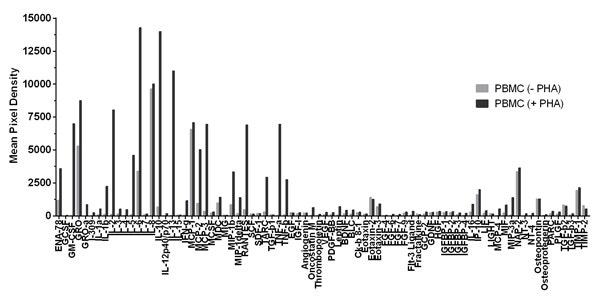
Cytokine Array - Human Cytokine Antibody Array (Membrane, 80 Targets)(AB133998)
Chosen because it is a membrane-based antibody array that profiles up to 80 cytokines simultaneously from a single sample, tying directly to this page's subject of paracrine signaling.
Recombinant Human IL-6 (Active) protein(AB316086)
Chosen as a complementary second option because it is an active recombinant IL-6 protein used as a positive control or stimulant in cytokine-signaling assays, also directly relevant to paracrine signaling.

Paracrine Signaling vs. Other Communication Pathways
Paracrine signalling operates in conjunction with other cellular communication pathways to elicit systemic responses to stimuli. It involves the release of signaling molecules that act locally on nearby cells within the same tissue. These signals diffuse short distances and are rapidly degraded, ensuring a localized and transient effect.21
In contrast, endocrine signaling relies on hormones released into the bloodstream, allowing them to travel to distant organs and tissues. Endocrine signals have systemic, long-range effects and often regulate whole-body processes, such as metabolism, growth or reproduction.21
Furthermore, cells can regulate their own processes through autocrine signaling, where a cell produces signals that bind to its own receptors. Autocrine signaling is often activated to fine-tune proliferation, differentiation and metabolism in individual cells.21
Importance of Paracrine Signaling
Essential for Cell Communication
Paracrine signaling is fundamental for neighboring cells to coordinate their activities. Rapid and localized paracrine communication ensures that cells within the same tissue can respond to shared cues in a timely and coordinated manner. Without these interactions, cell populations would struggle to exchange information efficiently, leading to uncoordinated or delayed responses.10
Maintains Normal Biological Processes
Paracrine signaling forms the basis of a myriad essential physiological functions, including cell growth, homeostasis, metabolism, tissue repair and neural communication.10
Prevents Disruption in Cellular Function
Paracrine signaling prevents cells from exhibiting unprecedented behaviour, such as autoimmune attacks or uncontrolled division. Impairments in this mechanism can lead to disrupted cellular function, chronic inflammation, incomplete tissue repair and cancer.10
Significance in Overall Health
By ensuring continuous coordination among cells within proximity, paracrine action contributes to the smooth functioning of multiple biological systems. Its precise regulation is critical for development, homeostasis and adaptation to environmental changes. Overall, paracrine communication represents a cornerstone of healthy tissue physiology and organismal well-being.10
See how Danaher Life Sciences can help
FAQs
What is the difference between endocrine, paracrine and autocrine signaling?
Endocrine signaling involves hormones released into the bloodstream to act on distant organs. Paracrine signaling acts locally, where cells release signals that affect nearby cells within the same tissue. Autocrine signaling occurs when a cell responds to its own signals through receptors on its surface.21
What is the function of paracrine signaling?
Paracrine signaling enables localized communication, allowing neighboring cells to coordinate growth, differentiation, immune responses and tissue repair.
What are the types of paracrine signaling?
Major types include growth factor–mediated, cytokine-mediated, neurotransmitter spillover and morphogen-based signaling used in development.
How do cells communicate through paracrine signaling?
Cells secrete signaling molecules into the extracellular space, where they diffuse short distances and bind to receptors on nearby target cells to activate intracellular pathways.
What types of molecules are involved in paracrine signaling?
Common paracrine molecules include growth factors (FGFs, VEGF), cytokines and chemokines, neuropeptides, nitric oxide and some neurotransmitters acting extrasynaptically.
References
- Moghimianavval H, Newell C, Parvizian P, Booth MJ, Liu AP. Strategies and applications of synthetic cell communication. Nat Chem Biol 2025:1-13.
- Yu T, Oh DG, Jean-Baptiste C, Brice B, Ren T, Hansen LM. Satellite Cell Increase Vascular Growth Through Paracrine Signaling Mechanisms. ATVB 2023;43(Suppl_1):A540-A540.
- Sasiadek L, Bielecka E, Falkowski K, Kulczycka M, Bereta G, Maksylewicz A, et al. Human tissue kallikrein 14 induces the expression of IL‐6, IL‐8, and CXCL1 in skin fibroblasts through protease‐activated receptor 1 signaling. The FEBS Journal 2025;292(21):5659-5675.
- Eiden LE, Hernández VS, Jiang SZ, Zhang L. Neuropeptides and small-molecule amine transmitters: cooperative signaling in the nervous system. Cell Mol Life Sci 2022;79(9):492.
- Deguchi E, Matsuda M, Terai K. Live imaging of paracrine signaling: Advances in visualization and tracking techniques. Cell Struct Funct 2025;50(1):1-14.
- Ewoldt JK, Wang MC, McLellan MA, Cloonan PE, Chopra A, Gorham J, et al. Hypertrophic cardiomyopathy–associated mutations drive stromal activation via EGFR-mediated paracrine signaling. Sci Adv 2024;10(42):eadi6927.
- Eguchi R, Kawabe J-i, Wakabayashi I. VEGF-independent angiogenic factors: Beyond VEGF/VEGFR2 signaling. J Vasc Res 2022;59(2):78-89.
- Moon H, Ro SW. MAPK/ERK signaling pathway in hepatocellular carcinoma. Cancers (Basel) 2021;13(12):3026.
- Wessolly M, Mairinger E, Borchert S, Bankfalvi A, Mach P, Schmid KW, et al. CAF-associated paracrine signaling worsens outcome and potentially contributes to chemoresistance in epithelial ovarian cancer. Front Oncol 2022;12:798680.
- Su J, Song Y, Zhu Z, Huang X, Fan J, Qiao J, et al. Cell–cell communication: new insights and clinical implications. Signal Transduct Target Ther 2024;9(1):196.
- Li Y, Wang L, Ma W, Wu J, Wu Q, Sun C. Paracrine signaling in cancer-associated fibroblasts: central regulators of the tumor immune microenvironment. J Transl Med 2025;23(1):697.
- Li Y, Ming M, Li C, Liu S, Zhang D, Song T, et al. The emerging role of the hedgehog signaling pathway in immunity response and autoimmune diseases. Autoimmunity 2023;56(1):2259127.
- Cihankaya H, Theiss C, Matschke V. Significance of intercellular communication for neurodegenerative diseases. Neural Regen Res 2022;17(5):1015-1017.
- Jing J, Wu Z, Wang J, Luo G, Lin H, Fan Y, et al. Hedgehog signaling in tissue homeostasis, cancers and targeted therapies. Signal Transduct Target Ther 2023;8(1):315.
- Khetchoumian K, Sochodolsky K, Lafont C, Gouhier A, Bemmo A, Kherdjemil Y, et al. Paracrine FGF1 signaling directs pituitary architecture and size. PNAS 2024;121(40):e2410269121.
- Manzari-Tavakoli A, Babajani A, Farjoo MH, Hajinasrollah M, Bahrami S, Niknejad H. The cross-talks among bone morphogenetic protein (BMP) signaling and other prominent pathways involved in neural differentiation. Front Mol Neurosci 2022;15:827275.
- Hartig SM, Cox AR. Paracrine signaling in islet function and survival. J Mol Med 2020;98(4):451-467.
- Batrash F, Shaik A, Rauf R, Kutmah M, Zhang J. Paracrine Regulation and Immune System Pathways in the Inflammatory Tumor Microenvironment of Lung Cancer: Insights into Oncogenesis and Immunotherapeutic Strategies. Cancers (Basel) 2024;16(6):1113.
- Lu Y, Yang Y, Xiao L, Li S, Liao X, Liu H. Autocrine and paracrine effects of vascular endothelial cells promote cutaneous wound healing. Biomed Res Int 2021;2021(1):6695663.
- Ghilardi SJ, O'Reilly BM, Sgro AE. Intracellular signaling dynamics and their role in coordinating tissue repair. Wiley Interdiscip Rev Syst Biol Med 2020;12(3):e1479.
- Yang Y, Wang Y. Autocrine, paracrine, and endocrine signals that can alter alveolar macrophages function. Rev Physiol Biochem Pharmacol 2022:177-198.