Manual Hemocytometer Counting: Scientific Accuracy Limitations

Introduction to Manual Hemocytometer Counting
Manual hemocytometer counting remains a foundational technique in cell biology, widely used for estimating cell concentration in suspension. Despite the rise of automated systems, it is still routinely applied in laboratories for its accessibility, low cost and direct visual feedback.1
In cell biology and experimental research, this method supports a range of applications, from basic culture maintenance to more advanced experimental workflows such as drug screening and viability assessment. It provides researchers with immediate insight into cell density and morphology, which can be useful when validating automated results or troubleshooting culture conditions.1
Nevertheless, accuracy and reproducibility are especially critical in areas like drug discovery and diagnostic development, where small counting errors can lead to significant downstream variability in experimental outcomes. Therefore, understanding the scientific inaccuracy and limitations of manual hemocytometer counting is essential. Factors such as user variability, limited sampling area and difficulty distinguishing live from dead cells can introduce systematic bias that must be carefully managed in rigorous experimental design.1
What Is Hemocytometer Counting?
Hemocytometer counting is a manual laboratory technique used to estimate the concentration of cells in a liquid suspension. It involves placing a small, precisely measured volume of sample onto a specialized counting slide and visually enumerating cells under a microscope. The primary purpose is to determine cell density, often as cells per milliliter, which is essential for standardizing experiments and ensuring consistent biological conditions.2
A hemocytometer is a thick glass slide with an engraved grid etched into a central counting chamber. When a coverslip is placed over the chamber, a fixed volume is created due to the defined chamber depth. The grid is divided into large and small squares, allowing systematic counting of cells in specific regions. This structured layout helps reduce randomness and supports statistical estimation of the total cell concentration based on sampled areas.2
Hemocytometers are widely used in cell culture laboratories for tasks such as determining cell viability, preparing cells for seeding and monitoring growth rates. They are also commonly applied in immunology, microbiology and cancer research, particularly when working with primary cells or when validating automated cell counters.2
Principles of Cell Counting with a Hemocytometer
Cell concentration in a hemocytometer is determined by converting the number of counted cells into a standardized volume-based estimate. The general principle is to count cells within a known grid area and then scale that number to cells per milliliter using the chamber’s defined volume. This provides a quantitative estimate of cell density in the original suspension.1
Because raw samples are often too concentrated to count directly, they are typically diluted before loading into the chamber. The final cell concentration must therefore account for this dilution. The calculation combines three elements: 1
- The number of cells counted
- The volume represented by the counted grid area
- The dilution factor applied before counting
A key assumption is that cells are evenly distributed throughout the suspension, which may not always hold in practice and can introduce variability. To mitigate this challenge and maintain consistency, laboratories apply standardized rules when deciding whether to include cells that touch grid lines.3
A common convention is to count cells along the top and left boundaries of a square, but exclude those along the bottom and right boundaries. This reduces double-counting across adjacent squares. Clear adherence to these rules is essential for improving reproducibility between users and experiments.3
Scientific Accuracy Limitations of Manual Hemocytometer Counting
Although hemocytometers are widely used for manual cell counting, their accuracy is inherently constrained by biological variability, operator interpretation and technical handling. Unlike automated systems, the method relies on visual estimation within a limited sampling area, making results sensitive to small procedural inconsistencies. These limitations collectively affect precision, reproducibility and comparability across experiments and operators.4
Human Subjectivity and Operator-Dependent Variability
Human subjectivity is a key challenge in manual hemocytometer counting. Different users may classify borderline cells differently (e.g., faintly stained or partially visible cells), leading to variation in counts even when analyzing the same sample.4
The level of experience and training can also influence counting accuracy. While experienced scientists typically demonstrate greater consistency in identifying cells, applying boundary rules and distinguishing debris from viable cells, novice users may show greater variability and higher error rates. Furthermore, even the same operator may produce different results across repeated counts due to fatigue, shifting focus or inconsistent field selection, thereby reducing reproducibility.4
See how Danaher Life Sciences can help
Sampling Error and Statistical Constraints
Sample area selection can significantly impact statistical analysis. If the user selects a limited sampling area, only a small fraction of the total sample may be observed in the counting grid, leading to results extrapolated from a limited dataset and potentially not fully representing the entire suspension. By the same logic, cells may clump or settle unevenly, especially if mixing is insufficient, leading to over- or underestimation depending on the sampled region. 1
Cell concentration can also jeopardize accuracy. Statistical noise increases at low cell numbers, while overlapping cells and crowding reduce counting clarity and precision at higher concentrations.1
Limitations in Live vs Dead Cell Identification
Distinguishing between live and dead cells can also be challenging during manual hemocytometer counting. Viability assessment often relies on dyes such as trypan blue, which assume that intact membranes indicate live cells, but this assumption is not always biologically accurate. For example, early apoptotic or metabolically compromised cells may show partial staining, making classification subjective and inconsistent. Small errors in distinguishing live and dead cells can significantly skew viability percentages, particularly in sensitive applications such as primary cell culture or drug testing.6
Technical and Chamber-Related Sources of Error
Technical errors may be caused by improper chamber loading and uneven cell distribution, where Incorrect pipetting or uneven capillary filling can cause non-uniform distribution across the grid. Furthermore, air bubbles may exclude usable counting areas, while debris can be mistakenly counted as cells, both of which can distort results. Cells near boundary lines may be inconsistently included or excluded depending on user interpretation, introducing systematic bias if rules are not strictly followed.3
Challenges in Manual Hemocytometer Counting for Modern Research
Beyond human-related variability and the technical limitations of manual hemocytometer counting, the complexity, increased demand and strict timelines of drug discovery and development workflows further challenge the applicability of this method in modern research.7
Manual hemocytometer counting requires individual sample preparation, microscope setup and repeated visual counting across multiple grid squares. This process is inherently slow, making it poorly suited for high-throughput workflows common in modern drug discovery and large-scale biological screening. As the experimental scale increases, manual counting becomes a bottleneck in data generation and workflow efficiency.4
Extended periods of microscopic counting can lead to visual fatigue, reduced concentration and slower decision-making. These effects increase the likelihood of cumulative errors, such as miscounting cells, skipping grid regions or inconsistently applying counting rules. Thus, manual analysis becomes particularly problematic in studies requiring large sample batches or repeated measurements.4
Another key challenge in manual hemocytometer use is the lack of full standardization across users and institutions. Differences in training, counting conventions, microscope calibration and sample handling can lead to significant inter-laboratory variability. This reduces reproducibility and complicates cross-study comparisons, especially in multi-center research or clinical translation contexts.4
Impact of Counting Inaccuracies on Drug Discovery and Diagnostics
Counting-related inaccuracies have significant implications for the reproducibility and quality of drug discovery and diagnostics workflows.
Accurate cell counts are essential for establishing reliable experimental conditions during assay development. Variability in initial cell seeding can alter assay sensitivity, signal intensity and baseline measurements, making validation more difficult. Inconsistent cell numbers may also reduce reproducibility between experimental runs, weakening confidence in assay performance and limiting scalability.4
Dose-response experiments depend heavily on uniform starting cell populations to generate meaningful pharmacological data. Counting inaccuracies can distort measurements of drug efficacy, cytotoxicity and therapeutic thresholds. Similarly, errors in viability assessment may lead to incorrect conclusions about treatment response, particularly when evaluating subtle biological effects or low-toxicity compounds.8
Small inaccuracies introduced during manual counting can accumulate across repeated experiments, passages or time-course studies. Over time, these deviations may produce misleading trends in growth kinetics, treatment response or comparative analysis between experimental groups. In multicenter or longitudinal research, inconsistent counting practices further complicate data harmonization and statistical interpretation.4
Featured Product
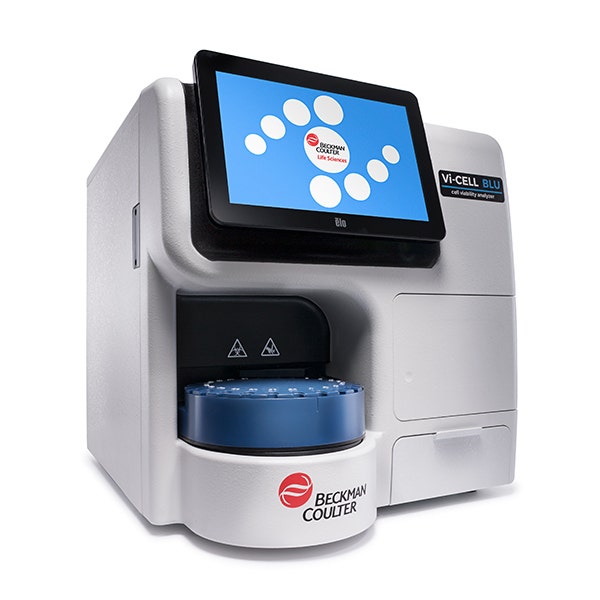
Vi-CELL BLU Cell Viability Analyzer
Chosen because it is an automated cell counter that measures viability, density and size via trypan-blue exclusion imaging, tying directly to this page's subject of manual hemocytometer counting.
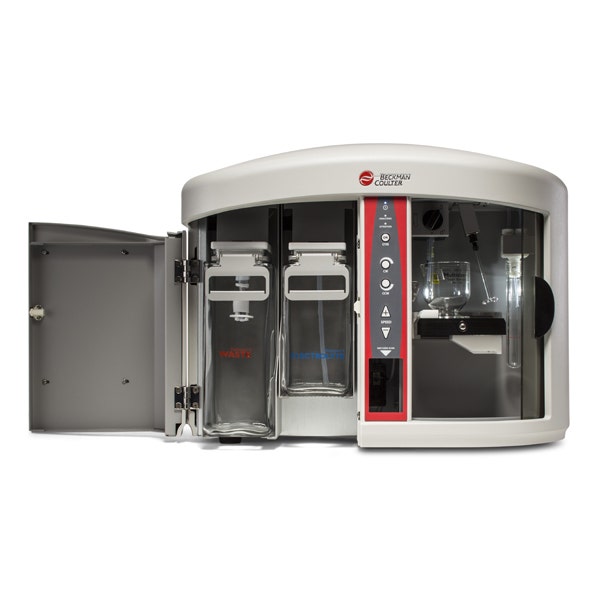
Multisizer 4e Coulter Counter
Chosen as a complementary second option because it is an electrical-impedance (Coulter principle) particle/cell counter offering precise sizing independent of optical properties, also directly relevant to manual hemocytometer counting.
See how Danaher Life Sciences can help
FAQ's
What are the main limitations of manual hemocytometer counting accuracy?
Accuracy is limited by subjective interpretation, uneven cell distribution and restricted sampling areas.
Why is live/dead cell identification challenging with hemocytometers?
Dye-exclusion methods can produce ambiguous staining, especially in stressed or apoptotic cells.
What are the primary sources of error in manual hemocytometer cell counting?
Common errors include pipetting inconsistencies, improper chamber loading, operator fatigue and inconsistent boundary rule application.
What is the typical coefficient of variation (CV) for manual hemocytometer counts?
Manual hemocytometer counting commonly produces CV values around 5–15%, depending on operator skill and sample quality.
What CV% is typical for manual vs. automated cell counting?
Manual counting often ranges from 5–15% CV, while automated systems typically achieve lower variability, often around 1–5% under standardized conditions.
References
- Jindal D, Singh M. Counting of Cells. Animal Cell Culture: Principles and Practice: Springer; 2023:131-145.
- Uhlendorff S, Odefey U, Frahm B, Pein‐Hackelbusch M. Performance Comparison between Semi‐Automated and Manual Cell Counting for Animal Cell Culture. Chem Ing Tech 2026;98(1-2):57-63.
- Mukherjee S, Malik P, Mukherjee TK. Mammalian cell culture laboratory: equipment and other materials. Practical approach to mammalian cell and organ culture: Springer; 2023:83-136.
- Liu M, Chu W, Guo T, Zeng X, Shangguan Y, He F, et al. Challenges of cell counting in cell therapy products. Cell Transplant 2024;33:09636897241293628.
- Thunyaporn R, Doh I, Lee DW. Multi-volume hemacytometer. Sci Rep 2021;11(1):14106.
- Sam-Yellowe TY. Exercise 4: Single Suspension of Mouse Spleen Cells, Cell Viability Assays and Identification of Specific Cells Using Cell Surface Antigens. Immunology: Overview and Laboratory Manual: Springer; 2021:255-265.
- Chen Y, Hu Y, Hu H. Advances and challenges in platelet counting: evolving from traditional microscopy to modern flow cytometry. J Lab Med 2025;49(1):2-13.
- Khilji S, Vuong NQ, Williams A, Fulton KM, Baay I, Twine SM, et al. Dose-response modeling reveals multifaceted molecular responses to low-dose radiation in human white blood cells. Int J Radiat Biol 2025;101(10):1013-1026.