Immunohistochemistry (IHC)
Visualizing the presence and distribution of proteins within intact tissue sections is crucial for studying signaling pathways, understanding disease mechanisms, classifying disease subtypes and informing therapeutic strategies. Immunohistochemistry is a powerful immunostaining technique that uses antibodies that bind selectively to target antigens. Its ability to reveal molecular detail within morphological context makes IHC indispensable in biomedical research.
What is Immunohistochemistry?
Immunohistochemistry (IHC) involves using antibodies to detect specific proteins directly within thin tissue slices. From this perspective, it functions like a “molecular navigator," enabling scientists and clinicians to visualize the location of specific proteins within cells and throughout the tissue sample.1
The principle of IHC relies on the specific binding between an antibody and its target antigen. After the antibody attaches to the protein of interest, an enzyme or fluorescent label linked to the antibody produces a visible signal, highlighting exactly where the protein is expressed.1
The spatial context of proteins, as determined by immunohistochemical staining, is crucial for understanding tissue organization, identifying abnormal cells and diagnosing diseases. Therefore, it is commonly employed in:
- Cancer diagnostics for identifying tumor subtype and interactions with surrounding tissue2
- Neuroscience research for mapping neuronal markers and pathways3
- Drug discovery for evaluating target expression and treatment response4
Principles of Immunohistochemistry Staining
In essence, IHC works by treating a tissue sample with an antibody that recognizes a target protein, followed by a detection system that produces a visible signal at the site of binding. Detection can occur in two ways:
- Chromogenic detection: where an enzyme, such as horseradish peroxidase (HRP) or alkaline phosphatase (AP), linked to the antibody converts a substrate into a colored product visible under a light microscope5
- Fluorescent detection: where antibodies are tagged with fluorescent dyes that emit light when excited, allows visualization with a fluorescence microscope6
The antigen-specific nature of immunohistochemistry distinguishes it from traditional histological staining methods that highlight general tissue structures or cell types without molecular specificity.6
Featured Product
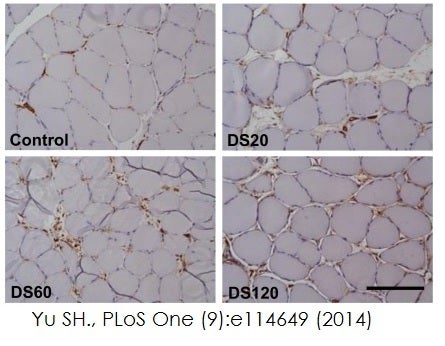
Mouse and Rabbit Specific HRP/Dab Detection IHC kit(ab64264)
Chosen because it is an HRP/DAB detection kit used for chromogenic secondary detection in immunohistochemistry, tying directly to this page's subject of immunohistochemistry.
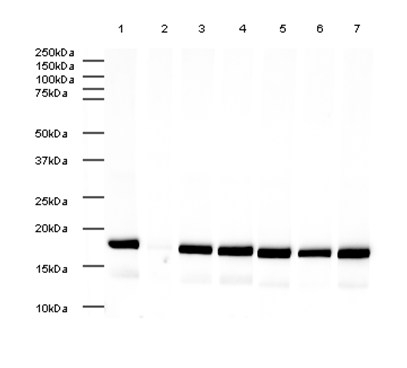
Goat Anti-Rabbit IgG H&L (HRP)(AB6721)
Chosen as a complementary second option because it is an HRP-conjugated secondary antibody used to detect rabbit primary antibodies in ELISA, WB and IHC workflows, also directly relevant to immunohistochemistry.
Immunohistochemistry Procedure and Steps
The immunohistochemistry (IHC) procedure consists of a series of controlled steps designed to preserve tissue structure while enabling specific antigen–antibody binding. A typical workflow comprises:7
- Tissue fixation is performed to preserve tissue structure and stabilize proteins to prevent degradation
- Embedding and sectioning, which involve encasing the tissue in paraffin and slicing it into thin sections for microscopic analysis
- Antigen retrieval, where heat or additional enzymes are applied to unmask antigen sites.
- Blocking nonspecific binding sites to prevent background
- Primary antibody incubation, with an antibody that specifically binds to the target antigen in the tissue
- Secondary antibody or detection system application, which introduces a labeled secondary antibody or detection reagent that binds to the primary antibody to amplify the signal
- Signal generation with the label (chromogenic or fluorescent) to produce a visible signal at the antigen site
- Counterstaining to reveal general tissue structure alongside the specific IHC signal
Standardization throughout the procedure is essential for reliable and reproducible results. It requires careful monitoring of fixation times, antibody selection and dilution, incubation conditions and detection methods.
Immunohistochemistry Techniques
Immunohistochemistry (IHC) encompasses several techniques designed to visualize protein expression in tissues, each offering different levels of sensitivity, specificity and practicality.
Based on the use of antibodies, there are two main approaches:6
- Direct IHC: A labeled primary antibody binds directly to the target antigen
- Indirect IHC: An unlabeled primary antibody is conjugated to a labeled secondary antibody to amplify the signal and improve sensitivity
The signal can be generated in two ways:
- Enzyme-based systems: An enzyme, mainly HRP or AP, catalyses a color-producing reaction in the event of antigen binding5
- Fluorescent labelling: Fluorophore-tagged antibodies emit light when excited, producing a signal at the antigen site that can be detected under fluorescence microscopy6
The choice of the immunohistochemistry procedure depends on the specific application. The direct method can be performed with a fast and simple workflow and may be preferred for research applications and preliminary diagnostics. On the other hand, clinical diagnostics favor enzyme-based indirect IHC for its robustness, clarity and compatibility with routine pathology workflows.8
Multiplex Immunohistochemistry (Multiplex IHC)
Multiplex immunohistochemistry (multiplex IHC) is an advanced IHC method involving the simultaneous detection of multiple proteins within a single tissue section. By combining multiple antibodies, each tagged with distinct fluorophores or enzyme systems, multiplexing enables the simultaneous detection of multiple molecular targets without compromising tissue architecture.9
Using multiplex IHC, researchers can visualize co-expression patterns, cell–cell interactions and crosstalk between signaling networks in a single, integrated image.9 Multiplex assays are especially powerful in fields such as:
- Cancer biomarker discovery, where tumor heterogeneity must be characterized10
- Immunology, where immune cell phenotypes and cell-cell interactions are critical11
- Personalized medicine, where extensive biomarker profiling informs targeted therapy strategies12
The key advantage of multiplex IHC over single-target IHC is the enhanced depth of information that can be gained from a single tissue slice, ultimately reducing the required sample volume.9
Applications of Immunohistochemistry Tests
Immunohistochemistry tests are crucial for linking molecular expression patterns and spatial organization with tissue structure, making them invaluable for both diagnostic purposes and biological discovery.
IHC is a cornerstone of clinical practice. It plays a central role in cancer classification, helping pathologists determine the tumor's origin, subtype and prognostic markers that guide treatment decisions.13 It is also used to detect infectious agents, such as viral or bacterial proteins, within affected tissues.8 In neuroscience, IHC enables researchers to map specialized cell types and pathways based on protein localization, providing insights into brain structure and the mechanisms of neurodegenerative diseases.14
In drug discovery and translational research, IHC is used for target validation to assert the expression pattern of the protein of interest within the tissue. Researchers can evaluate changes in target abundance and localization after drug administration and monitor drug pharmacodynamics. Thus, IHC strengthens the link between laboratory findings and clinical applications.15
Advantages and Limitations of IHC
Immunohistochemistry (IHC) offers several key strengths that make it indispensable in both research and clinical diagnostics.1
- High specificity allows precise identification of target proteins
- By preserving tissue architecture, researchers can view the spatial localization of molecular markers
- IHC offers diagnostic value, particularly in cancer classification, infectious disease detection and tissue characterization
Nevertheless, IHC also presents several challenges, especially in the reproducibility of image outputs, due to variability in staining protocols, antibody quality and tissue handling. Standardized workflows, which can address these issues:16
- Factors such as fixation time, antigen retrieval and detection methods are carefully optimized to ensure accurate and consistent results
- Appropriate positive and negative antibody controls are integrated to verify antibody specificity and activity
These precautions are essential for verifying assay performance, minimizing artifacts and improving the reliability of IHC data.
Advances in Immunohistochemistry (IHC)
The capabilities of immunohistochemistry techniques can be improved by adopting multiplex imaging and advanced image analysis.
Multiplex IHC enables the simultaneous visualization of multiple proteins within a single tissue section, providing researchers with a deeper understanding of cellular interactions, tumor heterogeneity and the tissue microenvironment.9 Furthermore, high-resolution whole-slide imaging enables a fast and efficient acquisition of multidimensional image data.17
IHC is also compatible with lab automation and AI-driven image analysis. Specifically, machine learning and deep learning algorithms are crucial tools for identifying correlations between protein abundance, localization, cell phenotypes and drug responses.15
The advantages of IHC make it a strong asset for precision medicine, where patient-specific biomarker profiles can inform the most suitable treatment for an individual.12
See how Danaher Life Sciences can help
FAQ's
What is the principle of immunohistochemistry?
The principle of immunohistochemistry is based on the specific binding between an antibody and its target antigen within a preserved tissue section, followed by a detection system that produces a visible signal showing where the protein is located.
What is immunohistochemical staining used for?
Immunohistochemical staining is used to detect and visualize specific proteins in tissue samples to aid in disease diagnosis, classify cell types, study biological pathways and evaluate biomarkers in research and clinical settings.
What cancers are diagnosed using immunohistochemistry?
IHC is widely used to diagnose and classify many cancers, including breast cancer18, pancreatic cancer19, lymphoma2, melanoma20, lung cancer21, colorectal cancer22 and cancers of unknown primary origin.23
What is the main purpose of immunohistochemistry?
The main purpose of immunohistochemistry is to identify the presence, abundance and spatial distribution of proteins in tissues, providing molecular information that supports accurate diagnosis, prognosis and research into disease mechanisms.
What is the difference between Immunocytochemistry (ICC), Immunohistochemistry (IHC) and Immunofluorescence (IF)?
ICC detects proteins in cultured or isolated cells, IHC detects proteins within tissue sections while preserving architecture and IF refers to the use of fluorescent labels in either ICC or IHC to visualize targets with fluorescence microscopy, often allowing multiplex analysis.1
References
- Hussaini HM, Seo B, Rich AM. Immunohistochemistry and immunofluorescence. Oral biology: molecular techniques and applications: Springer; 2022:439-450.
- Cho J. Basic immunohistochemistry for lymphoma diagnosis. Blood Res 2022;57(S1):55-61.
- Ye LIBMN, Kokhan N, Kitel A. General characteristics of brain immunohistochemical markers. AIRT 2023;1(1).
- Guillen KP, Fujita M, Butterfield AJ, Scherer SD, Bailey MH, Chu Z, et al. A human breast cancer-derived xenograft and organoid platform for drug discovery and precision oncology. Nat Cancer 2022;3(2):232-250.
- Gupta B, Yang G, Key M. Novel Chromogens for Immunohistochemistry in Spatial Biology. Cells 2024;13(11):936.
- Moreno V, Smith EA, Piña-Oviedo S. Fluorescent immunohistochemistry. Immunohistochemistry and Immunocytochemistry: Methods and Protocols: Springer; 2021:131-146.
- Mebratie DY, Dagnaw GG. Review of immunohistochemistry techniques: Applications, current status, and future perspectives. Semin Diagn Pathol: Elsevier; 2024:154-160.
- Oumarou Hama H, Aboudharam G, Barbieri R, Lepidi H, Drancourt M. Immunohistochemical diagnosis of human infectious diseases: a review. Diagn Pathol 2022;17(1):17.
- Harms PW, Frankel TL, Moutafi M, Rao A, Rimm DL, Taube JM, et al. Multiplex immunohistochemistry and immunofluorescence: a practical update for pathologists. Mod Pathol 2023;36(7):100197.
- Jia K, Chen Y, Sun Y, Hu Y, Jiao L, Ma J, et al. Multiplex immunohistochemistry defines the tumor immune microenvironment and immunotherapeutic outcome in CLDN18. 2-positive gastric cancer. BMC Med 2022;20(1):223.
- Van Der Hoorn IA, Martynova E, Subtil B, Meek J, Verrijp K, Textor J, et al. Detection of dendritic cell subsets in the tumor microenvironment by multiplex immunohistochemistry. Eur J Immunol 2024;54(1):2350616.
- Van Herck Y, Antoranz A, Andhari MD, Milli G, Bechter O, De Smet F, et al. Multiplexed immunohistochemistry and digital pathology as the foundation for next-generation pathology in melanoma: methodological comparison and future clinical applications. Front Oncol 2021;11:636681.
- Tang W, Li G, Lin Q, Zhu Z, Wang Z, Wang Z. Multiplex immunohistochemistry defines two cholesterol metabolism patterns predicting immunotherapeutic outcomes in gastric cancer. J Transl Med 2023;21(1):887.
- Muñoz-Castro C, Noori A, Magdamo CG, Li Z, Marks JD, Frosch MP, et al. Cyclic multiplex fluorescent immunohistochemistry and machine learning reveal distinct states of astrocytes and microglia in normal aging and Alzheimer’s disease. J Neuroinflammation 2022;19(1):30.
- Poalelungi DG, Neagu AI, Fulga A, Neagu M, Tutunaru D, Nechita A, et al. Revolutionizing pathology with artificial intelligence: Innovations in immunohistochemistry. J Pers Med 2024;14(7):693.
- Kohale MG, Dhobale AV, Bankar NJ, Noman O, Hatgaonkar K, Mishra V. Immunohistochemistry in pathology: A review. J Cell Biotechnol 2023;9(2):131-138.
- Doyle J, Green BF, Eminizer M, Jimenez-Sanchez D, Lu S, Engle EL, et al. Whole-Slide Imaging, Mutual Information Registration for Multiplex Immunohistochemistry and Immunofluorescence. Lab Invest 2023;103(8):100175.
- Sun H, Sahin AA, Ding Q. Updates on Utility of Immunohistochemistry in Diagnosis of Metastatic Breast Cancer. Hum Pathol 2025:105821.
- Luu TT. Review of immunohistochemistry biomarkers in pancreatic cancer diagnosis. Front Oncol 2021;11:799025.
- Gosman LM, Țăpoi D-A, Costache M. Cutaneous melanoma: a review of multifactorial pathogenesis, immunohistochemistry, and emerging biomarkers for early detection and management. Int J Mol Sci 2023;24(21):15881.
- Sholl LM. Biomarkers of response to checkpoint inhibitors beyond PD-L1 in lung cancer. Mod Pathol 2022;35:66-74.
- Kasprzak A. Prognostic biomarkers of cell proliferation in colorectal cancer (CRC): From immunohistochemistry to molecular biology techniques. Cancers (Basel) 2023;15(18):4570.
- Raghav K. Cancer of Unknown Primary Site. N Engl J Med 2025;392(20):2035-2047.