Deep Learning in Microscopy Image Analysis

Introduction to Deep Learning in Microscopy
Deep learning is a type of machine learning algorithm that uses multi-layered neural networks, primarily convolutional neural networks (CNNs), to learn patterns from raw data automatically. This technology is indispensable for processing raw microscopic image data, which is often high-dimensional, noisy and complex, making manual analysis error-prone.1
Traditional microscopy image analysis relied on manual features, such as thresholding, edge detection and morphological operations. While effective for simple cases, these methods suffered from variability in illumination, staining, cell morphology and imaging modalities. While the introduction of supervised machine learning in microscopy enabled scientists to train statistical models for image processing, this approach relied heavily on manual data labeling. Deep learning removes much of this dependency by automatically learning hierarchical representations, allowing models to generalize better across datasets and imaging conditions.1
Deep learning models can perform tasks such as segmentation, classification, denoising and feature extraction with high accuracy and minimal human intervention. Therefore, it is central to high-content screening in drug discovery and diagnostics, where millions of images must be analyzed rapidly to detect subtle phenotypic changes, cell-cell interactions, spatial properties and subcellular dynamics.2
How Deep Learning in Microscopy Works?
Data Acquisition and Image Preparation
The performance of deep learning models in microscopy depends on data quality. Models can only learn meaningful patterns from high-resolution images with consistent illumination, accurate staining and well-documented acquisition parameters. In contrast, poor-quality datasets containing blur, uneven illumination or annotation errors can lead to biased predictions or artefacts, limiting reproducibility and downstream biological interpretation.3
Microscopy images must be preprocessed to standardize inputs and improve model robustness. Methods include: 3
- Normalization, which adjusts intensity ranges to reduce variability across samples and imaging sessions
- Noise reduction techniques, such as filtering or denoising, help suppress sensor noise without removing biological detail
- Data augmentation, which applies rotations, flips, scaling or intensity perturbations to create novel image datasets, reduces overfitting and improves generalization to unseen samples
Model Training and Feature Learning
Deep neural networks learn hierarchical features from standardized microscopy images. Early layers capture low-level patterns, such as edges and textures, while deeper layers encode more abstract, biologically relevant structures, such as nuclei organelles and tissue regions.4
The need for labeled datasets is the key difference between deep learning and supervised learning. The latter requires image annotation for phenotypes and morphological features, which demands expert knowledge. In contrast, the convolutional architectures in deep learning leverage raw data to learn meaningful representations. This also allows models to adapt to diverse microscopy modalities, from fluorescence to electron microscopy.4
Inference and Real-Time Image Prediction
Once trained, deep learning models can rapidly analyze new microscopy images.
- Segmentation helps distinguish structures such as cells or subcellular components at high resolution 5
- Detection helps identify and localize objects of interest 5
- Classification models assign biological labels or phenotypes 5
In modern microscopy systems, deep learning models are integrated directly into automated imaging pipelines, streamlining real-time quality control, parameter fine-tuning and high-throughput analysis without human intervention. The combination of automation and deep learning ultimately champions large-scale studies in biomedical research and clinical applications.6
How Deep Learning Enhances Microscopy Image Analysis
From Manual Interpretation to Automated Insights
As datasets grow larger and more complex with high-content imaging and high-throughput screening, manual segmentation and feature extraction become bottlenecks, introducing inconsistencies that hinder downstream image analysis. Deep learning models automate key analysis steps by learning image representations directly from data. Thus, they can process thousands of images in minutes with consistent performance and high accuracy, even in challenging conditions such as low signal-to-noise ratios, heterogeneous cell populations or complex tissue structures.4
Understanding Microscopy Image Analysis Workflows
A typical microscopy image analysis workflow consists of: 7
- Preprocessing to correct illumination, normalize intensities and reduce noise
- Segmentation to identify cells, nuclei or organelles
- Classification to assign labels or phenotypes to these regions
- Quantification to extract key measurements, such as size, shape, phenotype similarity or spatial relationships
Each of these stages can be automated within a single end-to-end framework.
Key Deep Learning Techniques Used in Microscopy
Convolutional Neural Networks (CNNs) for Feature Extraction
Convolutional neural networks leverage localization and hierarchical structure in images. By applying learnable convolutional filters, CNNs can detect edges, textures and shapes that correspond to biological structures such as membranes, nuclei or organelles. 8
U-Net and Variants for Cellular Segmentation
U-Net architectures comprise an encoder–decoder design, where the encoder extracts increasingly deep features, similar to those of a CNN. In contrast, the decoder reconstructs spatial information by combining high-level and fine-grained features. The encoder and decoder are connected via skip connections that preserve fine-grained local details and fuse them with global context. Variants such as 3D U-Net, Attention U-Net and multi-scale U-Net extend this approach to volumetric data, dense tissues and complex cellular environments.9
Transformer-Based Models and Self-Supervised Learning
Initially developed for natural language processing (NLP), transformer-based models or visual transformers are increasingly applied to microscopy image analysis. This approach treats a cellular image as a sequence of patches, each with positional information. Furthermore, the multi-layer transformer encoder consists of self-attention and feed-forward layers that capture the spatial relationships between different patches. By determining the influence of each patch over the others, these architectures enable generalization across various imaging conditions.10
Generative Models for Image Enhancement
Generative models, particularly generative adversarial networks (GANs), can denoise low-signal images, perform super-resolution to recover fine structural details and translate information between imaging modalities. Additionally, they can be used to generate realistic synthetic data for data augmentation, which helps mitigate imbalances and bias during classification.11
Applications of Deep Learning in Microscopy Image Analysis
Cell Segmentation and Phenotype Classification
Deep learning is essential for accurate, automated segmentation of cells and subcellular structures, especially in densely packed or low-contrast images. During phenotypic classification, models can reliably identify phenotypes linked to cell state, disease progression or treatment response by classifying cells based on shape, size, texture and marker expression.2
High-Content Imaging and High-Throughput Screening
Deep learning scales efficiently to high-content imaging, which produces millions of images across thousands of conditions. This scalability is essential for high-throughput screening workflows, where rapid and reproducible analysis is necessary to evaluate large compound libraries or genetic perturbations.12
Advanced Image Reconstruction
Deep learning models can infer high-resolution structural details from lower-resolution images, surpassing physical limitations imposed by optics. In fluorescence microscopy, they can reduce acquisition time and phototoxicity while preserving biologically relevant information, making them valuable for live-cell imaging and long-term experiments. Furthermore, AI-based deconvolution and denoising models can correct for blur and noise without compromising fine structural features.13
Image-Based Machine Learning for Drug Discovery
By combining microscopy images with deep learning, researchers can model complex cellular responses to chemical or genetic perturbations. Deep learning-driven analysis accelerates hit identification by rapidly distinguishing active compounds from inactive ones in large-scale screens. Furthermore, compounds can be classified by mechanism of action using phenotypic insights from deep learning.2
Featured Product
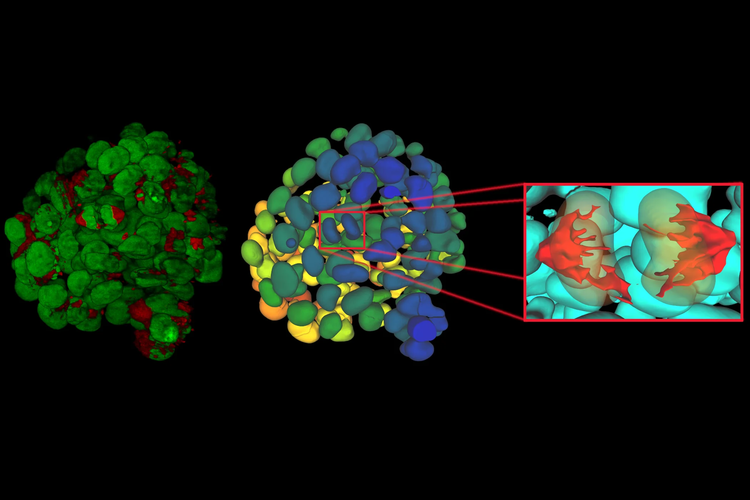
Aivia AI Image Analysis Software
Chosen because it is an AI-powered image analysis platform that automates deep-learning-based segmentation and quantification of microscopy images, tying directly to this page's subject of deep learning microscopy image analysis.
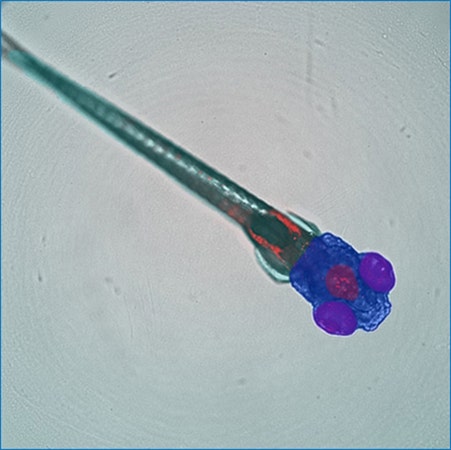
IN Carta Image Analysis Software
Chosen as a complementary second option because it is high-content image analysis software used to extract quantitative cellular phenotypes from microscopy datasets, also directly relevant to deep learning microscopy image analysis.
Challenges and Considerations in Implementing Deep Learning in Microscopy
Data Quality and Annotation Bottlenecks
Despite deep learning's minimal reliance on data labelling, high-quality ground truth and image labels remain essential for accurate classification and morphological measurements, which often require expert annotators and substantial time investment. To reduce annotation burden while retaining model performance, companies should implement semi-automated annotation tools that use active learning to prioritize informative samples from weak or partial labels.14
Computational Requirements
Training deep learning models on high-resolution microscopy images is computationally intensive, especially for 3D or time-lapse data. GPUs and cloud-based platforms offer scalable alternatives with rapid access to high-performance computing services and pipelines. Nevertheless, companies should carefully consider potential issues related to costs and data security.14,15
Model Validation and Reproducibility
The results from machine learning-driven microscopy can yield clinical insights only when models are validated across datasets and imaging conditions. Therefore, model predictions and outcomes should be benchmarked against traditionally analyzed image datasets to assess model generalizability and detect overrepresentation of specific cell types or imaging conditions.14,16
Scientific Rigor and Compliance
Especially for drug discovery and diagnostic development pipelines, deep learning-driven imaging workflows must be transparent and reproducible to demonstrate scientific rigor and regulatory compliance. Companies must produce clear documentation of raw data, preprocessing, model architecture and training steps to prove compliance with data governance and ethical guidelines.14
See how Danaher Life Sciences can help
FAQ's
What is deep learning in image processing?
Deep learning in image processing is a data-driven approach that uses multi-layer neural networks to automatically learn meaningful features and patterns directly from raw image data.
Deep learning for microscopy image analysis vs traditional image analysis?
Traditional image analysis relies on handcrafted rules and features, while deep learning learns features automatically from data, making it more robust, adaptive and scalable for complex microscopy images.
What are the advantages of deep learning image analysis?
Deep learning provides higher accuracy, automation, scalability and reproducibility by eliminating manual feature engineering and enabling end-to-end image analysis.
How does deep learning improve microscopy image analysis?
It improves segmentation, classification, denoising and quantitative analysis by learning complex biological patterns directly from microscopy data, enabling faster and more reliable workflows.
References
- Volpe G, Wählby C, Tian L, Hecht M, Yakimovich A, Monakhova K, et al. Roadmap on deep learning for microscopy. Journal of Physics: Photonics 2023.
- Krentzel D, Shorte SL, Zimmer C. Deep learning in image-based phenotypic drug discovery. Trends Cell Biol 2023;33(7):538-554.
- Dutta D, Sonowal N, Barauh R, Chetia D, Kalita SK. Recent Advancements in Microscopy Image Enhancement using Deep Learning: A Survey. 2024 IEEE International Conference on Computer Vision and Machine Intelligence (CVMI): IEEE; 2024:1-7.
- Midtvedt B, Helgadottir S, Argun A, Pineda J, Midtvedt D, Volpe G. Quantitative digital microscopy with deep learning. Appl Phys Rev 2021;8(1).
- Alom Z, Asari VK, Parwani A, Taha TM. Microscopic nuclei classification, segmentation, and detection with improved deep convolutional neural networks (DCNN). Diagn Pathol 2022;17(1):38.
- Melanthota SK, Gopal D, Chakrabarti S, Kashyap AA, Radhakrishnan R, Mazumder N. Deep learning-based image processing in optical microscopy. Biophys Rev 2022;14(2):463-481.
- Vohra SK, Prodanov D. The active segmentation platform for microscopic image classification and segmentation. Brain Sci 2021;11(12):1645.
- Aggarwal S, Gupta S, Kannan R, Ahuja R, Gupta D, Juneja S, et al. A convolutional neural network-based framework for classification of protein localization using confocal microscopy images. IEEE Access 2022;10:83591-83611.
- Ghaznavi A, Rychtáriková R, Císař P, Ziaei MM, Štys D. Symmetry Breaking in the U-Net: Hybrid Deep-Learning Multi-Class Segmentation of HeLa Cells in Reflected Light Microscopy Images. Symmetry 2024;16(2):227.
- Chen W, Liao D, Deng Y, Hu J. Development of a transformer-based deep learning algorithm for diabetic peripheral neuropathy classification using corneal confocal microscopy images. Front Cell Dev Biol 2024;12:1484329.
- Li B, Tan S, Dong J, Lian X, Zhang Y, Ji X, et al. Deep-3D microscope: 3D volumetric microscopy of thick scattering samples using a wide-field microscope and machine learning. Biomed Opt Express 2021;13(1):284-299.
- Carreras-Puigvert J, Spjuth O. Artificial intelligence for high content imaging in drug discovery. Curr Opin Struct Biol 2024;87:102842.
- Akçakaya M, Yaman B, Chung H, Ye JC. Unsupervised deep learning methods for biological image reconstruction and enhancement: An overview from a signal processing perspective. IEEE Signal Process Mag 2022;39(2):28-44.
- Chai B, Efstathiou C, Yue H, Draviam VM. Opportunities and challenges for deep learning in cell dynamics research. Trends Cell Biol 2024;34(11):955-967.
- Matveev AV, Nartova AV, Sankova NN, Okunev AG. DLGRAM cloud service for deep‐learning analysis of microscopy images. Microsc Res Tech 2024;87(5):991-998.
- Bertram CA, Stathonikos N, Donovan TA, Bartel A, Fuchs-Baumgartinger A, Lipnik K, et al. Validation of digital microscopy: review of validation methods and sources of bias. Vet Pathol 2022;59(1):26-38.