How the Lack of Robust Data Management Slows Cell Line Development Labs

Cell Line Development (CLD) labs are under increasing pressure to produce high-quality, regulator-ready cell lines more rapidly than before. However, numerous organizations continue to rely on fragmented, hybrid workflows that combine paper and digital methods, which reduce efficiency, compromise data integrity and delay critical decisions.
Without a robust, integrated data management system, CLD teams spend more time handling data than advancing science, risking project timelines, compliance and downstream success.
Why data management is a critical bottleneck in CLD
A hybrid paper/digital operating environment in a Cell Line Development (CLD) lab can consume thousands of hours yearly to connect processes, data, materials and personnel.
This lack of integration creates several downstream consequences:
- Scientists struggle to find, compare and reuse historical information
- Complex CLD reports take weeks to compile
- Last minute data integrity or completeness issues can delay regulatory submissions by up to six months
In an environment where clone selection and cell line characterization are data intensive and highly regulated, these inefficiencies can significantly slow development programs.

IDBS Polar can save over 14,000 hours of manual data handling time per year.
IDBS | Polar
Key challenges caused by poor data management in CLD labs
Why CLD workflows need a more holistic, integrated approach
Establishing a CLD workflow primed for success requires more holistic, integrated approaches to data management. Data silos between process steps, inventory operators and labs can all create the potential for rework, bottlenecks and issues with data integrity. Avoiding these pitfalls in the face of more data points than ever requires solutions that contextualize and connect data, make it accessible and interpretable and enable interfaces that support greater monitoring and collaboration.
An enterprise lab informatics software platform designed to power scientific innovation
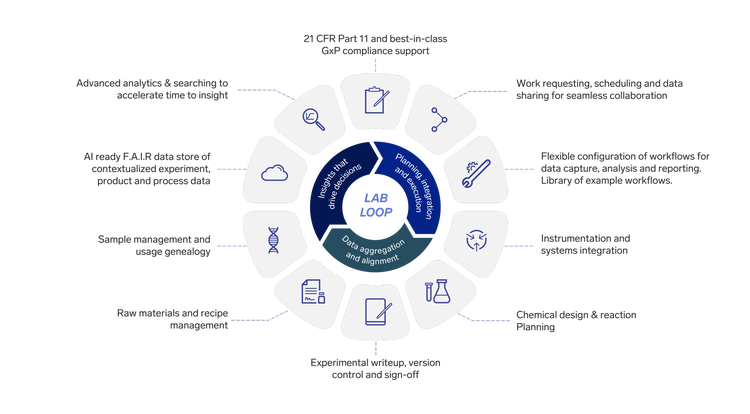
IDBS Polar combines ELN, LES and LIMS capabilities in a single GxP‑compliant platform. Polar helps scientists move from execution to insight faster by capturing and contextualizing experiment, product and process data, integrating with laboratory instruments to eliminate errors and delivering AI‑ready data for insights that accelerate innovation. Polar enables confident clone selection and faster cell optimization by systematically tracking data, clones and cultures across the scientific workflow and generating high-quality data needed for downstream success.
IDBS Polar powers the Lab Loop: From planning to insight
Accelerate cell line development with confidence
Inadequate data management not only slows down CLD labs but also creates risks at every development stage. By replacing fragmented workflows with an integrated, enterprise-grade informatics platform, organizations can boost efficiency, ensure compliance and confidently advance promising cell lines.
Discover how IDBS Polar integrates lab informatics to improve efficiency, traceability and compliance across the entire CLD lifecycle.